

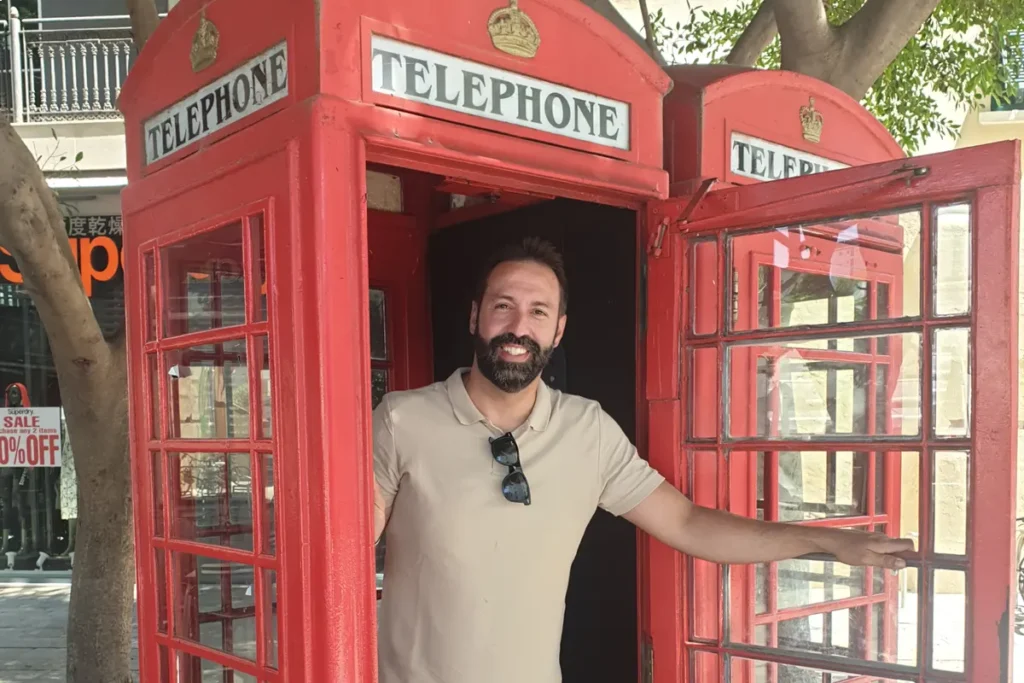
Everything you need to know
Day trip details
To see current prices for each rate (adults, children, students and infants), select your preferred date in the booking calendar. The price shown in the calendar is always the final price.
Check the available days and times directly in the booking calendar: it updates in real time according to the season.
There are three pick-up points in central Seville. The one you choose is also where the day ends.
C. Trajano 6, Casco Antiguo, 41001 Seville · View on Google Maps
C. Zaragoza 1, Casco Antiguo, 41001 Seville · View on Google Maps
C. Rastro 12A, 41003 Seville · View on Google Maps
Not every pick-up point is available on every date: the booking calendar shows which ones you can choose and the exact time. We recommend arriving with time to spare.
Gibraltar is a British Overseas Territory with its own border, outside the Schengen area. Everyone crosses a passport control on the way in and again on the way out.
Bring your passport. Rules on which documents are accepted have changed more than once in recent years and can differ by nationality, so a passport is the one thing that always works. Do not rely on a national ID card.
Check whether your nationality needs a visa for Gibraltar, which is not the same as a Schengen visa. Travel documents are the traveler’s own responsibility.
Border queues vary with the day and the season and are outside anyone’s control.
Round-trip transport from Seville and a professional guide for the day.
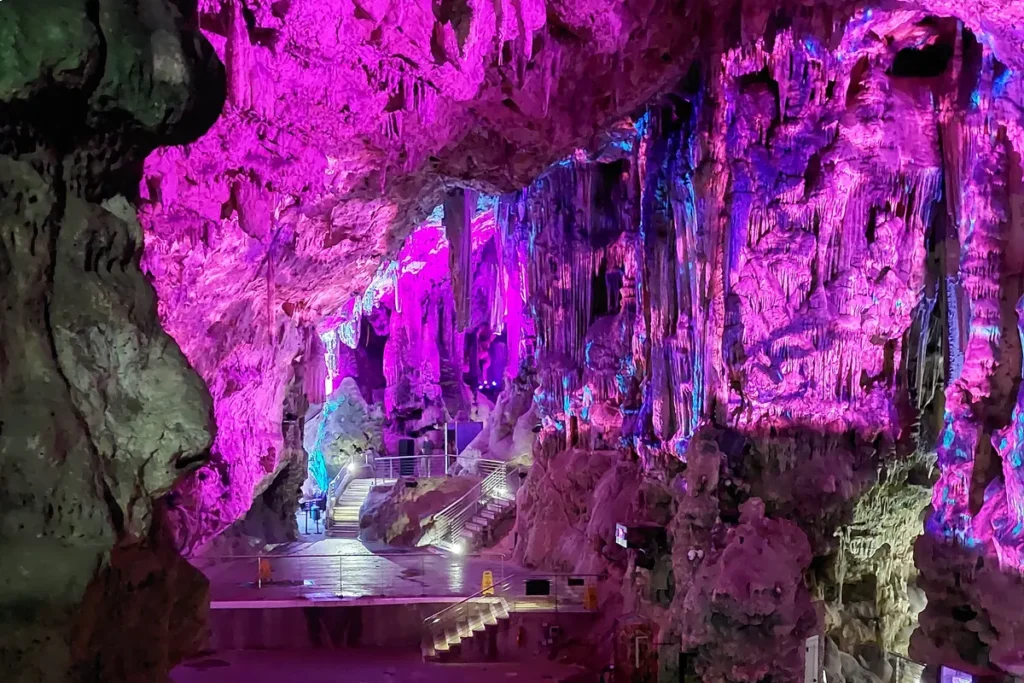
The Rock Tour, with entry to the Gibraltar Nature Reserve: the viewpoint over the strait at the Pillars of Hercules, St Michael’s Cave, and the Barbary macaques on the upper Rock.
A guided tour of the town.
Free time afterwards for lunch and for the shops around Main Street.
Food, drink and any purchases are not included.
The order of the visits may change depending on the group, the border or the time of year.
Your passport, before anything else. Check the night before that you have it.
Comfortable footwear. The town is walked on foot and the Rock is steep.
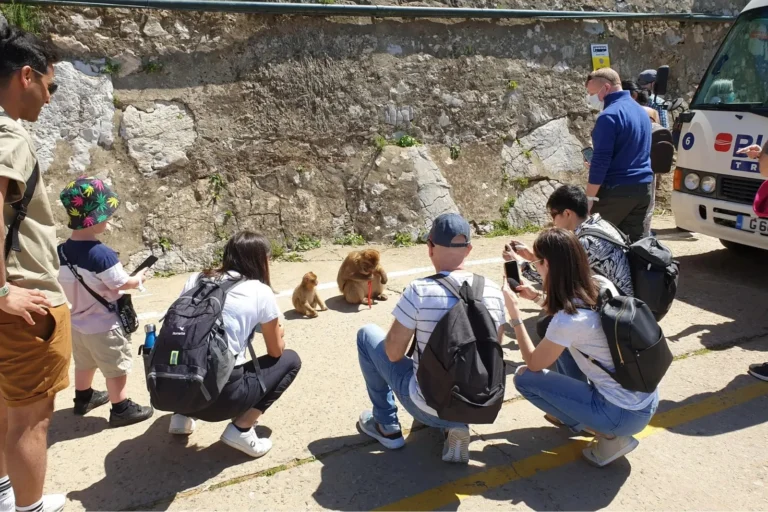
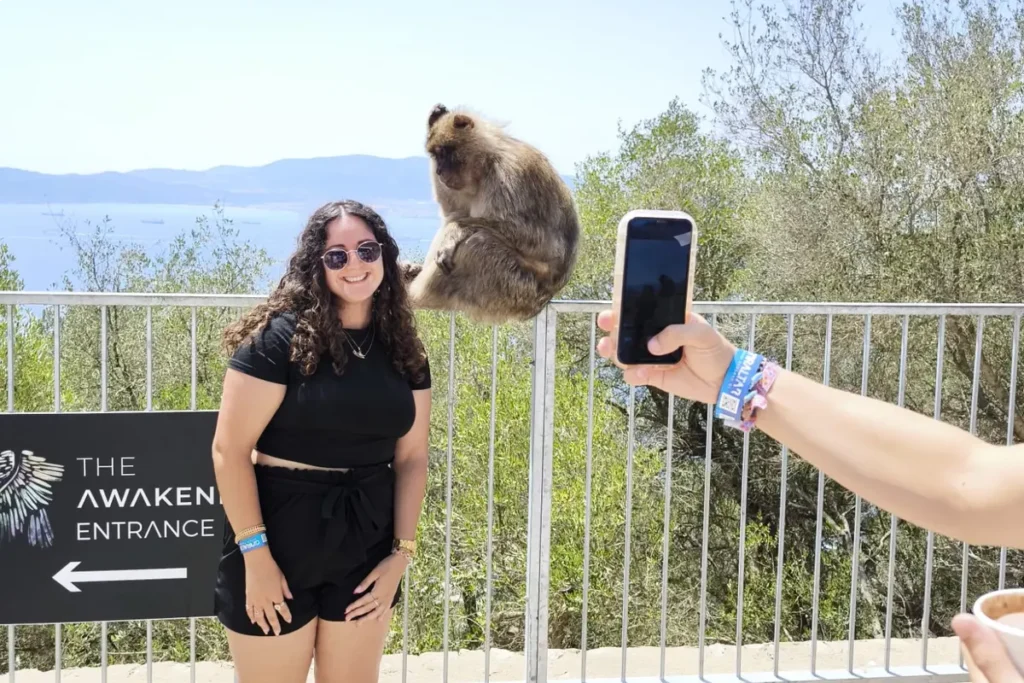
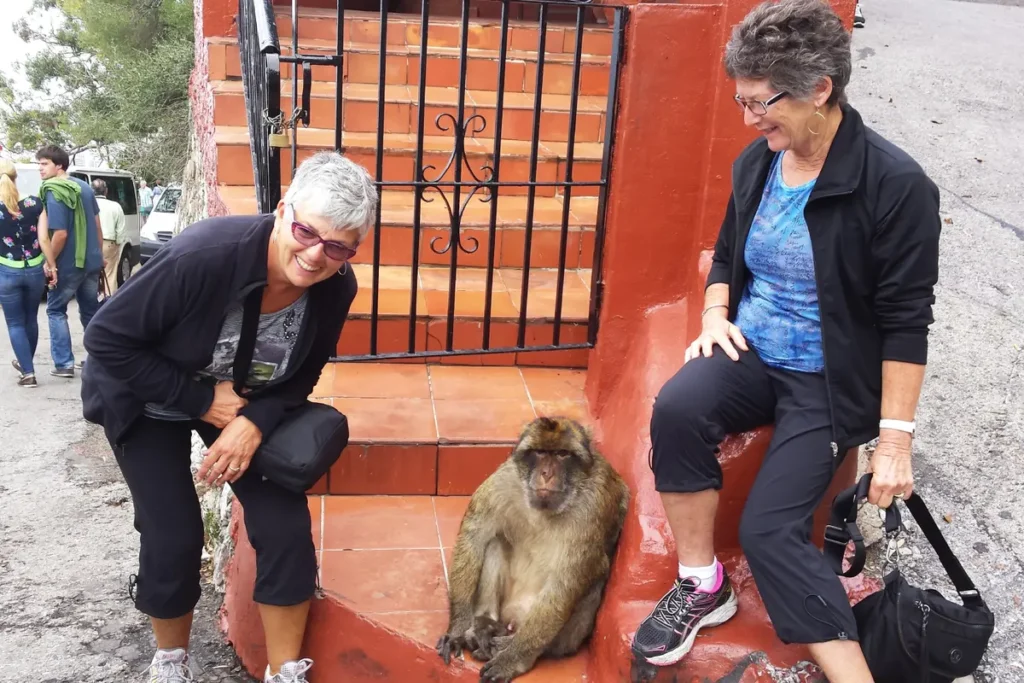
Do not feed or touch the macaques. It is illegal in Gibraltar and carries a substantial fine. Keep food out of sight and bags closed: they are quick and they are not tame.
Bring some water and a snack. In summer add sun protection and a hat.
Gibraltar uses the pound. Euros are widely accepted but at a poor rate, and cards work everywhere.
Free cancellation up to 24 hours before the activity. You can cancel from the confirmation email you receive when you book.
Ways to visit
Choose how you visit
Everything on this page describes the shared day trip. The same visit is also sold in other formats, each with its own group size, languages and price, and every one of them is booked right here.
Shared day trip
From €129per adult
- GroupRegular group
- LanguagesEnglish or Spanish
The full day exactly as this page describes it, in a regular group, with transport from Seville and the Rock Tour on the far side of the border.
Check datesPrivate group
From €822per group
- GroupYour party only
- LanguagesEN / ES / FR / IT, chosen when you book
The same day for your party alone, priced per group rather than per person. It is also the only way to take this trip in French or Italian.
The best-rated guide to Seville
First-hand local advice, more than 90 pages in PDF: what to see, where to eat, museums and palaces, day trips, opening hours and prices, and tourist maps of the city. Book any activity with us and it’s yours. Get the guide
 Eduardo BallesterosSeville local and author of the guide
The day trip
A British town, a limestone monolith and the only wild monkeys in Europe
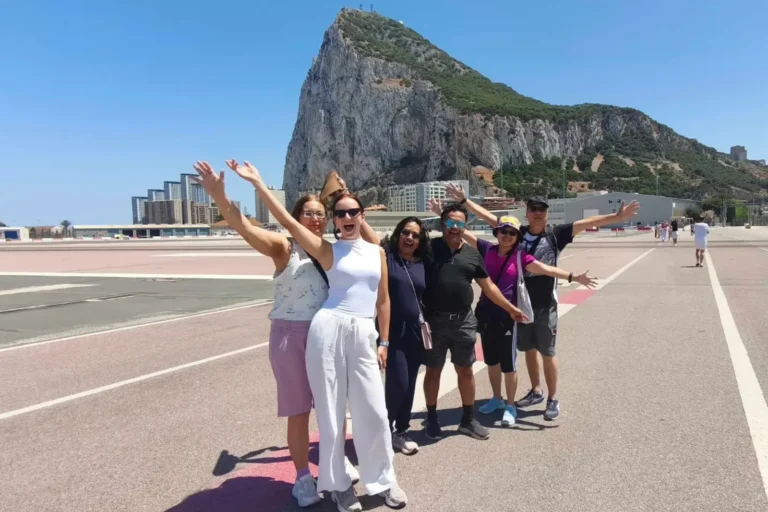
Gibraltar is a few square kilometres of Britain attached to the south of Spain, with a 426-metre block of limestone rising out of it and Africa visible across the water. It makes very little sense and that is exactly why it is worth a day.
South through cork oak country
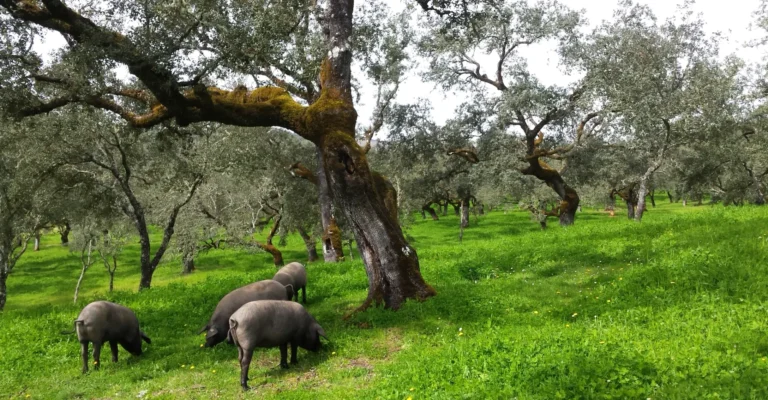
The drive takes about two hours, crossing the province of Cadiz through cork oak forest and past white villages, and ends at a border post. Passports out, and you walk into a place where the road signs change language and the police wear different hats.
The Rock Tour
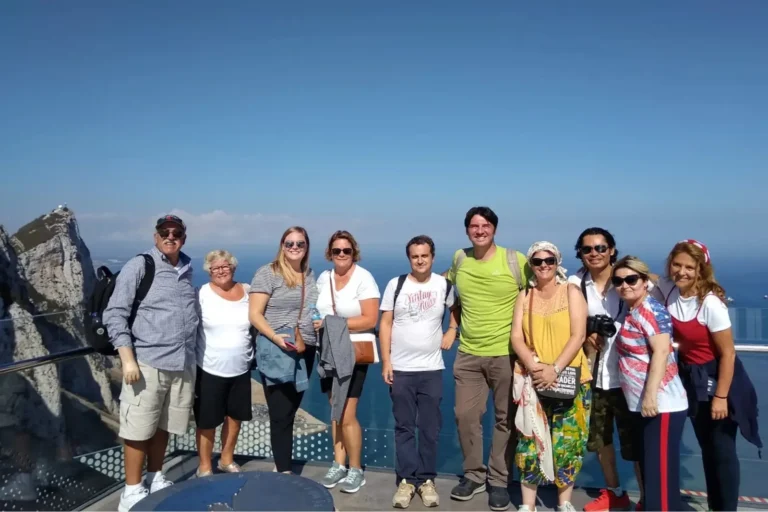
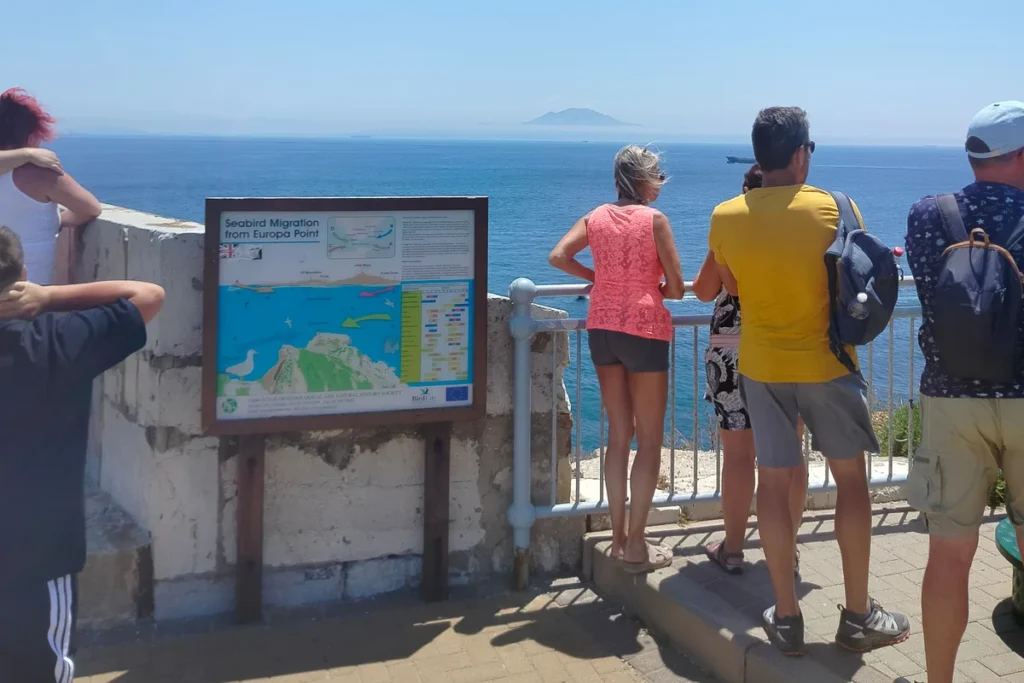
The tour goes up into the Gibraltar Nature Reserve, which covers most of the upper Rock. The first stop is the viewpoint at the Pillars of Hercules, looking out over the strait to the Moroccan coast, with the Mediterranean on one side and the Atlantic on the other.
St Michael’s Cave and the macaques
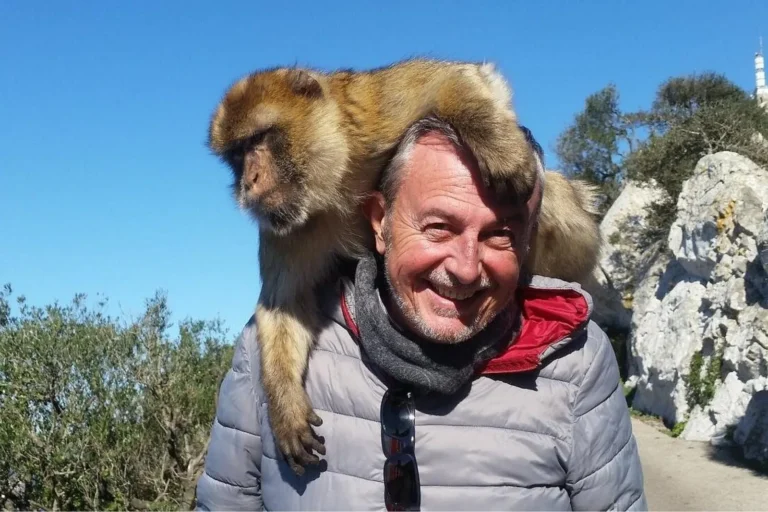
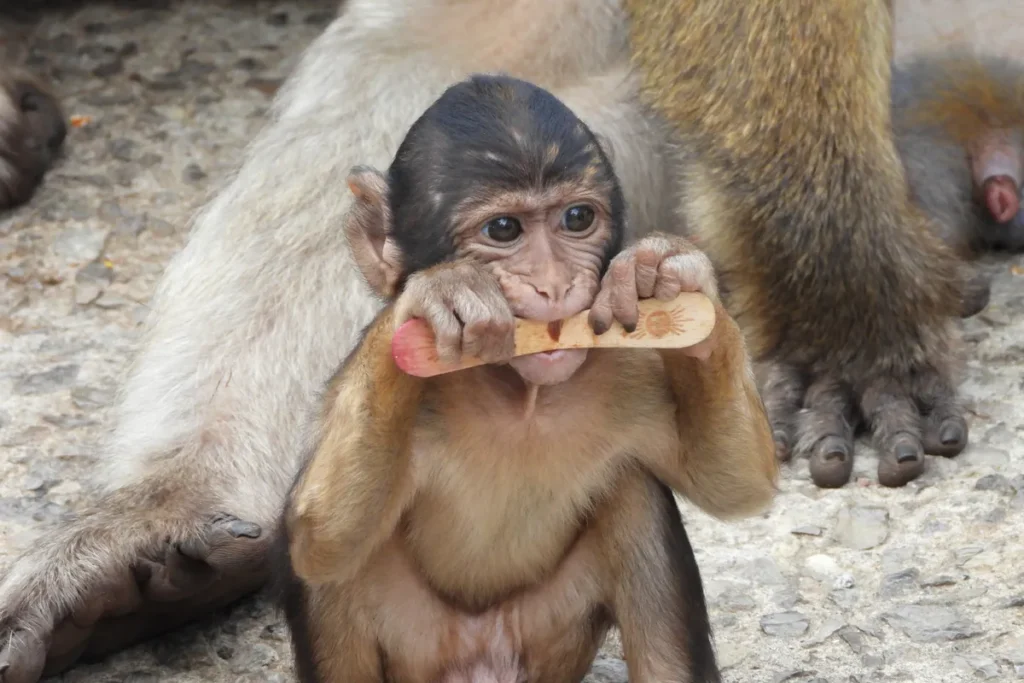
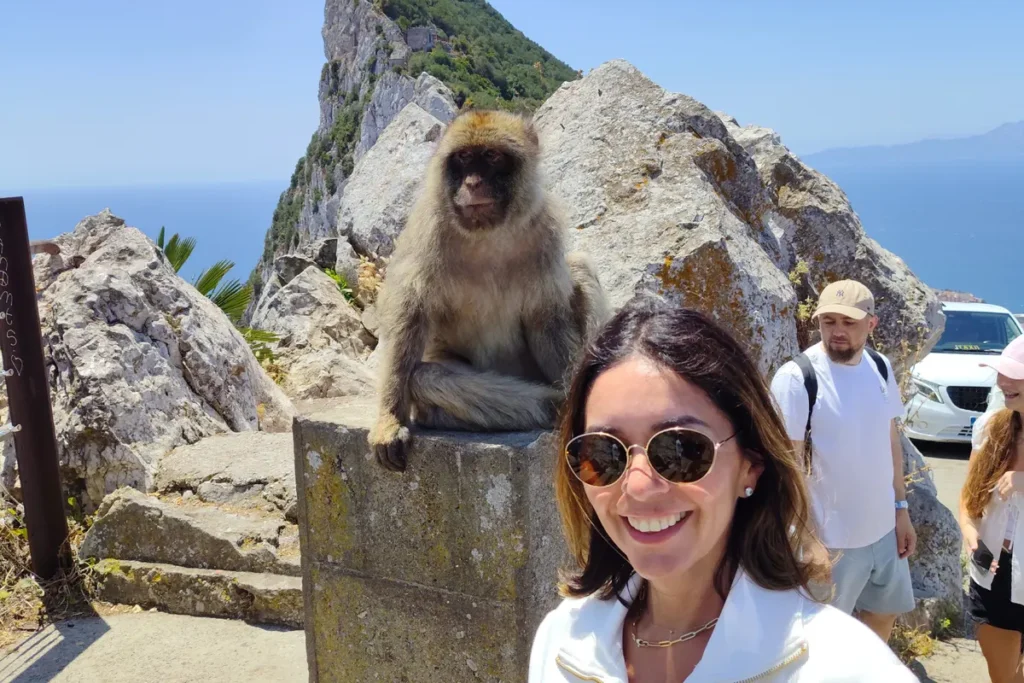
Inside the Rock, St Michael’s Cave is a natural cathedral of stalactites, used as a hospital in the Second World War and now lit for visitors. Outside it live the Barbary macaques, the only wild monkey population in Europe, entirely unbothered by people and very interested in bags.
Main Street, and back across the border
The afternoon is free, most of it spent on Main Street, where the shops are duty free and the pubs look transplanted from an English high street. Then back through passport control and the road to Seville.
Important: the order and format of the route may vary depending on the time of year, the weather, road conditions and each town’s local holidays. Your guide will organize the day in whatever way works best for the group.
Your questions answered
Frequently asked questions
Bring it. Gibraltar has its own border and is outside the Schengen area, so there is a passport control in both directions. Rules on other documents have changed repeatedly and vary by nationality; a passport is the one that always works.
Yes, including entry to the Gibraltar Nature Reserve, the viewpoint over the strait, St Michael’s Cave and the upper Rock where the macaques live.
Almost certainly. Around 300 Barbary macaques live on the upper Rock in troops that are used to visitors and are not shy. Do not feed or touch them: it is illegal and carries a fine.
They are wild animals rather than pets, and they will take food, sunglasses or an unzipped bag if you give them the chance. Bites happen when people try to touch or feed them. Keep your distance and they will ignore you.
Around ten hours. The exact departure time for your date appears in the booking calendar, and the border can add time in either direction.
Spanish and English only on this route, unlike most of our day trips. You choose when you book.
From central Seville. There are three pick-up points and the booking calendar shows which ones are available on your date. The pick-up point is also the drop-off point.
Yes, round trip. You travel in a comfortable, air-conditioned vehicle, van, minibus or coach, depending on how many travelers have booked for that date. Some have a toilet on board; if yours does not, you can ask your guide to stop at a service area.
It depends on the bookings for each date, and groups are usually small. In high season the group is split into two or more subgroups: as a rule, groups are no larger than 30 people. If you would rather not share the vehicle with anyone, you can book it as a private group.
No. There is free time in town for lunch, and Gibraltar is full of pubs and restaurants around Main Street. You can also bring your own.
Gibraltar uses the pound. Euros are accepted almost everywhere but at a rate that works against you, and cards are taken in every shop and restaurant.
A moderate amount. The Rock Tour is done by vehicle with stops, so the walking is around the viewpoints, inside the cave and through the town. The cave has steps.
Yes, and there is a reduced rate for children. The monkeys make it one of the more popular day trips with families. Keep food and small objects out of reach and hold on to younger children around the macaques.
Yes. Cancellation is free up to 24 hours before the activity.
Planning your visit to Gibraltar
Practical questions about the Rock itself, useful background before you travel.
It was captured by an Anglo-Dutch force in 1704 during the War of the Spanish Succession and ceded to Britain by the Treaty of Utrecht in 1713. It has been a British territory ever since, through a famous four-year siege in the 1780s and two referendums in which its people voted overwhelmingly to stay.
Historically yes, and it is one of the few places on earth where a public road crossed an active runway, with barriers coming down for every landing. A tunnel under the runway now carries much of the traffic, but the crossing is still there and still used.
The only wild monkey population in Europe, around 300 animals living in troops on the upper Rock. They are macaques rather than apes despite the local name, they are tailless, and the popular legend says that if they ever leave, British rule ends with them.
The two promontories that flank the eastern entrance to the strait: the Rock of Gibraltar on the European side and, depending on which classical source you follow, Jebel Musa or Monte Hacho in Morocco. To the ancient world they marked the edge of the known map.
English is the official language and everything is signed in it, but nearly everyone also speaks Spanish, and among themselves many Gibraltarians use Llanito, a local mix of Andalusian Spanish and English that switches between the two mid-sentence.
More tunnel than rock, in places. Around 50 kilometres of galleries were cut into the limestone, beginning with the Great Siege Tunnels dug by hand in the 1780s and expanded enormously during the Second World War, when the Rock held an underground city.
Yes, on most days. The Moroccan coast is about 25 kilometres across the strait from the southern tip at Europa Point, and the hills behind Ceuta and Tangier are clearly visible when the haze lifts.
For some things. There is no VAT, which makes alcohol, tobacco, perfume and electronics noticeably cheaper than in Spain. Everything else is priced for a small British town, which is to say not cheap at all.