

Everything you need to know
Day trip details
To see current prices for each rate (adults, children, students and infants), select your preferred date in the booking calendar. The price shown in the calendar is always the final price.
Check the available days and times directly in the booking calendar: it updates in real time according to the season.
There are three pick-up points in central Seville. The one you choose is also where the day ends.
C. Trajano 6, Casco Antiguo, 41001 Seville · View on Google Maps
C. Zaragoza 1, Casco Antiguo, 41001 Seville · View on Google Maps
C. Rastro 12A, 41003 Seville · View on Google Maps
Not every pick-up point is available on every date: the booking calendar shows which ones you can choose and the exact time. We recommend arriving with time to spare.
Round-trip transport from Seville and a professional guide for the day.
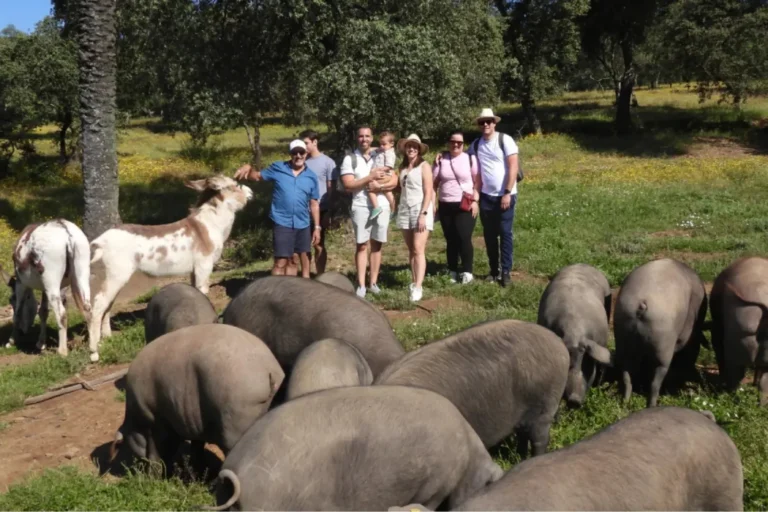
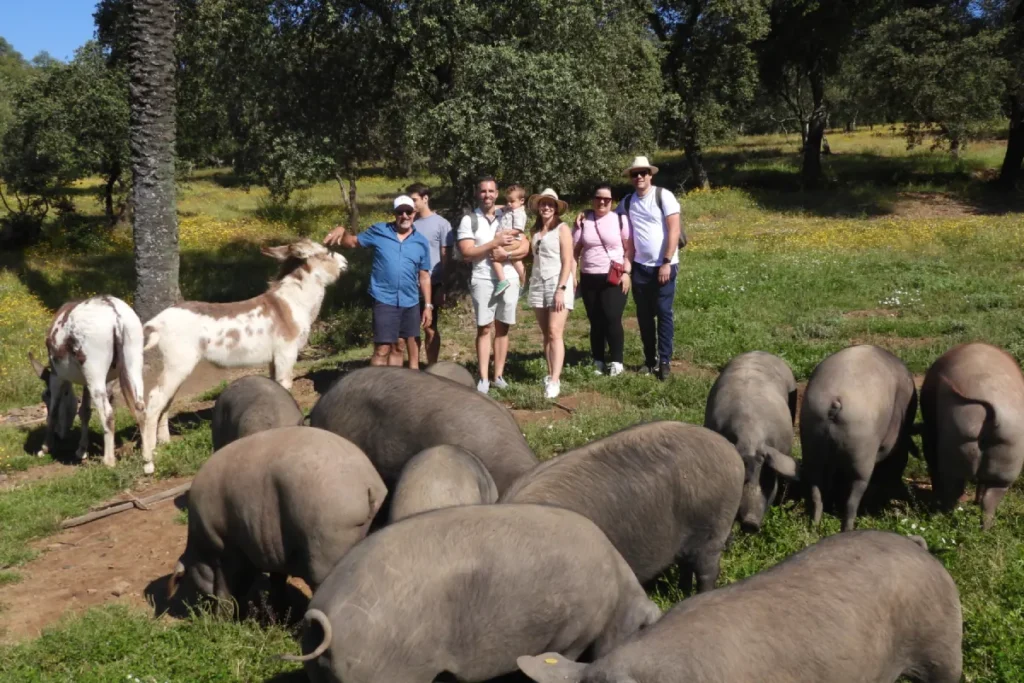
The Iberian pig route: a visit to the pasture where the pigs are reared, to see how it works.
Admission to the Gruta de las Maravillas in Aracena.
A panoramic tour through the Dehesa de Sierra Morena Biosphere Reserve, with stops at points such as the medieval castle of Aracena, the mosque of Almonaster la Real and the Pena de Arias Montano.
Food and drink are not included, and neither is any tasting or purchase of ham. There is a stop with free time for lunch in one of the towns.
The order of the visits may change depending on the group or the time of year.
Comfortable footwear you do not mind getting muddy. The pasture is a working farm on uneven ground.
The cave holds a steady temperature of around 16 degrees and it is humid, so bring a layer even in August.
Bring some water and a snack for the road. In summer add sun protection and a hat.
There is a stop with free time for lunch. Iberian ham is the local speciality and your guide can recommend where to eat it, but no tasting is included in the price.
This is hill country north of Seville and it is cooler than the city all year round.
Free cancellation up to 24 hours before the activity. You can cancel from the confirmation email you receive when you book.
The best-rated guide to Seville
First-hand local advice, more than 90 pages in PDF: what to see, where to eat, museums and palaces, day trips, opening hours and prices, and tourist maps of the city. Book any activity with us and it’s yours. Get the guide
 Eduardo BallesterosSeville local and author of the guide
The day trip
Where the ham comes from, and a cave under the town
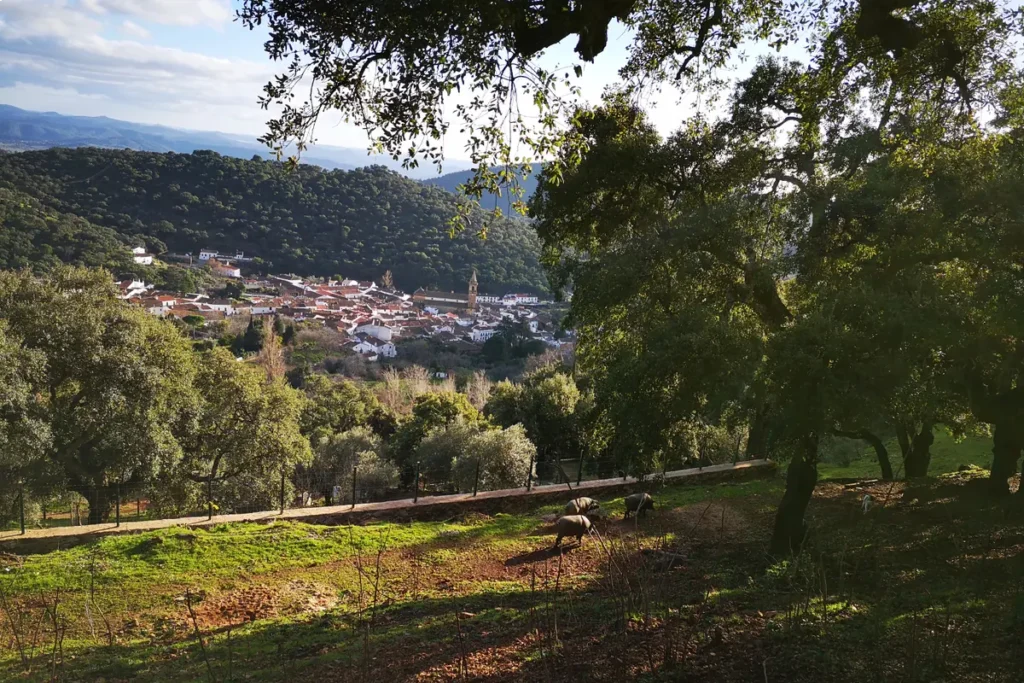
The Sierra de Aracena is a green, oak-covered range in the north of Huelva that produces the best Iberian ham in Spain and has one of its finest caves running underneath a hilltop town. This day trip takes in both, and the landscape that connects them.
North into the Sierra Morena
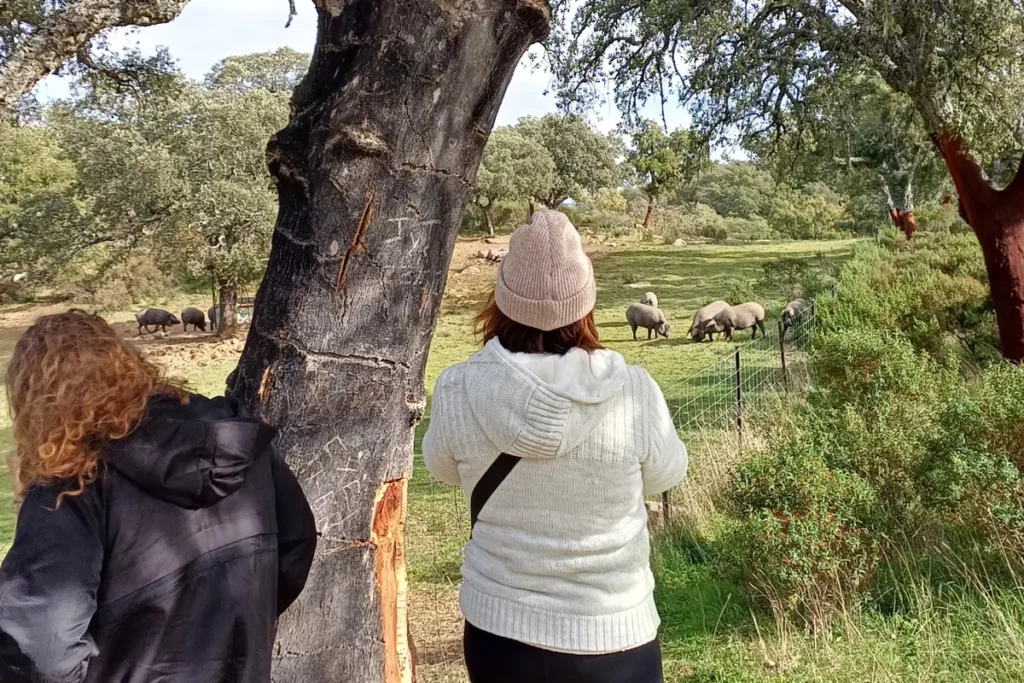
The drive out of Seville heads north into the Dehesa de Sierra Morena, a UNESCO Biosphere Reserve. The dehesa is not wild country but a managed one, worked for centuries: widely spaced holm and cork oaks over open grass, which turns out to be one of the richest habitats in Europe as well as one of the most productive.
The Iberian pig route
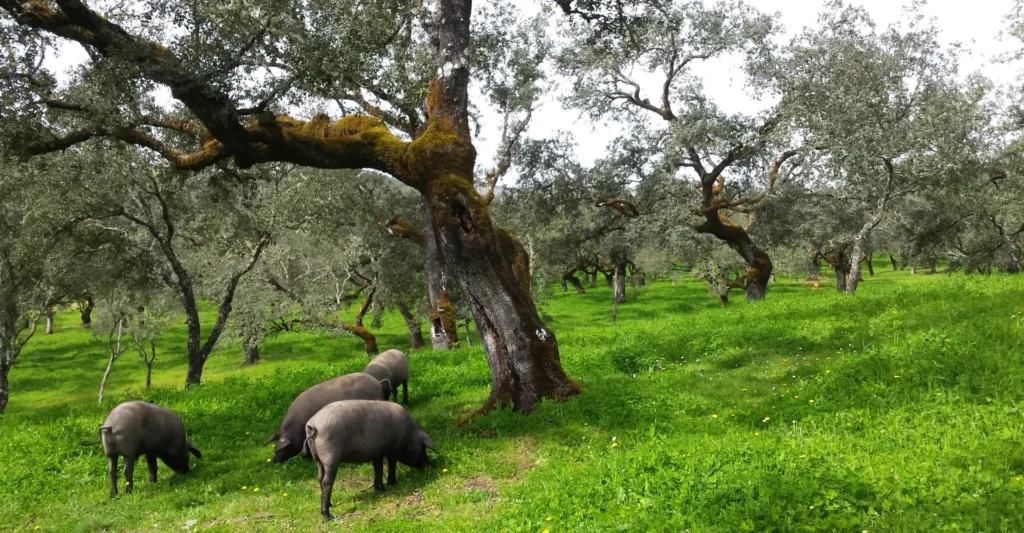
The route stops at the pasture where the pigs are reared, which is the part that explains everything else. The Iberian pig is a distinct, dark-footed breed that lives outdoors and, in the season, feeds on acorns fallen from the oaks. That diet is the whole reason the ham tastes the way it does and costs what it does.
Villages, a castle and a mosque
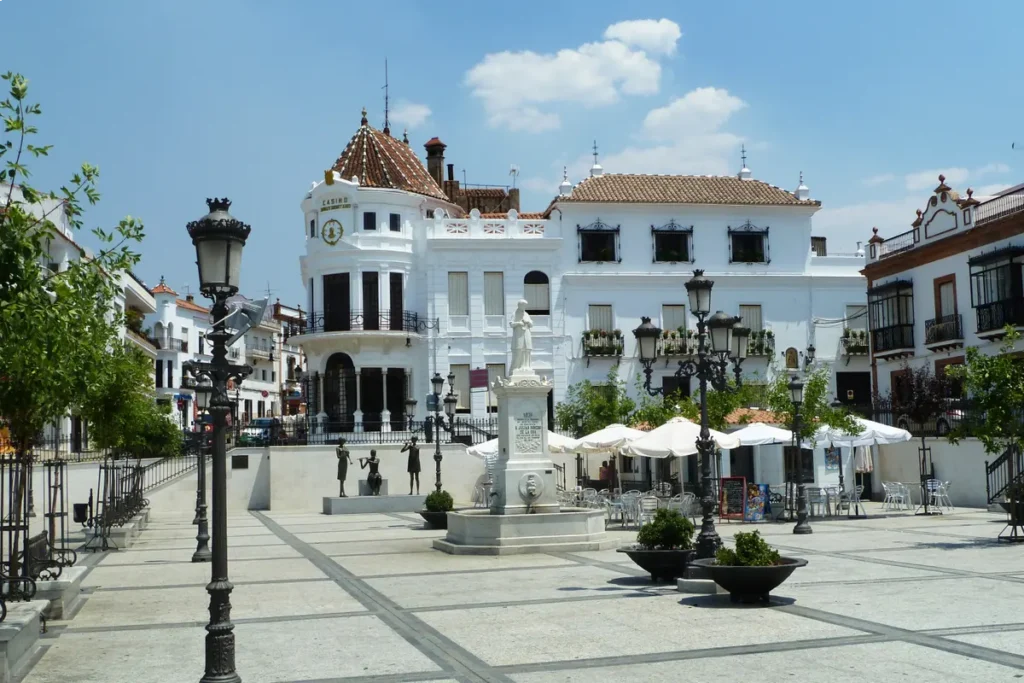
The panoramic tour through the sierra takes in the medieval castle above Aracena, the tenth-century mosque of Almonaster la Real, one of the few rural mosques left standing in Spain, and the Pena de Arias Montano, a rocky outcrop above Alajar with a hermitage and a long view. There is a stop with free time to eat.
The Gruta de las Maravillas
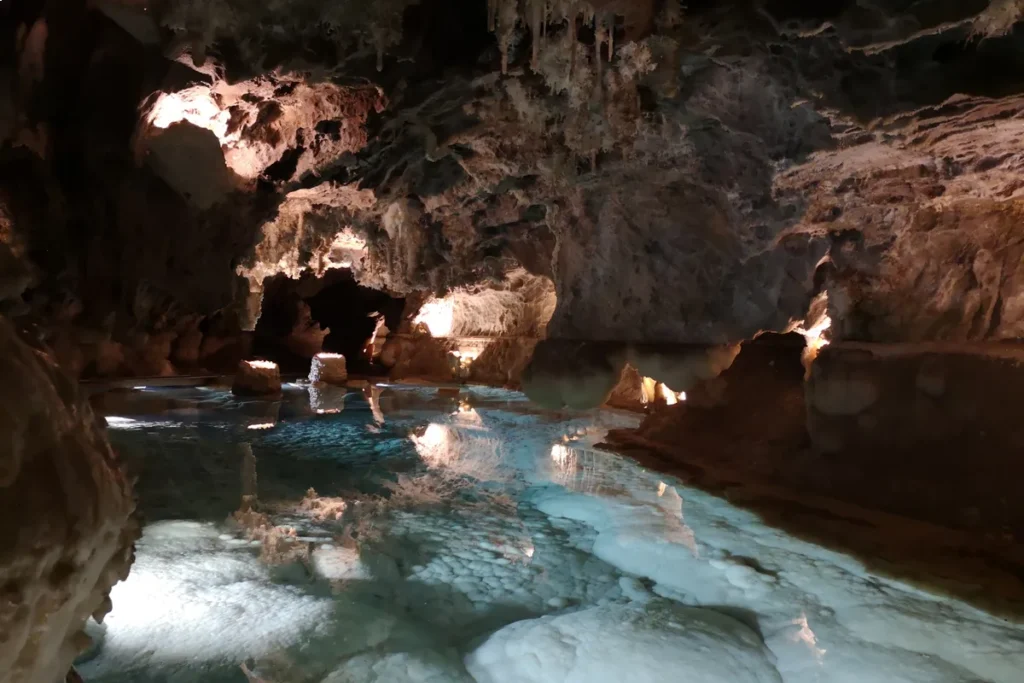
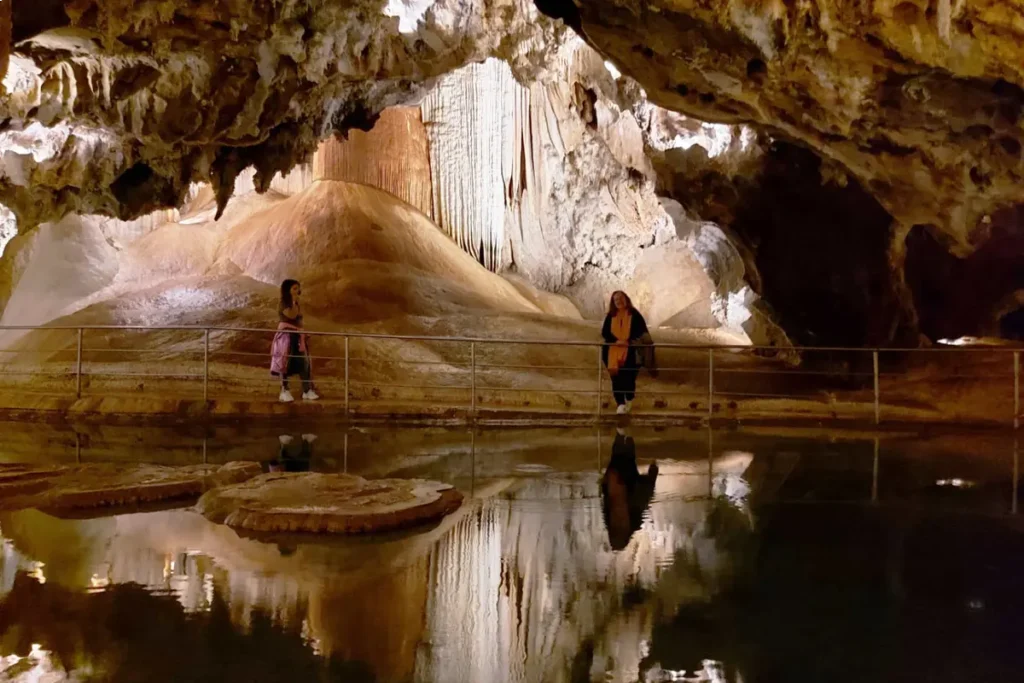
Under the hill that Aracena is built on runs a cave of chambers and underground lakes, opened to visitors in 1914 and still one of the most beautiful in Spain. The water is glass-clear and completely still, which doubles everything above it. Admission is included.
Important: the order and format of the route may vary depending on the time of year, the weather, road conditions and each town’s local holidays. Your guide will organize the day in whatever way works best for the group.
Your questions answered
Frequently asked questions
No, and we would rather be clear about it. The price covers the visit to the pasture where the pigs are reared and admission to the Gruta de las Maravillas. Any tasting, meal or purchase on the day is at your own expense.
Yes. Entry to the Gruta de las Maravillas is included and you go in with the group.
The route visits the pasture where they are reared, so in normal conditions yes. They are free-ranging animals on a working farm, though, so how close they are on any given day is up to them.
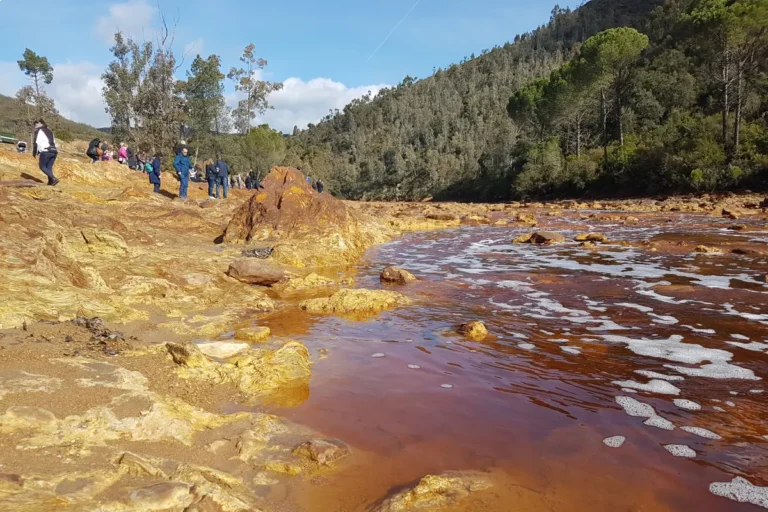
Both go to Aracena, the cave and the sierra. This one adds the Iberian pig route and the pasture; the other one swaps that for the red mining landscapes of Riotinto. Pick by whether you would rather see where the ham comes from or where the copper did.
Around ten hours. The exact departure time for your date appears in the booking calendar.
No. There is a stop with free time for lunch in one of the towns, at a local bar or restaurant, on which your guide can make recommendations, or you can bring your own picnic.
Spanish, English, French and Italian. You choose when you book. Usually the guide runs the day in one language, although it is sometimes run in two at once, with the guide alternating between them.
From central Seville. There are three pick-up points and the booking calendar shows which ones are available on your date. The pick-up point is also the drop-off point.
Yes, round trip. You travel in a comfortable, air-conditioned vehicle, van, minibus or coach, depending on how many travelers have booked for that date. Some have a toilet on board; if yours does not, you can ask your guide to stop at a service area.
It depends on the bookings for each date, and groups are usually small. In high season the group is split into two or more subgroups: as a rule, groups are no larger than 30 people.
Photography rules inside the Gruta de las Maravillas are set by the site and have changed over the years. Your guide will tell you what applies on the day.
A moderate amount. The cave is a walk of about a kilometre on made paths with steps and some slopes, the pasture is uneven ground, and the villages are on hillsides.
Yes, and there is a reduced rate for children. The pigs and the cave usually work well with younger travelers.
We would not recommend it. The visits are made entirely on foot and much of the route is over uneven, cobbled ground.
Yes. Cancellation is free up to 24 hours before the activity.
Planning your visit to the Sierra de Aracena
Practical questions about the sierra, the ham and the cave, useful background before you travel.
Ham from Iberian pigs that spent the last months of their lives loose in the dehesa eating acorns. Bellota means acorn. The diet changes the fat itself, making it soft, unsaturated and liquid at room temperature, which is why a good slice looks translucent and melts rather than chews.
The animal. Serrano comes from ordinary white pigs, is cured for a year or two and is what most Spanish bars serve by default. Iberico comes from the native Iberian breed, is cured for three to four years, and costs several times as much. They are different products, not different grades.
The acorn season, roughly October to February, when the oaks drop their fruit and the pigs are turned out to fatten on it. A single animal can put on more than half its weight in those months, walking several kilometres a day between trees. It is the part of the process that cannot be industrialised.
A village of about two thousand people in this sierra that gave its name to one of the most prestigious hams in the world. It is now a protected designation of origin covering the Sierra de Huelva, and the cellars there hang hams for years in mountain air that is cool and dry enough to cure them slowly.
Because the acorns are on the ground and the pigs have to walk to reach them. The exercise builds the marbling that runs through the meat, and the law that governs the top grades sets a maximum number of animals per hectare precisely to force it.
A cave system running under the hill that Aracena is built on, with around a kilometre open to visitors across a dozen chambers and six underground lakes. It opened to the public in 1914 and is generally described as the first show cave in Spain.
About 90 kilometres north, roughly an hour and a quarter by road. It sits at around 700 metres, which is why the sierra is green and several degrees cooler than the city.
Autumn and spring. October and November bring the montanera and the chestnut woods turning, and the sierra is at its greenest from March to May. Summer is far more bearable here than in Seville, and the cave keeps the same temperature all year regardless.