

Everything you need to know
Half-day trip details
To see current prices for each rate (adults, children, students and infants), select your preferred date in the booking calendar. The price shown in the calendar is always the final price.
Check the available days and times directly in the booking calendar: it updates in real time according to the season.
There are three pick-up points in central Seville. The one you choose is also where the trip ends.
C. Trajano 6, Casco Antiguo, 41001 Seville · View on Google Maps
C. Zaragoza 1, Casco Antiguo, 41001 Seville · View on Google Maps
C. Rastro 12A, 41003 Seville · View on Google Maps
Not every pick-up point is available on every date: the booking calendar shows which ones you can choose and the exact time. We recommend arriving with time to spare.
Round-trip transport from Seville and a professional guide.
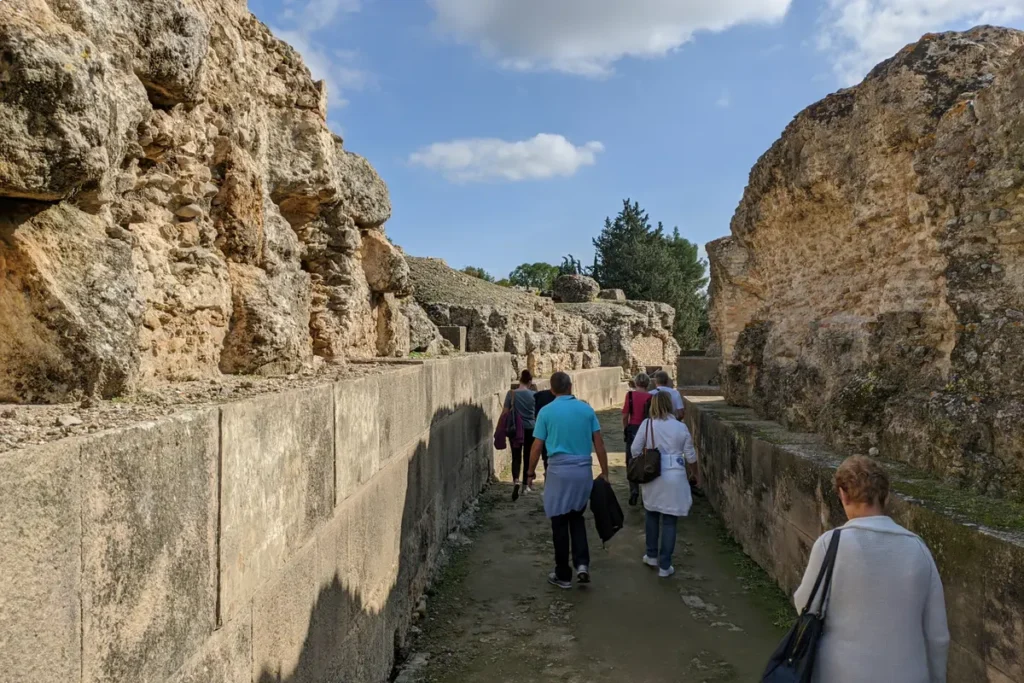
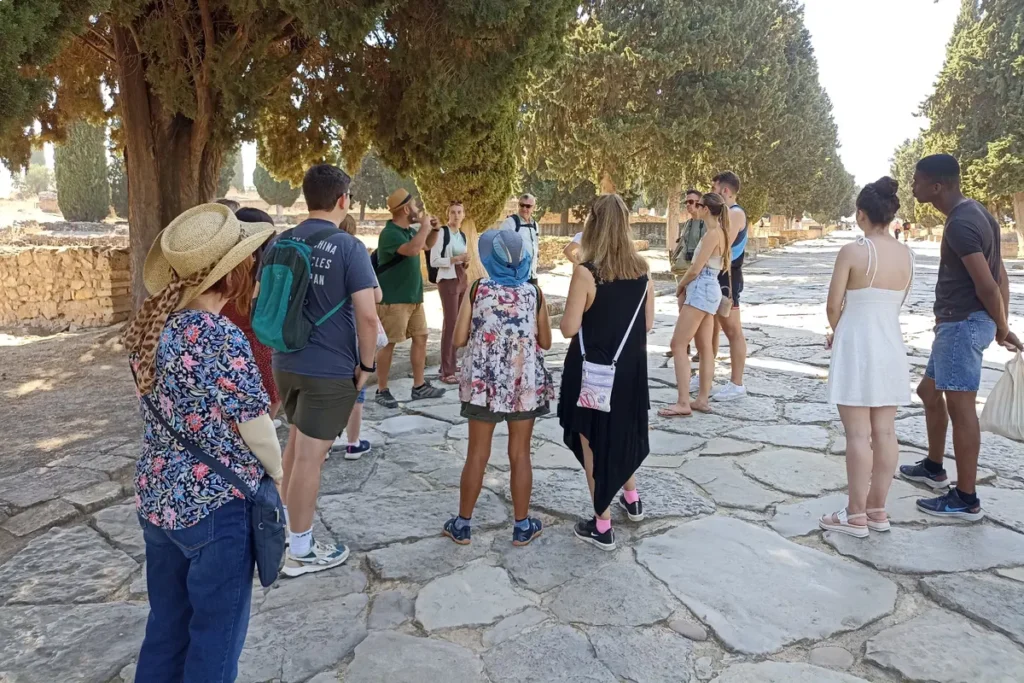
A guided tour of the Roman city of Italica, including the amphitheatre, the paved streets and the mosaic houses.
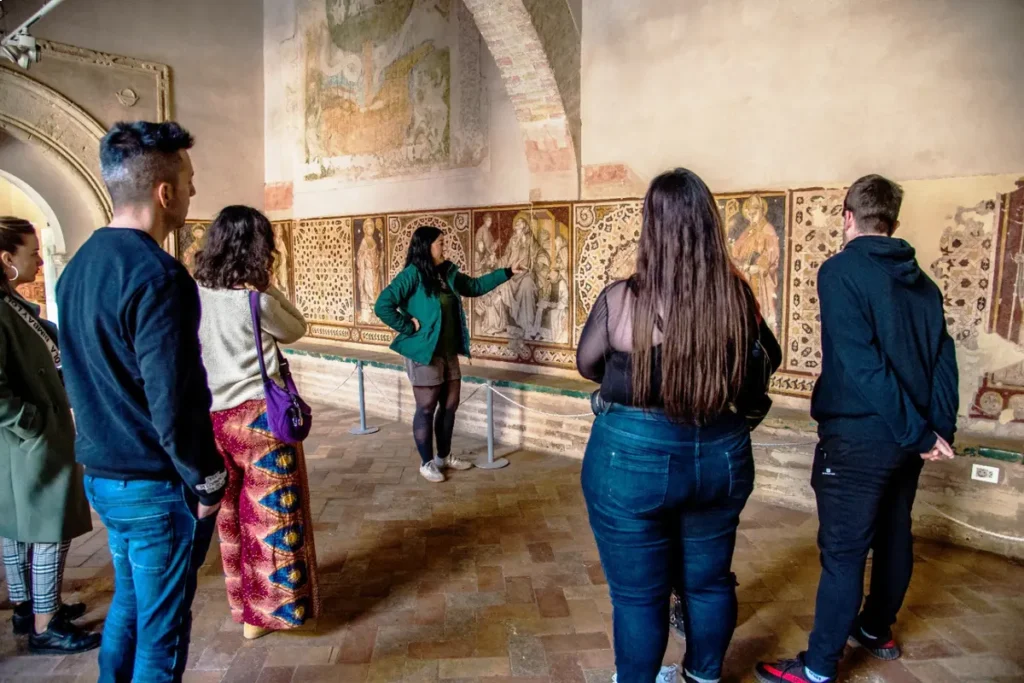
A guided visit to the Monastery of San Isidoro del Campo, a medieval fortified monastery a few minutes away.
Food and drink are not included. This is a half-day activity and there is no meal stop.
Comfortable footwear. The site is walked on Roman paving and gravel, uneven in places.
Sun protection and a hat in the warmer months: Italica is an open archaeological site with almost no shade.
Bring some water. There is very little on site.
It is a four-hour activity, so you are back in Seville with most of the day still ahead of you.
Free cancellation up to 24 hours before the activity. You can cancel from the confirmation email you receive when you book.
Ways to visit
Choose how you visit
Everything on this page describes the shared half-day trip. The same visit is also sold in other formats, each with its own group size, languages and price, and every one of them is booked right here.
Shared half-day trip
From €42per adult
- GroupRegular group
- LanguagesEN / ES / FR / IT, chosen when you book
The same four hours as this page describes, in a regular group, with transport from Seville, the Roman city and the monastery of San Isidoro del Campo.
Check datesPrivate group
From €224per group
- GroupYour party only
- LanguagesEN / ES / FR / IT, chosen when you book
The same morning for your party alone, with a guide for your group only, priced per group rather than per person.
The best-rated guide to Seville
First-hand local advice, more than 90 pages in PDF: what to see, where to eat, museums and palaces, day trips, opening hours and prices, and tourist maps of the city. Book any activity with us and it’s yours. Get the guide
 Eduardo BallesterosSeville local and author of the guide
The half-day trip
The first Roman city in Spain, fifteen minutes from Seville
Italica was founded in 206 BC, the first Roman settlement outside Italy, and it produced two emperors. It sits just outside Seville at Santiponce, and because the modern town grew up next to it rather than on top of it, the Roman street plan survives almost intact.
Out to Santiponce
The drive takes a little over fifteen minutes, which makes this the shortest excursion we run. An official guide gives an introduction at the entrance before the walk begins.
Streets, mosaics and the houses of the elite
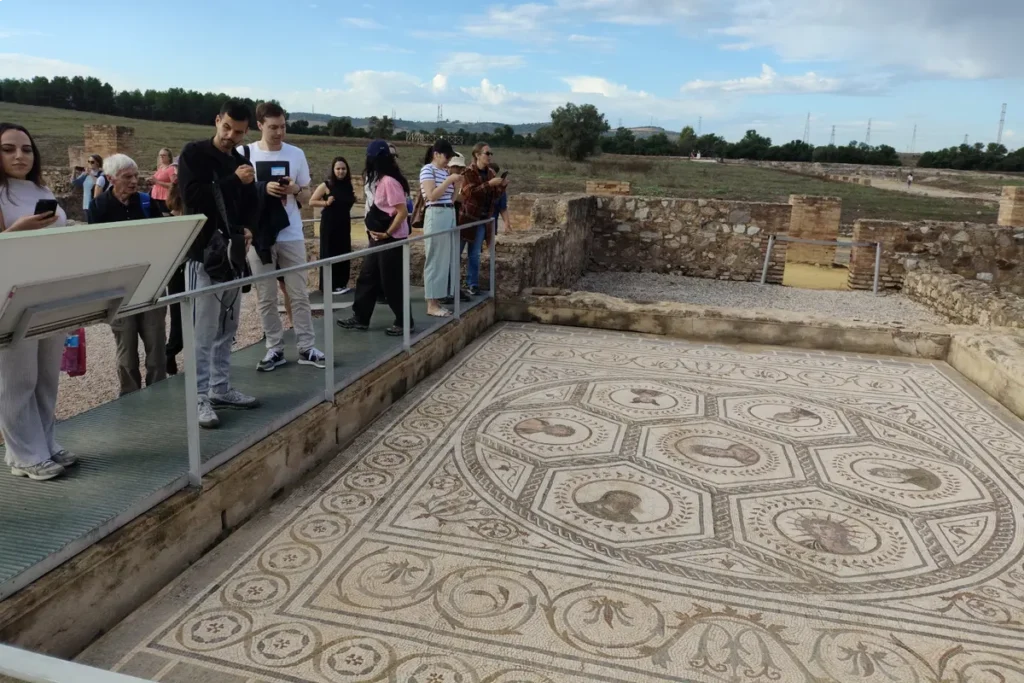
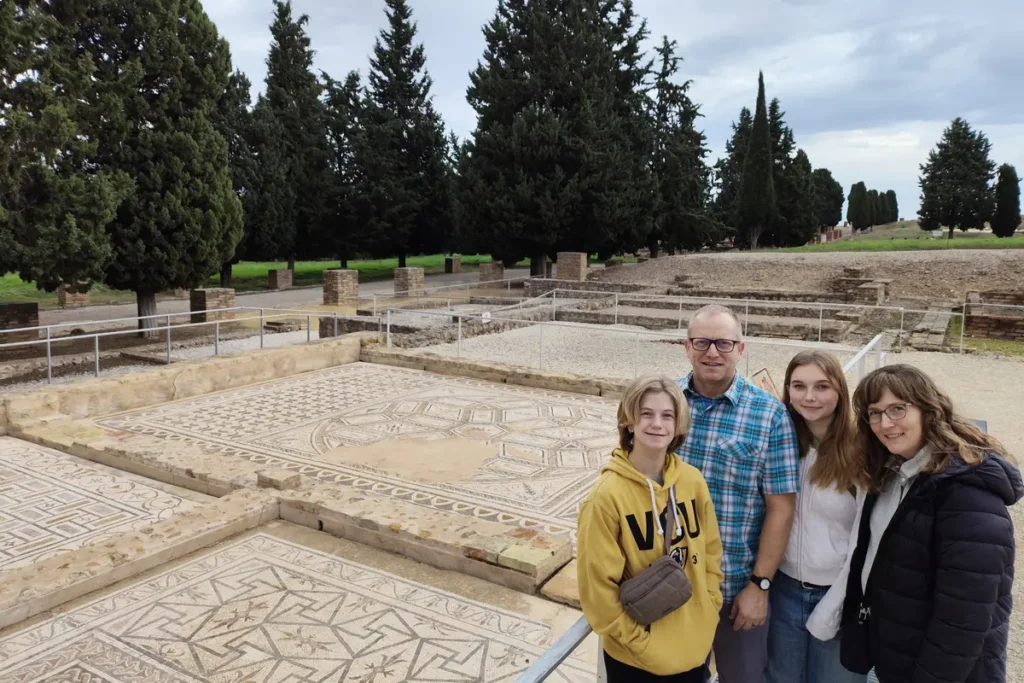
The route follows the wide, colonnaded avenues of the new city built by Hadrian, past the remains of grand houses still floored with their mosaics. The House of Neptune and the House of the Birds keep some of the finest, laid out where they were made rather than lifted into a museum.
The amphitheatre
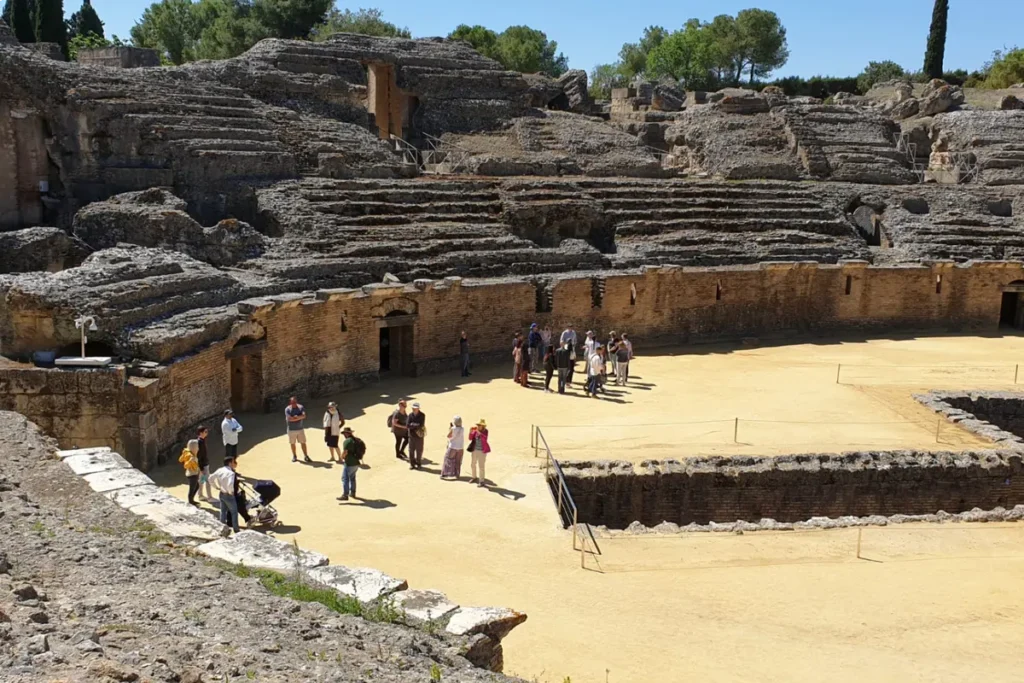
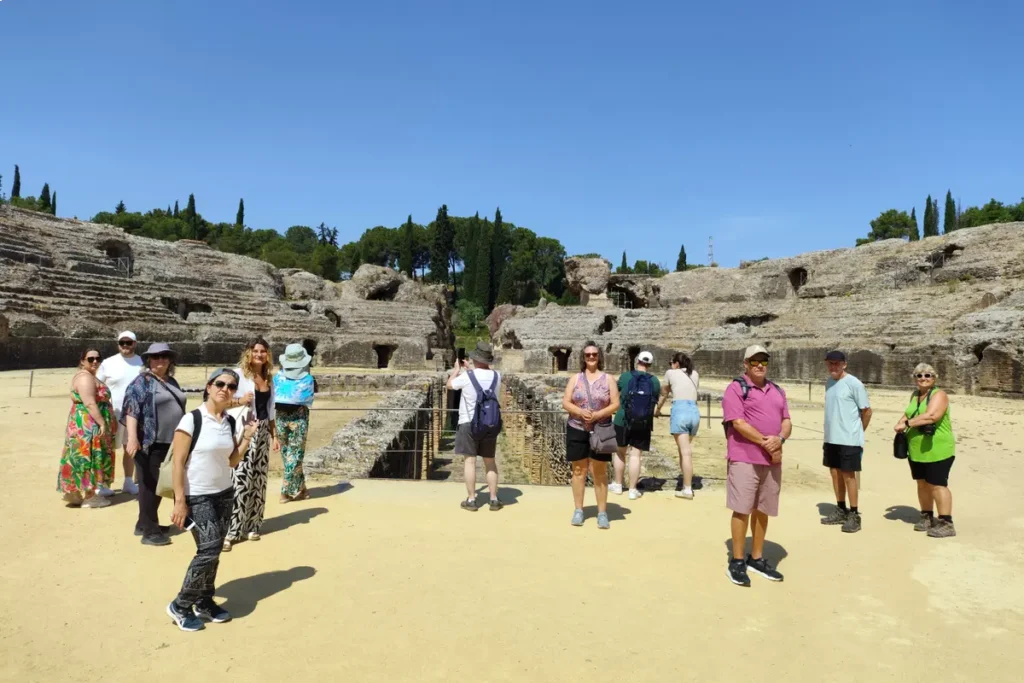
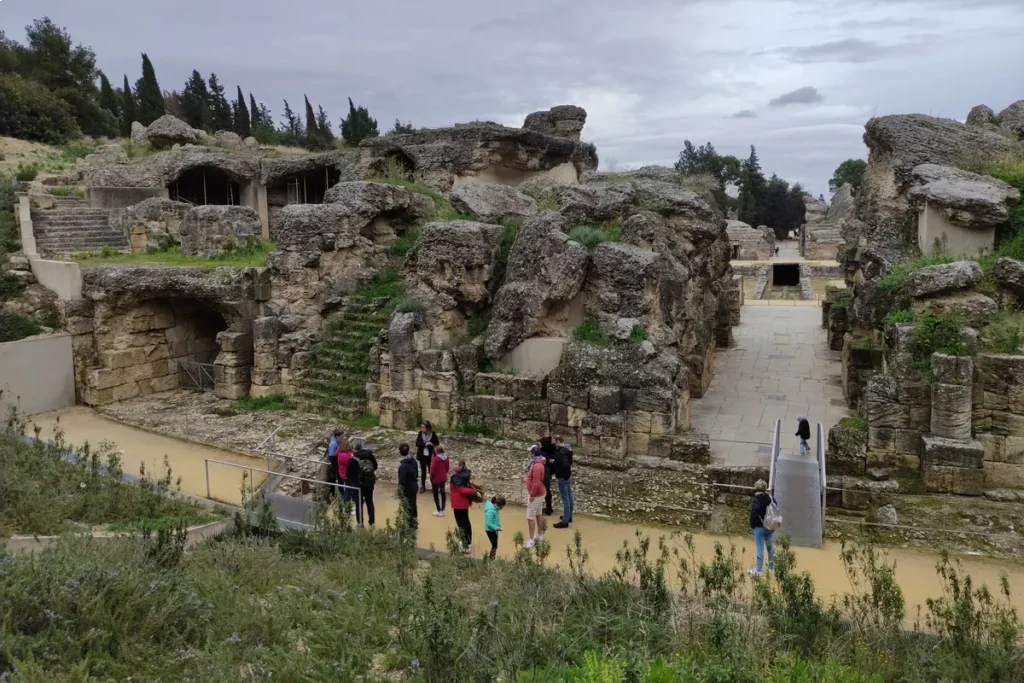
Italica’s amphitheatre held around 25,000 people, more than the city’s own population, and ranks among the largest in the Roman world. You walk out into the arena itself and through the galleries beneath it, which is the part most visitors remember.
San Isidoro del Campo
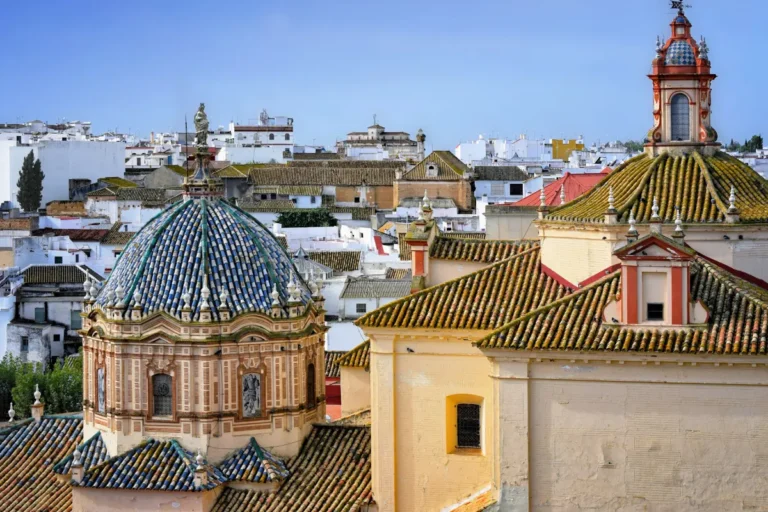
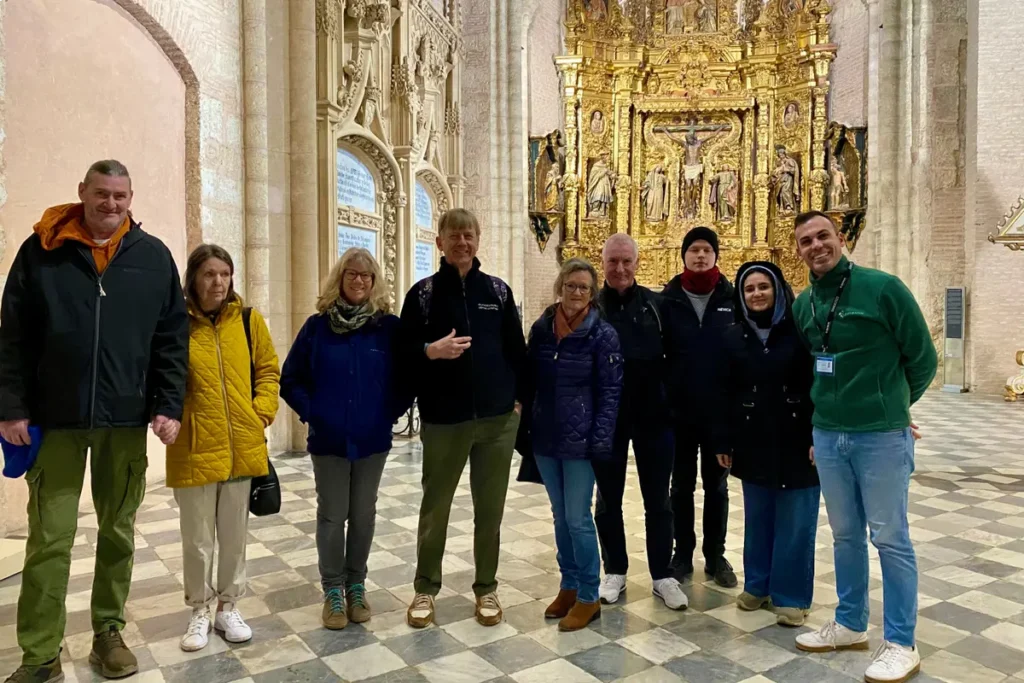
The visit ends at the Monastery of San Isidoro del Campo, founded in 1301 and built like a fortress. Behind its walls are Mudejar cloisters and a set of medieval wall paintings, along with Gothic and Baroque work added over the centuries.
Important: the order and format of the route may vary depending on the time of year, the weather, road conditions and each town’s local holidays. Your guide will organize the trip in whatever way works best for the group.
Your questions answered
Frequently asked questions
Around four hours in total, including the drive each way. It is a half-day activity, so you are back in Seville with the rest of the day free.
Yes. The guided tour of Italica and the guided visit to the Monastery of San Isidoro del Campo are both included in the price.
Yes. The route goes down into the arena and through the galleries underneath it.
Spanish, English, French and Italian. You choose when you book. French and Italian need a minimum of three travelers to be guaranteed; if that number is not reached, it runs in English or Spanish.
From central Seville. There are three pick-up points and the booking calendar shows which ones are available on your date. The pick-up point is also the drop-off point.
Yes, round trip. You travel in a comfortable, air-conditioned vehicle, van, minibus or coach, depending on how many travelers have booked for that date. Some have a toilet on board; if yours does not, you can ask your guide to stop at a service area.
It depends on the bookings for each date, and groups are usually small. In high season the group is split into two or more subgroups: as a rule, groups are no larger than 30 people. If you would rather not share the vehicle with anyone, you can book it as a private group.
No, and there is no meal stop. At four hours this is a half-day activity and it does not cross lunchtime in the way our day trips do.
A moderate amount, on the flat. Italica is a large open site walked on Roman paving and gravel, so comfortable shoes help, but there are no climbs.
Yes, and there is a reduced rate for children. The amphitheatre tends to do the work: it is one of the few Roman sites where you can walk out into the arena.
Partly. The site is flat, which helps, but the surfaces are Roman paving and gravel, and the amphitheatre galleries involve steps.
Yes. Cancellation is free up to 24 hours before the activity.
Planning your visit to Italica
Practical questions about the site itself, useful background before you travel.
The first Roman city founded outside Italy, established in 206 BC by Scipio Africanus to settle veterans after the battle of Ilipa. It grew into a wealthy provincial city and was hugely expanded by Hadrian in the second century, which is the part visitors walk today.
Yes. The amphitheatre stood in for the Dragonpit in the seventh and eighth seasons, including the summit scene in the final season. The production also used the Royal Alcazar in Seville as the Water Gardens of Dorne.
Trajan, born here in AD 53, and almost certainly Hadrian, born in AD 76, whose family came from the city. Trajan was the first emperor born outside Italy, and Hadrian repaid the connection by rebuilding Italica on a grand scale.
It held around 25,000 spectators, which made it one of the largest in the Roman empire and considerably bigger than the city needed. The arena floor and the underground service pit beneath it are both still visible.
A monastery founded in 1301 by Guzman el Bueno, the same nobleman remembered for the siege of Tarifa, and built with defensive walls. It holds two Mudejar cloisters, medieval wall paintings and a Baroque altarpiece by Martinez Montanes.
About 9 kilometres northwest, in the town of Santiponce. It is close enough to reach in a quarter of an hour, which is why this works as a half-day rather than a full one.
If Roman sites interest you at all, yes. What makes it unusual is the scale of what is exposed: entire streets with their drainage, the floor plans of mansions with mosaics in place, and an amphitheatre you can walk into. Merida has more standing structures, but Italica gives you a city plan.
Yes. It is a public archaeological site with regular opening hours, free for European Union citizens on presentation of an identity document, and reachable by local bus from Seville. What a guided visit adds is the explanation and the transport, and the monastery alongside it.