


Everything you need to know
Day trip details
To see current prices for each rate (adults, children, students and infants), select your preferred date in the booking calendar. The price shown in the calendar is always the final price.
Check the available days and times directly in the booking calendar: it updates in real time according to the season.
There are three pick-up points in central Seville. The one you choose is also where the day ends.
C. Trajano 6, Casco Antiguo, 41001 Seville · View on Google Maps
C. Zaragoza 1, Casco Antiguo, 41001 Seville · View on Google Maps
C. Rastro 12A, 41003 Seville · View on Google Maps
Not every pick-up point is available on every date: the booking calendar shows which ones you can choose and the exact time. We recommend arriving with time to spare.
Round-trip transport from Seville and a professional guide for the day.
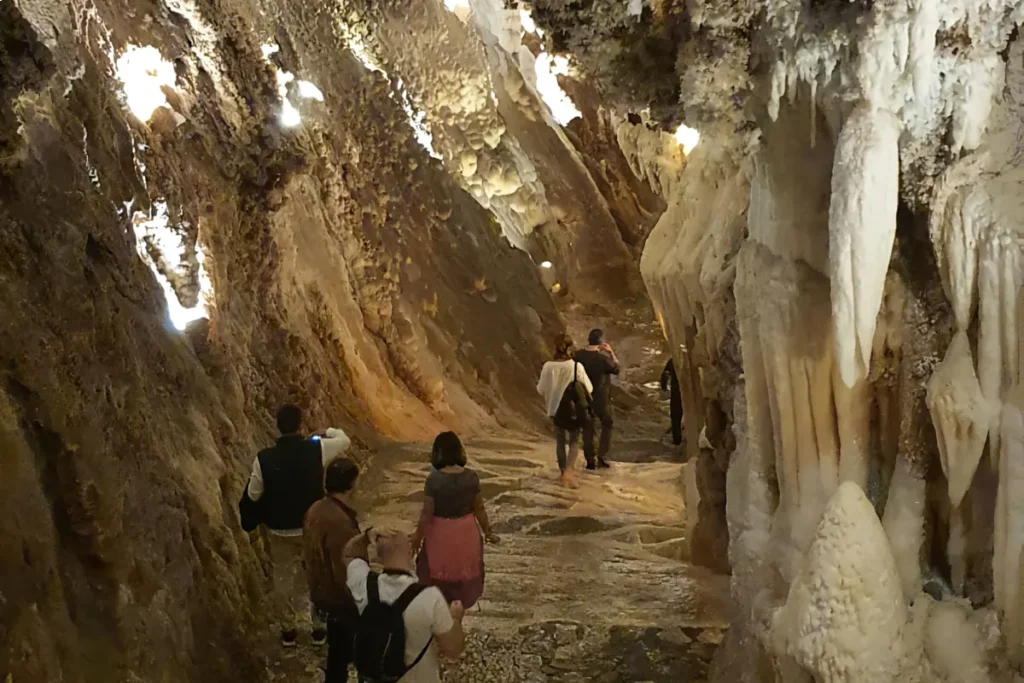
Admission to the Gruta de las Maravillas in Aracena.
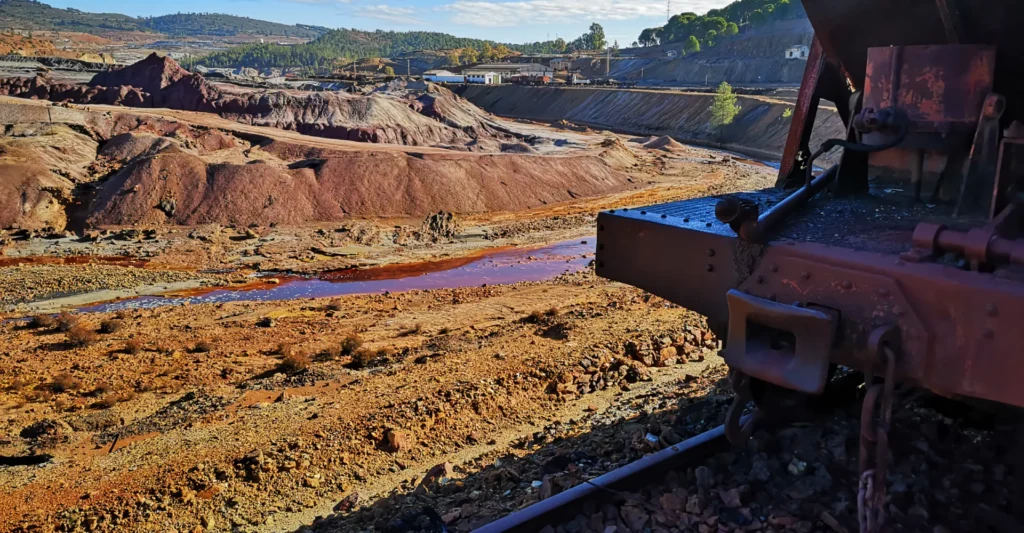
A visit to the Riotinto mining area and its red landscapes.
A panoramic tour through the Dehesa de Sierra Morena Biosphere Reserve, with stops at points such as the medieval castle of Aracena, the mosque of Almonaster la Real and the Pena de Arias Montano.
Food and drink are not included. There is a stop with free time for lunch in one of the towns.
The order of the visits may change depending on the group or the time of year.
Comfortable footwear. The cave is walked on made paths with steps, and the mining ground is uneven and dusty.
The cave holds a steady temperature of around 16 degrees and it is humid, so bring a layer even in August.
Do not touch the water of the Rio Tinto. It is naturally acidic, roughly the strength of vinegar or stronger, and it stains.
Bring some water and a snack for the road. In summer add sun protection and a hat: there is no shade at the mines.
There is a stop with free time for lunch. Iberian ham is the local speciality and your guide can recommend where to eat it.
Free cancellation up to 24 hours before the activity. You can cancel from the confirmation email you receive when you book.
Ways to visit
Choose how you visit
Everything on this page describes the shared day trip. The same visit is also sold in other formats, each with its own group size, languages and price, and every one of them is booked right here.
Shared day trip
From €95per adult
- GroupRegular group
- LanguagesEN / ES / FR / IT, chosen when you book
The full day exactly as this page describes it, in a regular group, with transport from Seville, the Gruta de las Maravillas and the Riotinto mines.
Check datesPrivate group
From €471per group
- GroupYour party only
- LanguagesEN / ES / FR / IT, chosen when you book
The same day for your party alone, priced per group rather than per person. You can keep the meeting point in the centre or ask for pick-up at your accommodation.
The best-rated guide to Seville
First-hand local advice, more than 90 pages in PDF: what to see, where to eat, museums and palaces, day trips, opening hours and prices, and tourist maps of the city. Book any activity with us and it’s yours. Get the guide
 Eduardo BallesterosSeville local and author of the guide
The day trip
A cave, a green sierra and a river the colour of rust
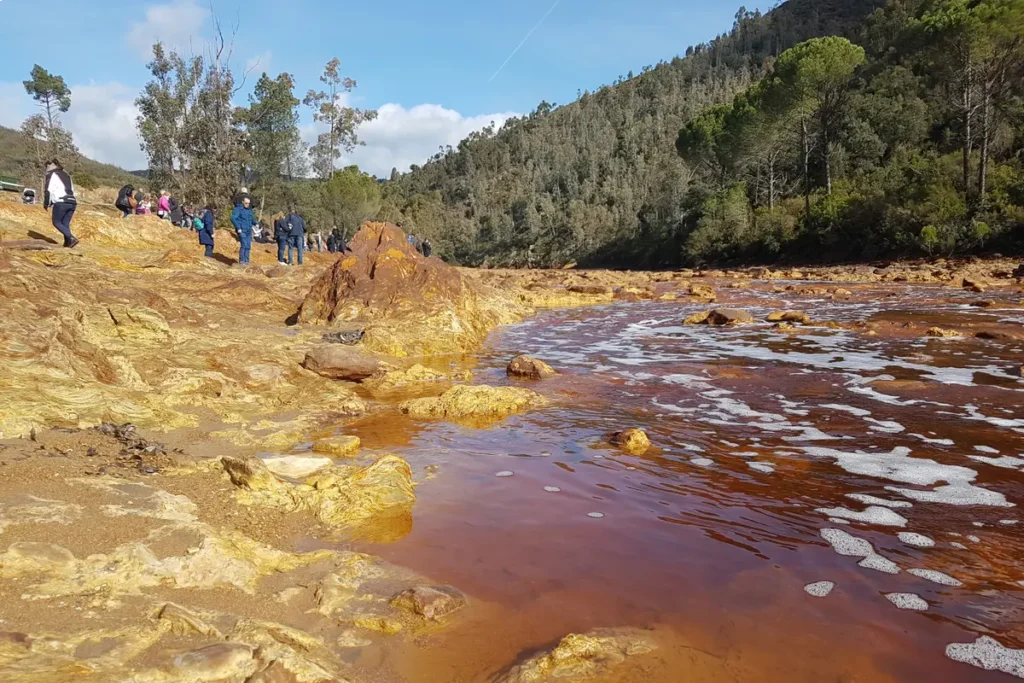
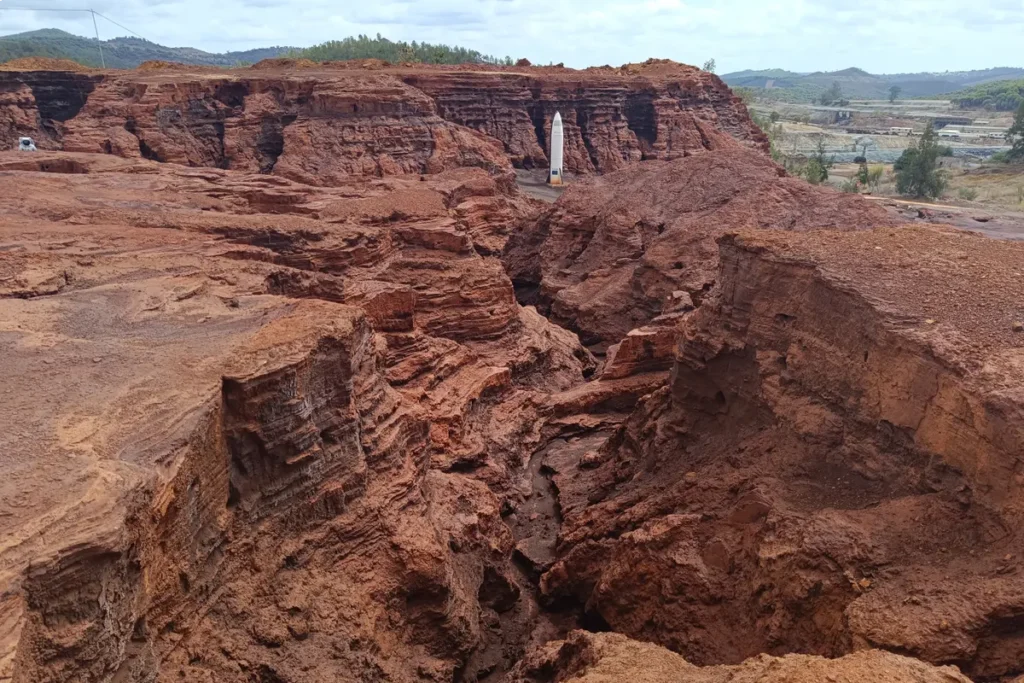
North of Seville the land rises into oak-covered hills that produce the best ham in Spain, and then, an hour further west, turns abruptly into something that looks like another planet: terraced red rock, ochre spoil heaps and a river running the colour of blood. Both are in this day.
Aracena and the cave beneath it
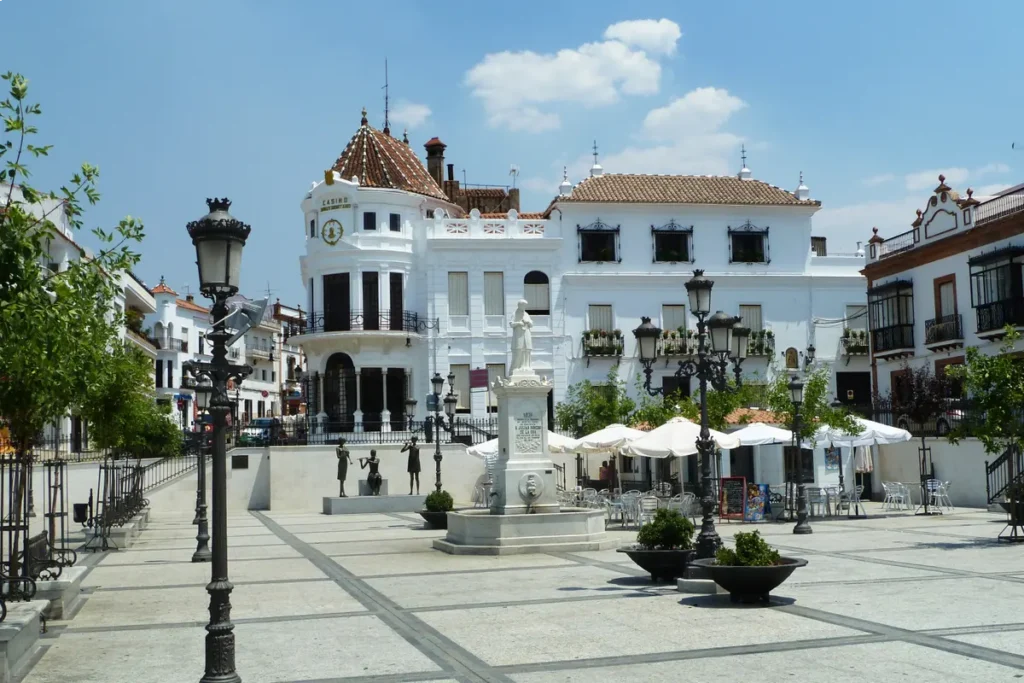
The first stop is Aracena, a white town on a hill in the north of Huelva with a medieval castle above it. Underneath the hill runs the Gruta de las Maravillas, a system of chambers and still underground lakes opened to visitors in 1914 and generally reckoned the first show cave in Spain. Admission is included.
Through the Dehesa de Sierra Morena
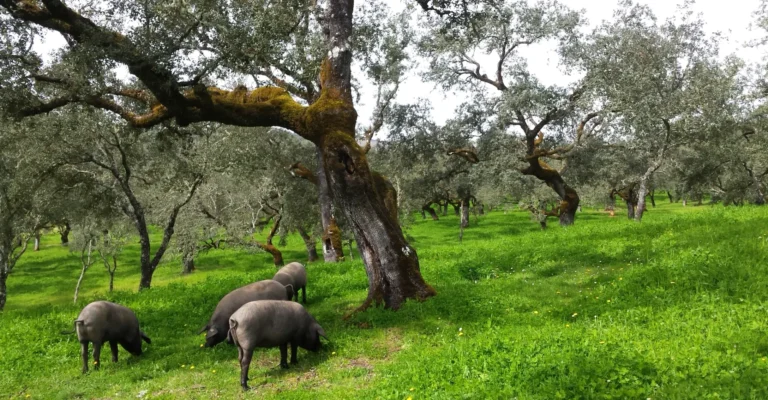
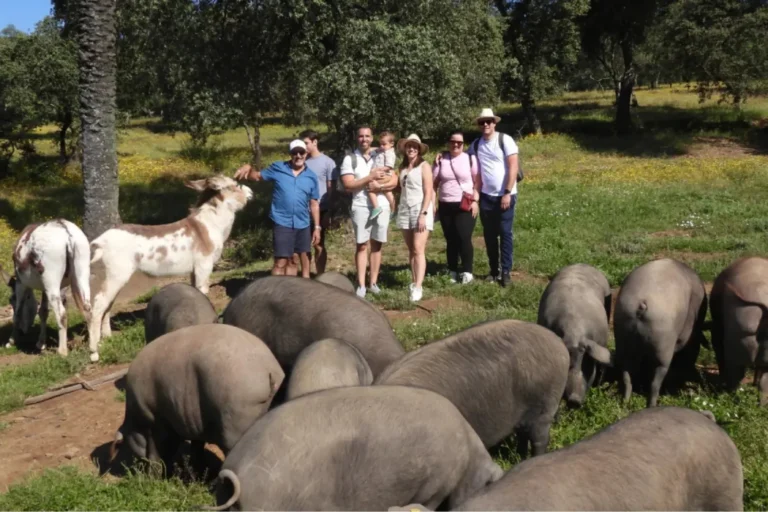
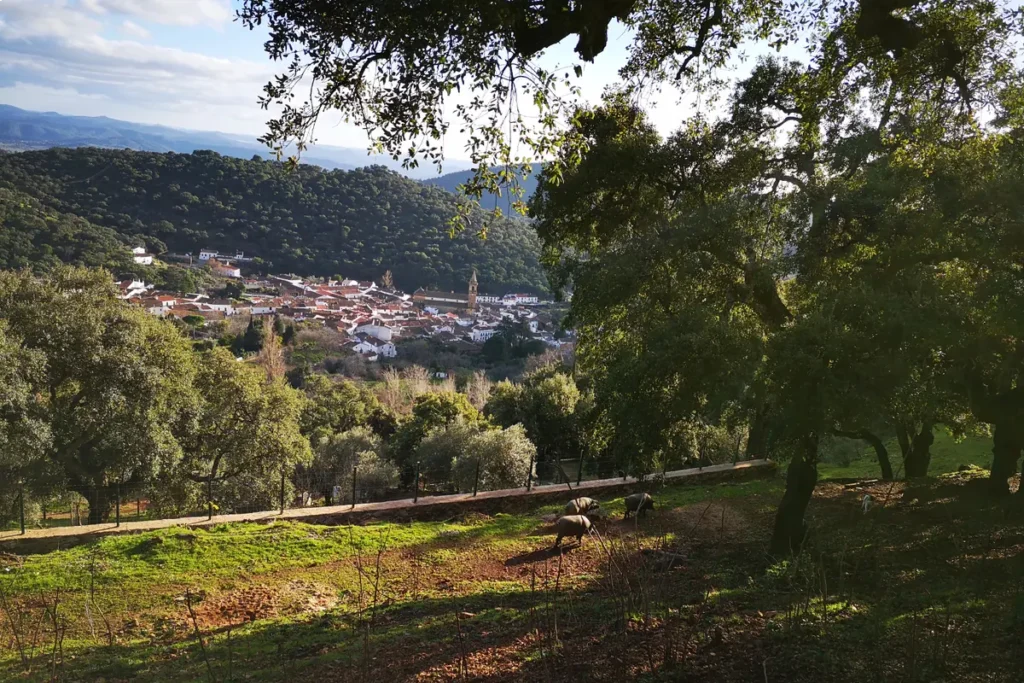
The panoramic route crosses a UNESCO Biosphere Reserve of holm and cork oaks grazed by Iberian pigs, stopping at places like the tenth-century mosque of Almonaster la Real, one of the very few rural mosques still standing in Spain, and the Pena de Arias Montano above Alajar. There is free time to eat in one of the villages.
Riotinto
Then the landscape changes completely. Riotinto has been mined for around five thousand years, by Tartessians, Romans and finally by a British company that took the river’s name and became a mining multinational. What is left is an open pit cut in terraces out of red and ochre rock, on a scale that is hard to photograph.
The river that is not what it looks like
The Rio Tinto runs deep red and is acidic enough to dissolve metal, and the usual assumption is that mining did it. It did not, or not entirely: bacteria living on the sulphide minerals underground have been acidifying this water for millions of years. NASA studies the river because the conditions resemble those on Mars.
Important: the order and format of the route may vary depending on the time of year, the weather, road conditions and each town’s local holidays. Your guide will organize the day in whatever way works best for the group.
Your questions answered
Frequently asked questions
Yes. Entry to the Gruta de las Maravillas in Aracena is included and you go in with the group.
The mining landscape: the open-pit workings, the red rock and the river itself. The visit is to the area and its scenery. Any separate ticket, such as a museum or the mining railway, is not included in the price.
Both go to Aracena, the cave and the sierra. This one continues to the red mining country of Riotinto; the other swaps that for a visit to the pasture where the Iberian pigs are reared. Pick by whether the mines or the ham interest you more.
No. The water is naturally acidic, with a pH somewhere between vinegar and battery acid depending on the stretch, and it is heavy with dissolved iron. It will stain clothing and irritate skin. Photograph it and keep your hands out.
Around ten hours. The exact departure time for your date appears in the booking calendar.
No. There is a stop with free time for lunch in one of the towns, at a local bar or restaurant, on which your guide can make recommendations, or you can bring your own picnic.
Spanish, English, French and Italian. You choose when you book. Usually the guide runs the day in one language, although it is sometimes run in two at once, with the guide alternating between them.
From central Seville. There are three pick-up points and the booking calendar shows which ones are available on your date. The pick-up point is also the drop-off point.
Yes, round trip. You travel in a comfortable, air-conditioned vehicle, van, minibus or coach, depending on how many travelers have booked for that date. Some have a toilet on board; if yours does not, you can ask your guide to stop at a service area.
It depends on the bookings for each date, and groups are usually small. In high season the group is split into two or more subgroups: as a rule, groups are no larger than 30 people. If you would rather not share the vehicle with anyone, you can book it as a private group.
A moderate amount. The cave is a walk of about a kilometre on made paths with steps and slopes, the villages are on hillsides, and the mining area is walked on uneven ground.
Yes, and there is a reduced rate for children. The cave and the Martian landscape at Riotinto tend to go down well. Keep younger children away from the water.
We would not recommend it. The visits are made entirely on foot and much of the route is over uneven, cobbled ground.
Yes. Cancellation is free up to 24 hours before the activity.
Planning your visit to Riotinto and the sierra
Practical questions about the mines and the river, useful background before you travel.
Dissolved iron. The water carries iron in solution at a concentration high enough to colour it, and the pH sits between about 1.5 and 3, which keeps the iron dissolved instead of settling out. The colour shifts from orange to deep red along its course.
Less than everyone assumes. Five thousand years of mining have certainly left their mark, but researchers have shown the acidity is largely natural: an underground community of bacteria feeding on the sulphide minerals of the Iberian Pyrite Belt has been acidifying this water for far longer than anyone has been digging here.
Because the chemistry matches Mars. The river is full of jarosite and related iron sulphates, the same minerals the Opportunity rover identified at Meridiani Planum. If life can survive in this water, it tells us something about where to look on Mars, and NASA has run drilling projects here to find out.
Around five thousand years. Copper was taken from here in the Chalcolithic, the Tartessians and Phoenicians worked it, and the Romans mined silver on an industrial scale with slave labour. It was abandoned for centuries and reopened in 1873 by a British consortium, which took the river’s name and grew into one of the largest mining companies in the world.
A rocky outcrop above the village of Alajar with a sixteenth-century hermitage on it and a long view over the sierra. It is named after Benito Arias Montano, the humanist and royal chaplain to Philip II, who retreated here to work.
A small tenth-century mosque built on a hilltop inside an older fortress, later used as a church and never demolished. It is one of the very few rural mosques left standing anywhere in Spain, with its original horseshoe arches and mihrab intact.
About 80 kilometres northwest, a little over an hour by road. Aracena is a similar distance to the north, and the two sit close enough together to combine in one day.
A great deal, but nothing you can see. No fish, no plants, but an unusually rich community of acidophilic microorganisms, algae and fungi that thrive in the acid and are the reason the river is studied at all. Around eighty per cent of the species found there are eukaryotes.