


Everything you need to know
Multi-day trip details
This trip runs in two versions, of three days or four days, and they are priced differently. The figure shown here is the adult rate for the three-day option; the four-day version costs more.
To see the current price for each rate and each length, select your preferred date and option in the booking calendar. The price shown in the calendar is always the final price.
Check the available days and times directly in the booking calendar: it updates in real time according to the season.
There are three pick-up points in central Seville. The one you choose is also where the trip ends.
C. Trajano 6, Casco Antiguo, 41001 Seville · View on Google Maps
C. Zaragoza 1, Casco Antiguo, 41001 Seville · View on Google Maps
C. Rastro 12A, 41003 Seville · View on Google Maps
Not every pick-up point is available on every date: the booking calendar shows which ones you can choose and the exact time. We recommend arriving with time to spare.
A valid passport is compulsory. A national ID card is not enough to enter Morocco, and the hotels require an identity document from every guest at check-in.
You must provide the full name and passport number of every traveler at the time of booking.
Most visitors do not need a visa: citizens of the European Union, the United Kingdom, the United States, Canada, Australia, New Zealand, Japan and most Latin American countries can enter for up to 90 days without one. The official Moroccan government portal tells you in one step what your nationality needs.
Transfer from Seville to Tarifa and back, and the fast ferry between Tarifa and Tangier in both directions.
Road transport inside Morocco between the cities on the route.
Hotel accommodation with breakfast for every night, in a 4 star hotel in Tangier and in riads in the other cities, or similar establishments.
A guided day in Tangier with lunch included.
On the four-day version, guided visits to Chefchaouen and Tetouan with lunch included on both.
On the three-day version, the days in Chefchaouen are free rather than guided.
Dinners and drinks are not included on either version.
Your passport, above everything else. You need it at the border and at every hotel.
Pack light. You change accommodation each night and the medinas are walked on foot.
Comfortable footwear with grip. Chefchaouen is built on a mountainside and its lanes are steep and worn smooth.
The local currency is the dirham and it cannot be bought outside Morocco. Hotels take cards; the souks do not.
Modest dress is worth the small effort inland: Chefchaouen and Tetouan are considerably more traditional than Tangier.
A layer for the evening. Chefchaouen sits high in the Rif and is cold at night even in summer.
Free cancellation up to 24 hours before the activity. You can cancel from the confirmation email you receive when you book.
The best-rated guide to Seville
First-hand local advice, more than 90 pages in PDF: what to see, where to eat, museums and palaces, day trips, opening hours and prices, and tourist maps of the city. Book any activity with us and it’s yours. Get the guide
 Eduardo BallesterosSeville local and author of the guide
The multi-day trip
Past the port city, into the Rif
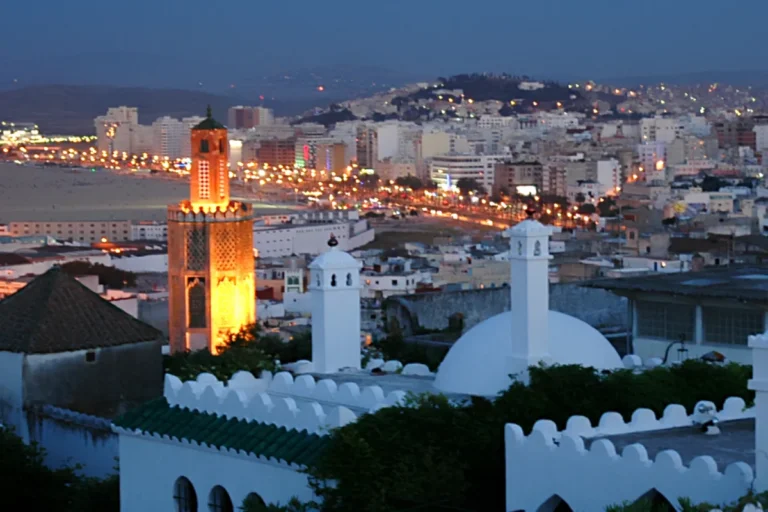
Almost everyone who crosses the Strait sees Tangier and turns round. This trip carries on inland, to a town painted entirely blue on the side of a mountain, and to a walled medina that UNESCO calls one of the most complete in North Africa.
Day one: across to Tangier
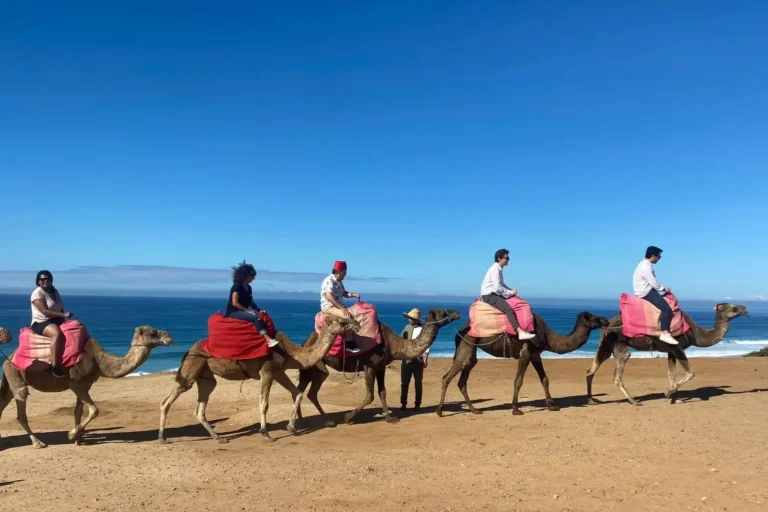
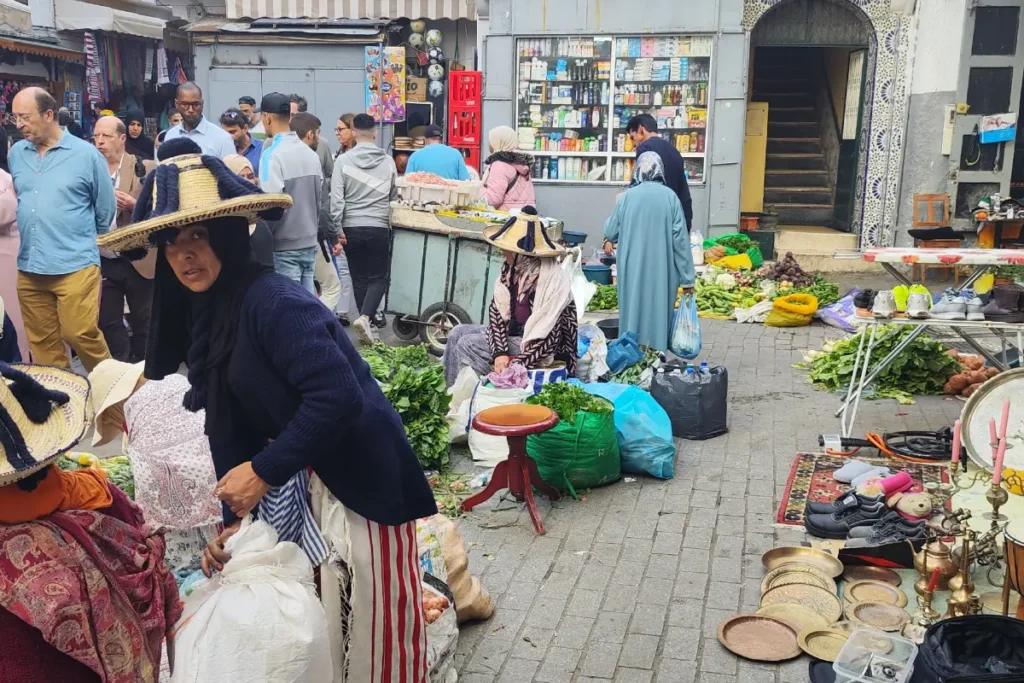
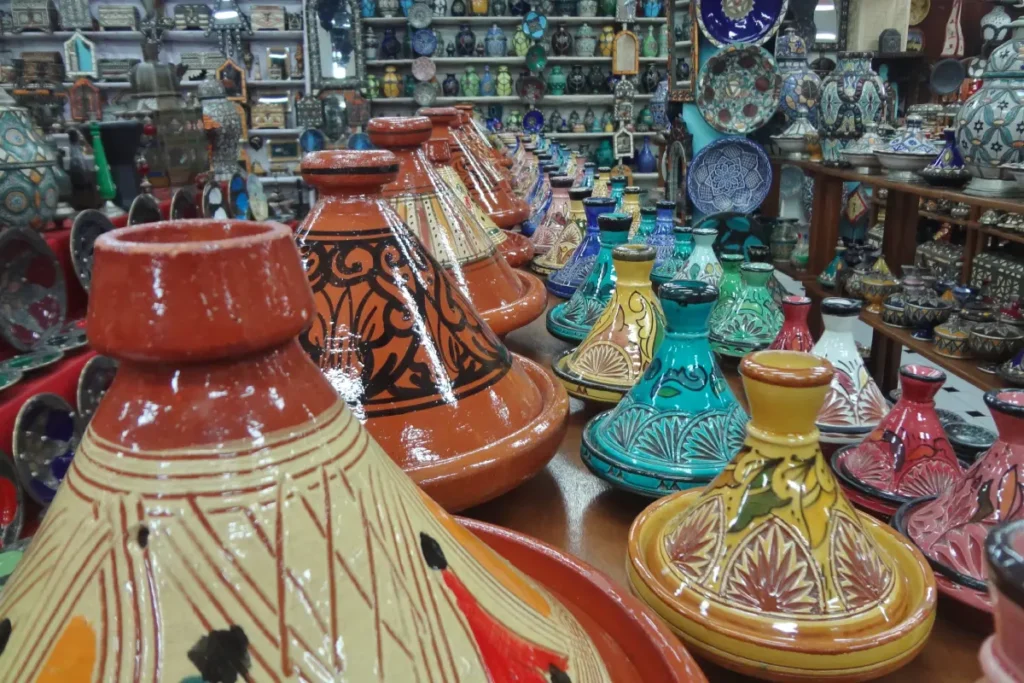
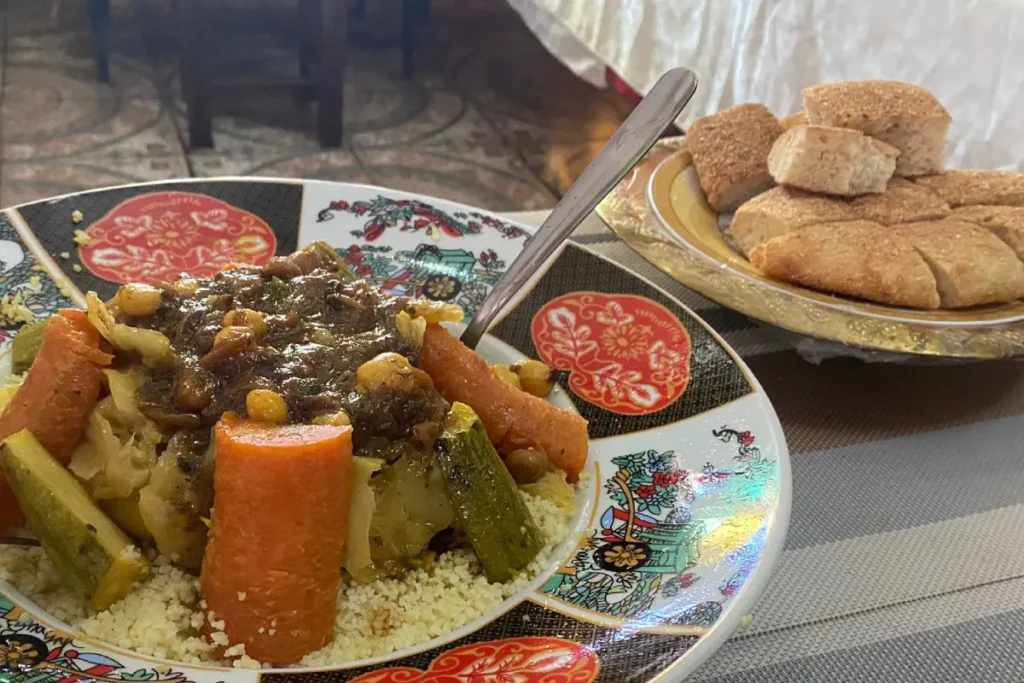
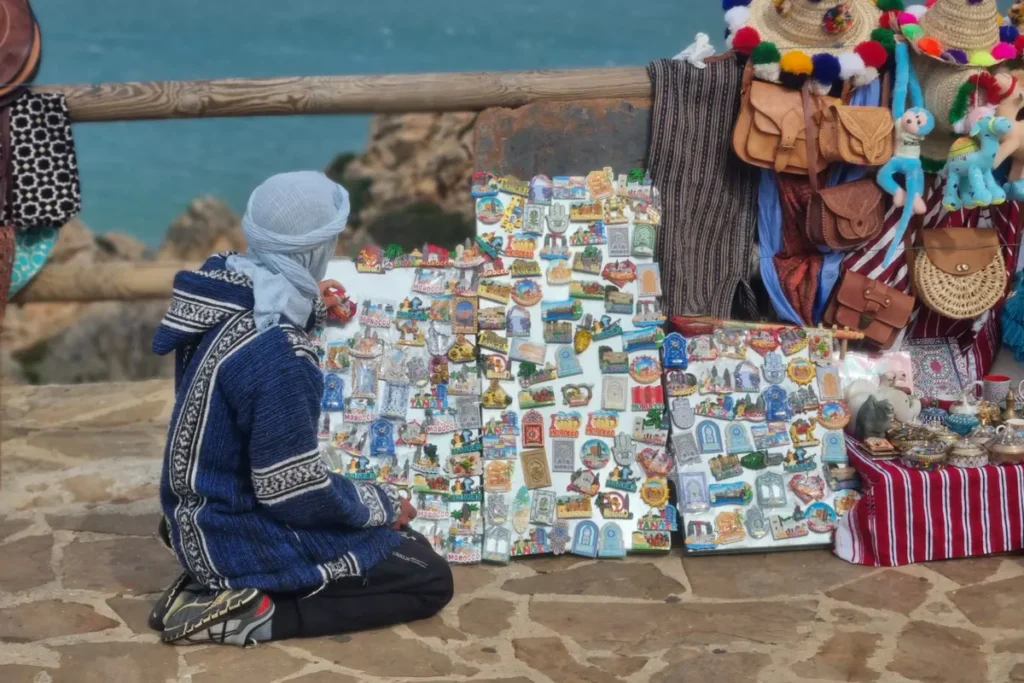
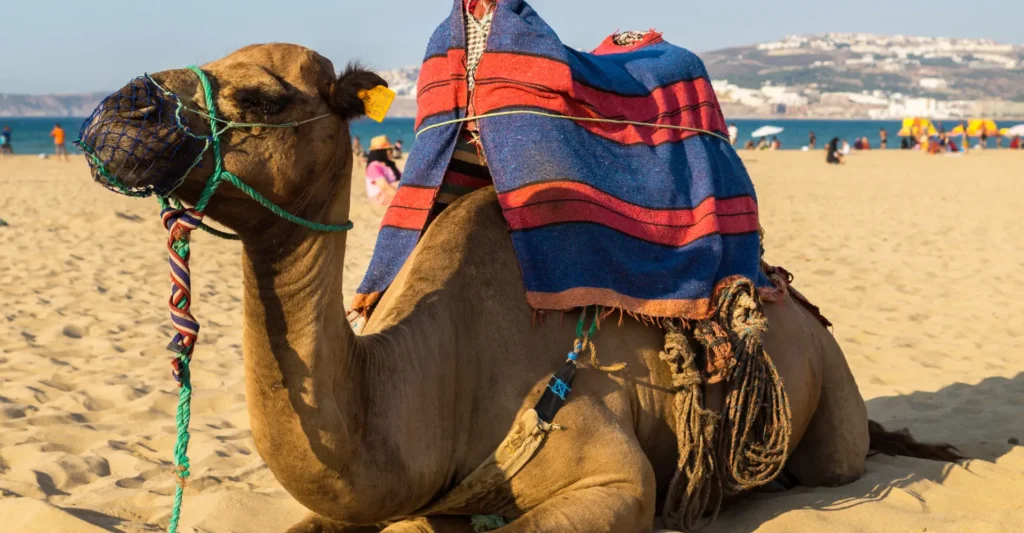
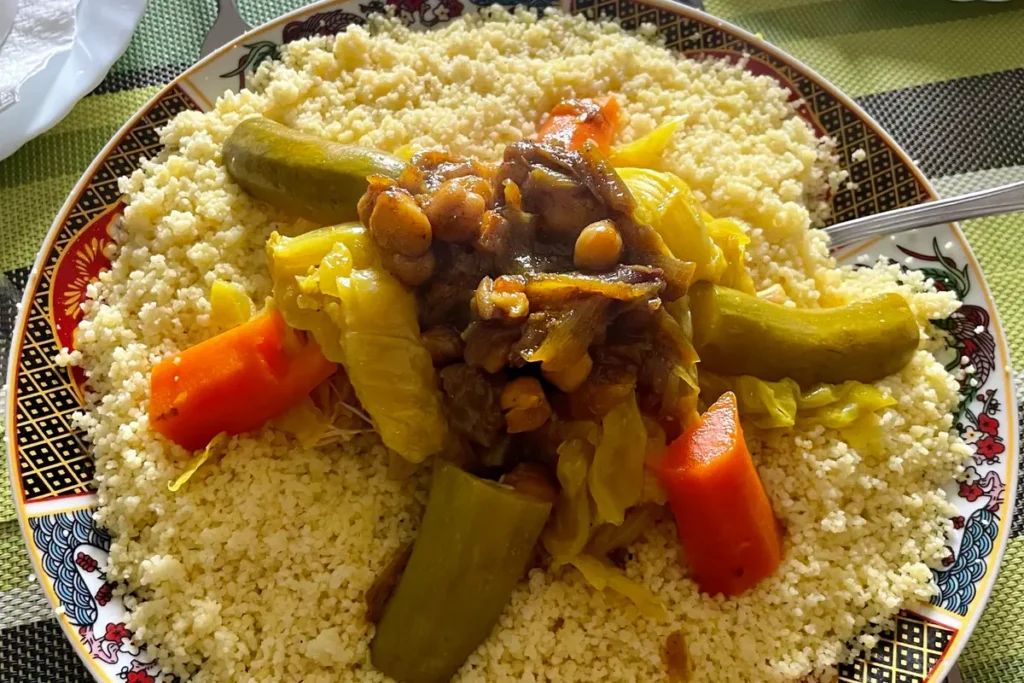
From Seville to Tarifa and over on the fast ferry. The day in Tangier is guided: the coast and the Caves of Hercules, with free time to go inside or take a camel ride, then the Kasbah and the medina on foot, a traditional Moroccan lunch and time in the souk. The night is in a 4 star hotel by the port.
Chefchaouen, the blue town
The second day climbs into the Rif mountains to Chefchaouen, where every wall, step and doorframe is painted in shades of blue. Nobody entirely agrees why. The accommodation is a riad in the old town, and on the four-day version there is a guided visit with lunch; on the three-day version the time is yours.
Tetouan, on the longer version
The four-day trip continues to Tetouan, a city rebuilt by Andalusians expelled from Granada, whose walled medina is a UNESCO World Heritage Site and is still lived in rather than curated. There is a guided visit with lunch, and a night in a riad there.
The crossing home
The last morning returns to Tangier for the ferry to Tarifa and the drive back to Seville. How the middle days are arranged depends on which of the two versions you book.
Important: the order and format of the route may vary depending on the time of year, the weather, road conditions and each town’s local holidays. Your guide will organize the trip in whatever way works best for the group.
Your questions answered
Frequently asked questions
Three days give you a guided day in Tangier and then free time in Chefchaouen. Four days add guided visits to Chefchaouen and to Tetouan, both with lunch, and a third night. If you want the Rif explained rather than simply wandered, take the four.
Yes, every night, with breakfast. A 4 star hotel in Tangier and riads in the other cities, or similar establishments. Rooms are allocated by the operator; if you want one to yourself a single supplement applies.
Breakfast every morning, and lunch on the guided days: the day in Tangier on both versions, plus Chefchaouen and Tetouan on the four-day one. Dinners and drinks are at your own expense.
Yes. Morocco is outside the European Union and a national ID card is not accepted. You also have to give the full name and passport number of every traveler when you book, and each hotel requires the document at check-in.
Spanish and English only on this route, unlike most of our trips. You choose when you book.
From central Seville. There are three pick-up points and the booking calendar shows which ones are available on your date. The pick-up point is also the drop-off point.
On the four-day version, yes: Tangier, then Chefchaouen, then Tetouan. It is one of the reasons to pack light. The three-day version stays in Chefchaouen for the middle nights.
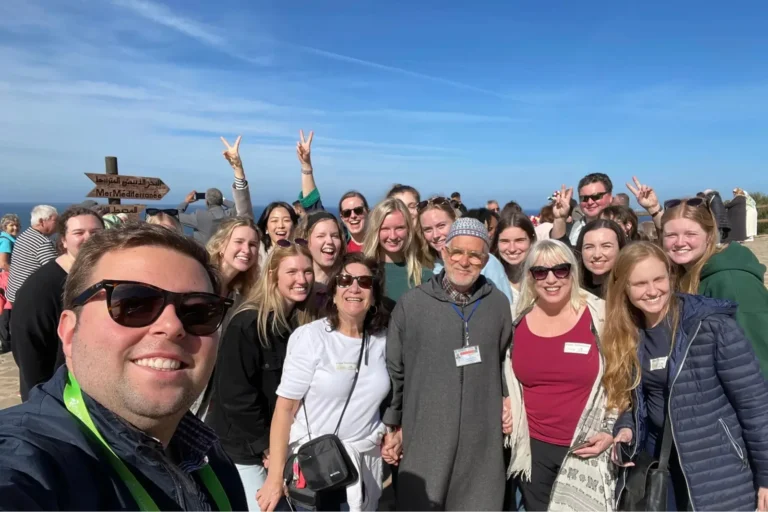
It depends on the bookings for each date, and groups are usually small. In high season the group is split into two or more subgroups: as a rule, groups are no larger than 30 people.
A good deal, and Chefchaouen is the demanding part: the town is built on a mountainside and the medina is all steps and slopes, worn smooth by centuries of use. Tangier and Tetouan are flatter but still walked on foot.
Yes, and there is a reduced rate for children. It is a slower trip than a day excursion, which helps, but it involves several changes of hotel and a lot of walking. Children need their own passport.
We would not recommend it. The medinas cannot be entered by vehicle, the streets of Chefchaouen are steps cut into a hillside, and riads are old buildings with stairs rather than lifts.
Yes. Cancellation is free up to 24 hours before the activity.
Planning your trip into northern Morocco
Practical questions about the cities on the route, useful background before you travel.
Nobody agrees, which is part of the appeal. The most repeated explanations are that Jewish refugees arriving in the 1930s brought the custom, that blue repels mosquitoes, or that it simply keeps the walls cooler. What is certain is that the practice spread through the whole medina and is now maintained deliberately.
In the Rif mountains of northern Morocco, at around 600 metres, beneath two peaks that give the town its name: chefchaouen means look at the horns. It is roughly 110 kilometres from Tangier, about two and a half hours by road through the mountains.
A city of about 400,000 people at the foot of the Rif, rebuilt from the fifteenth century by Muslims and Jews expelled from Granada, which is why its architecture looks Andalusian. Its medina was listed by UNESCO in 1997 as one of the most complete and least altered in North Africa.
A traditional house built around an interior courtyard, usually with a fountain and often with a roof terrace, and turned inwards so that the street sees only a plain wall and a door. Many have been converted into small hotels, which is the most atmospheric way to stay in a Moroccan medina.
The mountain range that runs along Morocco’s Mediterranean coast, rising to over 2,400 metres. It is greener and wetter than most people expect of Morocco, with cedar and cork oak forest, and it has historically been the most independent-minded region of the country.
More covered than in Tangier. Chefchaouen and Tetouan are traditional towns where visitors are a small minority, and shoulders and knees covered is the sensible default for everyone. It is a matter of courtesy rather than a rule, and it draws less attention.
Wool. The Rif has its own weaving tradition and the blankets, cloaks and rugs sold in the medina are made in the villages around the town. Goat cheese from the mountains is the other local speciality, and unusual in Morocco.
Spring and autumn. Chefchaouen is high enough to be cold from December to February and can have snow on the peaks, while July and August are hot on the coast though still bearable in the mountains. April, May, September and October are the comfortable months.