



Everything you need to know
Two-day trip details
To see current prices for each rate (adults, children, students and infants), select your preferred date in the booking calendar. The price shown in the calendar is always the final price.
Check the available days and times directly in the booking calendar: it updates in real time according to the season.
You are picked up at your hotel or accommodation in central Seville, and dropped off there at the end. If the vehicle cannot reach your address, the pick-up is at the nearest accessible point.
Pick-up at your accommodation is only available if you are staying in central Seville. If you are staying outside it, choose C. Rastro 12A, 41003 Seville as your pick-up point when you book and make your own way there. · View on Google Maps
Once you have booked, the exact time and pick-up point are confirmed with you by email or telephone. We recommend being ready a few minutes early.
Bring your passport or national ID card. The hotel requires an identity document from every guest at check-in; it is a legal obligation in Spain and Morocco and there is no way around it.
Rooms are allocated by the operator. If you are travelling alone or want a room to yourself, a single supplement applies and is arranged at the time of booking.
Round-trip transport from Seville and a specialist guide for both days.
One night in rural accommodation in the village of El Rocio.
A tour of the different ecosystems of the park across two days: marshland, gallery forest, dunes, beach and woodland.
A 4×4 route inside a restricted area of the National Park, which cannot be entered on your own.
Binoculars for wildlife watching.
Food and drink are not included. There are breaks for meals and your guide can recommend where to eat.
The order of the visits may change depending on the group, the tides, the season or where the animals have been moving.
Bring a swimsuit and a towel. The route reaches the beach on the first afternoon and, weather permitting, there is time to swim.
Pack light. One night means one small bag, and you carry it in and out of the accommodation yourself.
Comfortable footwear you do not mind getting sandy, and a layer for the evening: El Rocio is quiet and open and it cools down after dark.
Sun protection and a hat. The marsh and the dunes have almost no shade.
Binoculars are provided, but bring a camera with some zoom if you have one.
The best wildlife watching is at first and last light, which is the real argument for staying the night.
Free cancellation up to 24 hours before the activity. You can cancel from the confirmation email you receive when you book.
The best-rated guide to Seville
First-hand local advice, more than 90 pages in PDF: what to see, where to eat, museums and palaces, day trips, opening hours and prices, and tourist maps of the city. Book any activity with us and it’s yours. Get the guide
 Eduardo BallesterosSeville local and author of the guide
The two-day trip
Two days in the largest roadless wilderness in Western Europe
One day in Donana shows you the park. Two days let you be there when the animals are actually moving, at dawn and at dusk, and put you in a village of sand streets for the night in between. It is the same wilderness, seen properly.
Day one: the marshes and El Rocio
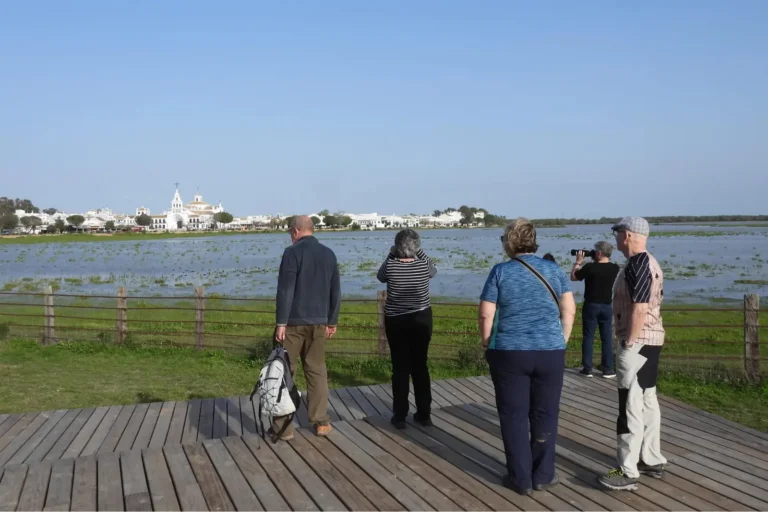
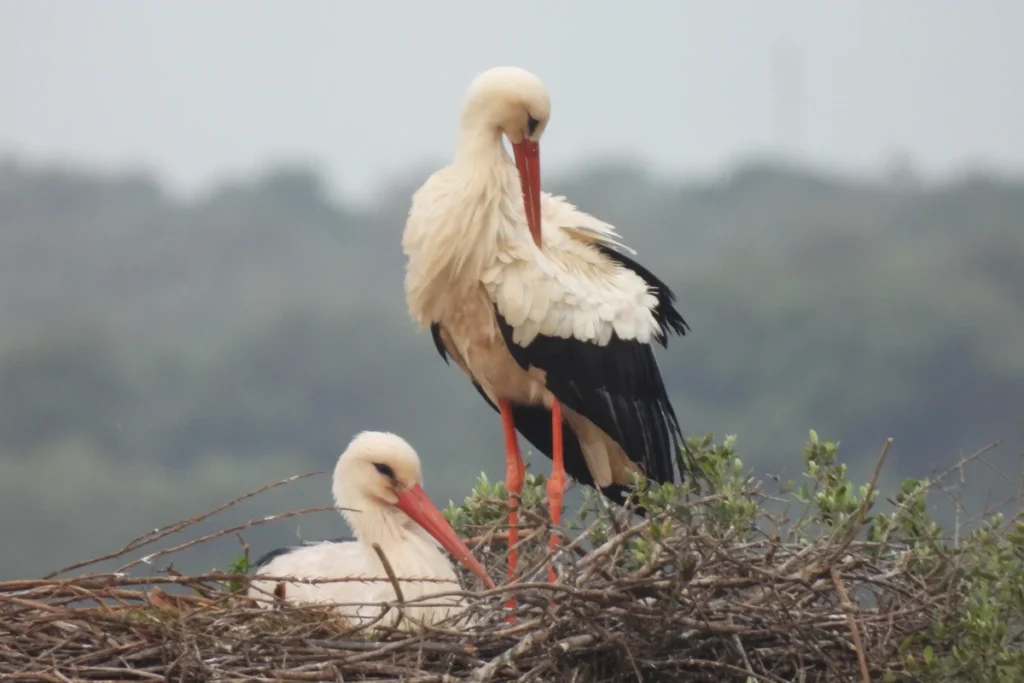
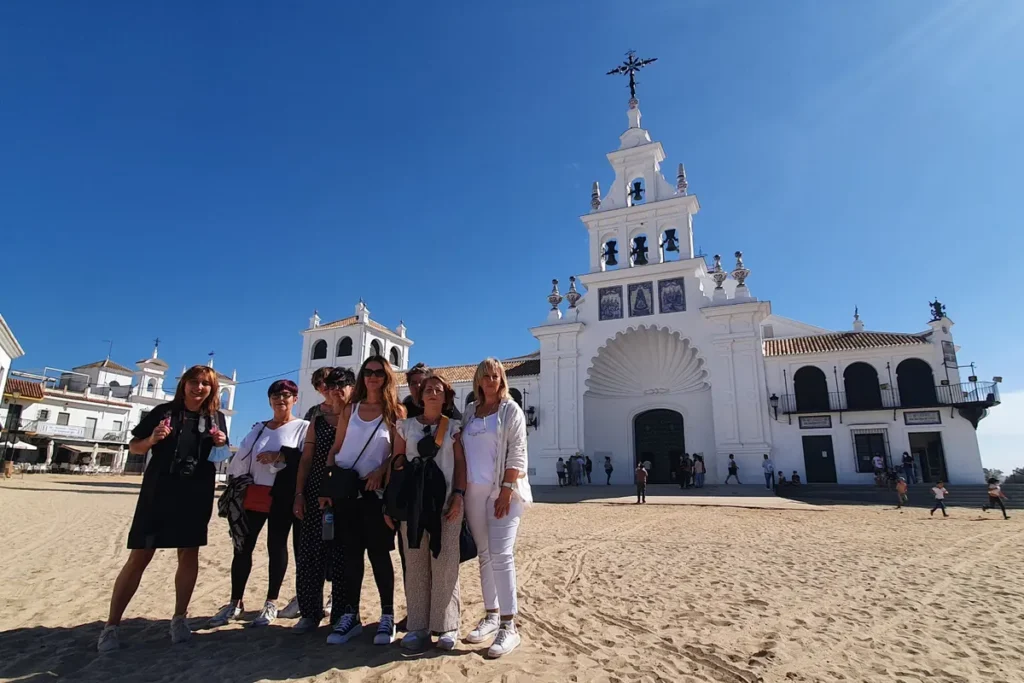
The first stop is the wetland in the northern part of the park, where rice fields and marsh meet and hundreds of birds feed within sight. From there the route reaches El Rocio, a village with sand instead of asphalt, hitching rails outside the houses, and a sanctuary at its centre that draws around a million pilgrims each spring.
Gallery forest and the beach
In the afternoon comes another ecosystem: the gallery forest along the Rocina stream, walked on a circular route, and then the coast. The beach at Donana runs for more than thirty kilometres without a building on it, backed by dunes that move several metres a year. Weather permitting there is time for a swim before returning to El Rocio for the night.
Day two: the lynx and the woodland
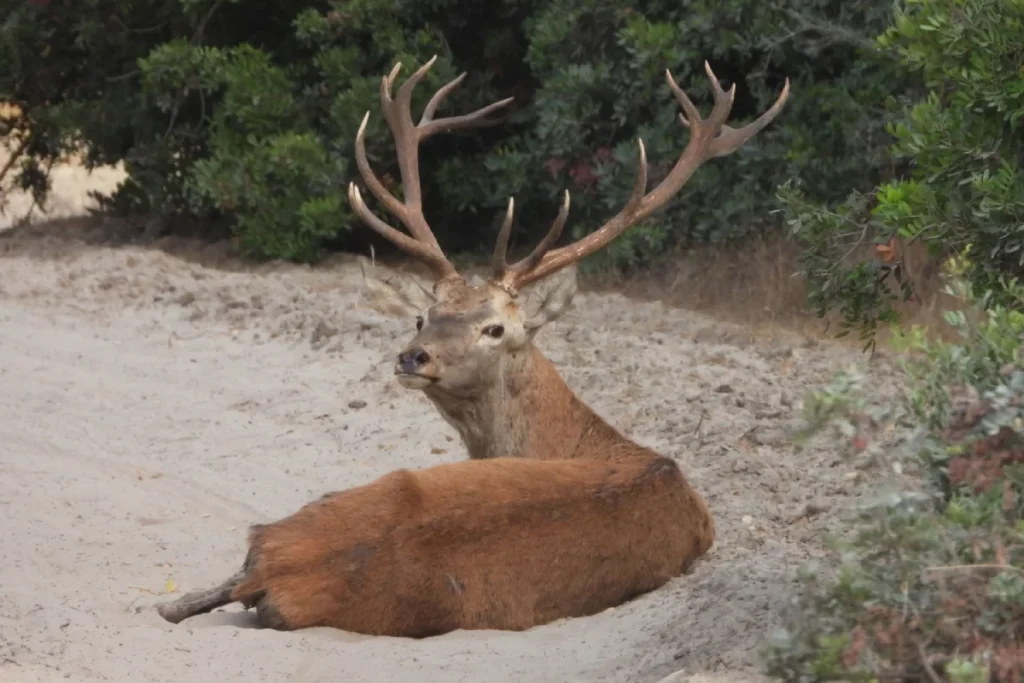
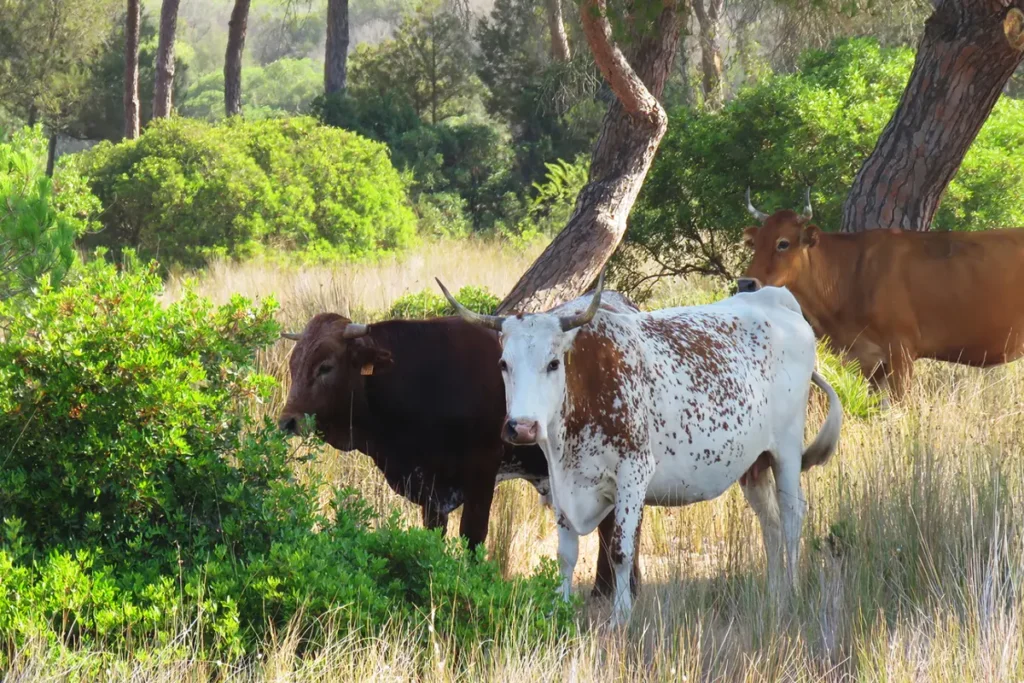
The second day starts at the Acebuche, where the Iberian lynx breeding programme has run for years, and then goes into the most wooded of the restricted areas. This is the part closed to private vehicles and the best chance of seeing deer, wild boar and, with a great deal of luck, the animal the park is famous for.
Lunch, and the road home
The trip closes with a meal and a rest before the drive back to Seville. Meals are not included, which leaves you free to eat where you like, and your guide knows which bars in El Rocio are worth the walk.
Important: the order and format of the route may vary depending on the time of year, the weather, road conditions and each town’s local holidays. Your guide will organize the trip in whatever way works best for the group.
Your questions answered
Frequently asked questions
Yes. One night in rural accommodation in El Rocio is included in the price. Meals are not.
Probably not, and nobody can promise it. Two days give you more chances than one, because you are out at dawn and dusk and you go into the wooded restricted area, but sightings remain rare. The visit to the Acebuche breeding centre is about the conservation programme, not a guaranteed sighting.
It is a different thing rather than a better one. The day trip covers the main ecosystems and gets you back to Seville the same evening. This adds the woodland restricted area, the lynx centre, and above all the early and late hours, which is when the animals move.
Rural accommodation in El Rocio itself, which is a village of low whitewashed houses and sand streets rather than a resort. Rooms are allocated by the operator; if you want a room to yourself a single supplement applies.
No. There are breaks for lunch on both days and dinner in El Rocio on the first evening, all at your own expense. Your guide can recommend where to go.
Usually yes on the first afternoon, weather permitting, so bring a swimsuit. The beach is undeveloped, which means no lifeguards and no facilities, and the Atlantic here has a current.
Spanish, English, French and Italian. You choose when you book. Usually the guide runs the day in one language, although it is sometimes run in two at once, with the guide alternating between them.
You are picked up at your hotel or accommodation in central Seville, and that is also where the trip ends. After you book, the exact time and pick-up point are confirmed with you by email or telephone. If you are staying outside central Seville, choose C. Rastro 12A as your pick-up point instead and make your own way there.
Yes, round trip. You travel in a comfortable, air-conditioned vehicle, van, minibus or coach, depending on how many travelers have booked for that date. Some have a toilet on board; if yours does not, you can ask your guide to stop at a service area.
It depends on the bookings for each date, and groups are usually small. In high season the group is split into two or more subgroups: as a rule, groups are no larger than 30 people.
Moderate and spread over two days. There is a circular walk in the gallery forest on level ground, some walking on sand at the dunes, and short stops elsewhere. Most of the distance is covered in the vehicle.
Yes, and there is a reduced rate for children. Two days at an unhurried pace, with animals and a beach, usually works better for younger travelers than a single long day.
Partly. The driving and the birdwatching stops are manageable, but the forest walk and the dunes are on soft uneven ground, and El Rocio itself has sand streets rather than pavements.
Yes. Cancellation is free up to 24 hours before the activity.
Planning two days in Donana
Practical questions about the park and the village, useful background before you travel.
A captive breeding centre inside the park, opened in the 1990s, that became the backbone of the effort to save the Iberian lynx. Animals bred there have been released across Andalusia, Extremadura and Portugal. It is a research facility rather than a zoo, so what visitors see is the setting and the story rather than guaranteed animals.
The strip of woodland that follows a watercourse through otherwise open country, fed by groundwater rather than rain. Along the Rocina stream it means ash, willow, alder and bramble, dense and shaded, and a completely different set of birds from the marsh a few hundred metres away.
Because nothing holds them. The prevailing southwesterly pushes sand inland in long ridges that advance several metres a year, burying the pine woods behind them and then uncovering the dead trunks as they pass on. The result is a landscape that has swallowed and released the same forest repeatedly.
The resort town at the eastern end of the Donana coast, and effectively the only development on that stretch. West of it the beach runs unbroken for more than thirty kilometres inside the protected area, which is what makes it the longest undeveloped coastline in Spain.
It depends which birds. Waterfowl arrive from northern Europe from October and stay until February, which is when the marsh is fullest. Spring brings the breeding colonies and the passage migrants heading for Africa. Late summer is the quietest, because much of the marsh has dried out.
Yes, and it is an unusual place to do it. The village is almost empty most of the year, with hundreds of brotherhood houses shuttered until the pilgrimage, and a handful of small hotels and rural guesthouses that stay open. The streets are sand, so horses still have right of way.
It is. The marshes depend on an aquifer that has been drawn down by irrigation, particularly for berry farming on the park boundary, and by drought. The European Court of Justice ruled against Spain over it in 2021, and a plan to buy out and reforest some of the surrounding farmland was agreed in 2023. It remains the central issue for the park.
About 80 kilometres southwest, a little over an hour by road. The northern edge of the park is closer still, which is why the first stops come early in the day.