

Everything you need to know
Two-day trip details
To see current prices for each rate (adults, children, students and infants), select your preferred date in the booking calendar. The price shown in the calendar is always the final price.
Check the available days and times directly in the booking calendar: it updates in real time according to the season.
There are three pick-up points in central Seville. The one you choose is also where the trip ends.
C. Trajano 6, Casco Antiguo, 41001 Seville · View on Google Maps
C. Zaragoza 1, Casco Antiguo, 41001 Seville · View on Google Maps
C. Rastro 12A, 41003 Seville · View on Google Maps
Not every pick-up point is available on every date: the booking calendar shows which ones you can choose and the exact time. We recommend arriving with time to spare.
This trip crosses two international borders, into Gibraltar and into Morocco. A valid passport is compulsory and a national ID card is not enough.
You must provide the full name and passport number of every traveler at the time of booking, which Morocco requires.
Bring the passport itself: you need it at both borders and again at the hotel in Tangier.
Check whether your nationality needs a visa for Morocco. Most visitors do not, and the official Moroccan government portal tells you in one step. Gibraltar sets its own rules, which are not the same as the Schengen ones.
Border queues vary with the day and the season and are outside anyone’s control.
Round-trip transport from Seville, the transfer between Gibraltar and Tangier, and return ferry tickets between Tarifa and Tangier.
One night in a 4 star hotel in Tangier, on a bed and breakfast basis.
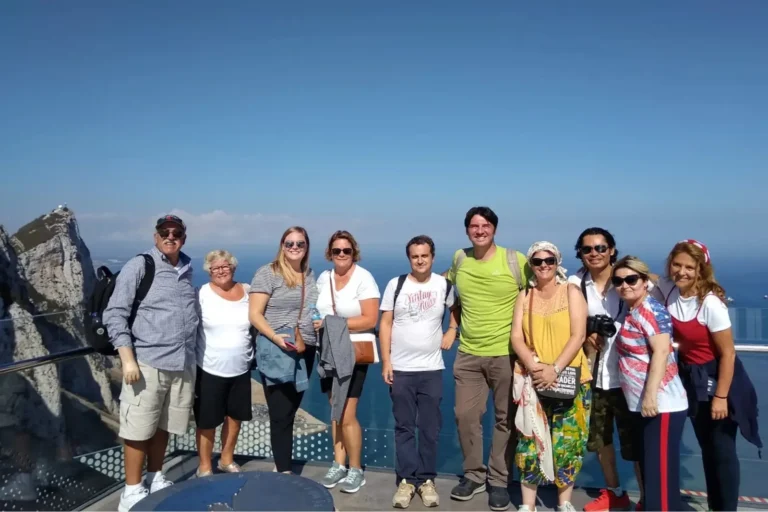
The Rock Tour in Gibraltar, with entry to the Nature Reserve, the viewpoint over the Strait, St Michael’s Cave and the Barbary macaques.
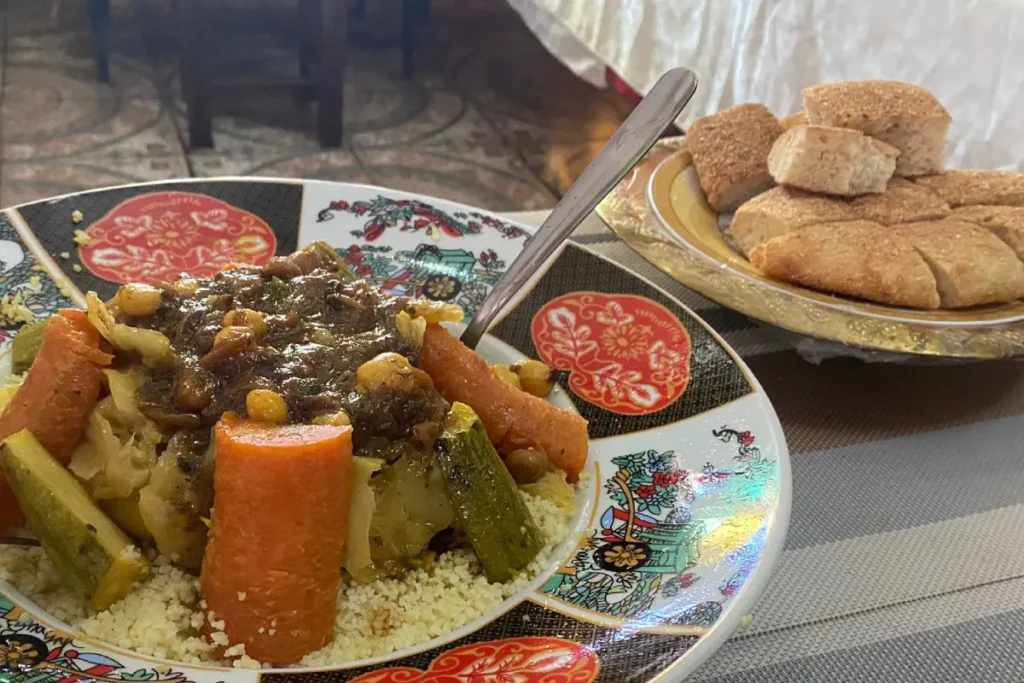
A guided tour of Tangier and one traditional Moroccan lunch, drinks excluded.
Not included: food in Gibraltar, dinner in Tangier, drinks, the camel ride, and the supplement for a single room, which is arranged when you book.
The order of the two countries depends on your date. Some departures start in Gibraltar and others in Tangier; the booking calendar shows which applies.
Your passport, above everything else. Check the night before that you have it.
Pack light. One night means one small bag, carried through two border controls and a ferry.
Comfortable footwear. Both cities are walked on foot, and the Rock is steep.
Three currencies are in play: euros in Spain, pounds in Gibraltar and dirhams in Morocco. Cards work in Gibraltar and in Moroccan hotels; the souk does not.
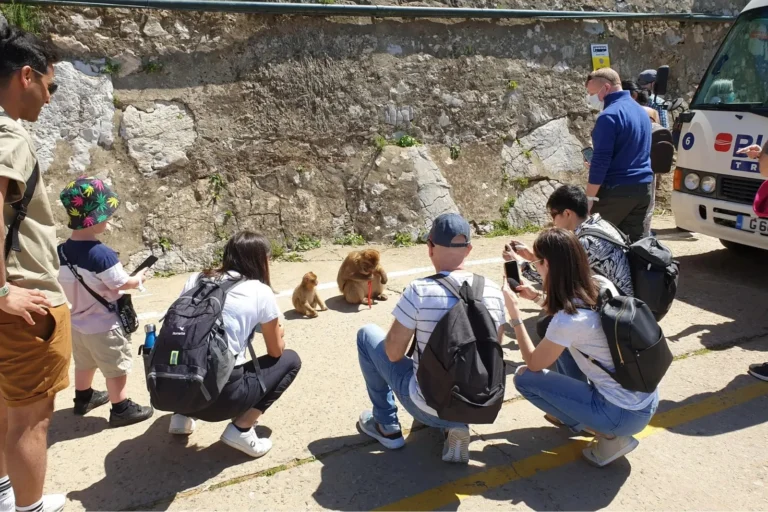
Do not feed or touch the macaques in Gibraltar. It is illegal there and carries a substantial fine.
Free cancellation up to 24 hours before the activity. You can cancel from the confirmation email you receive when you book.
The best-rated guide to Seville
First-hand local advice, more than 90 pages in PDF: what to see, where to eat, museums and palaces, day trips, opening hours and prices, and tourist maps of the city. Book any activity with us and it’s yours. Get the guide
 Eduardo BallesterosSeville local and author of the guide
The two-day trip
Spain, Britain and Morocco, in forty-eight hours
In two days this trip puts you in three countries, two continents and two seas, with a night in Africa in the middle. It sounds like a gimmick until you look at a map of the Strait and realise how little distance is involved.
Gibraltar and the Rock
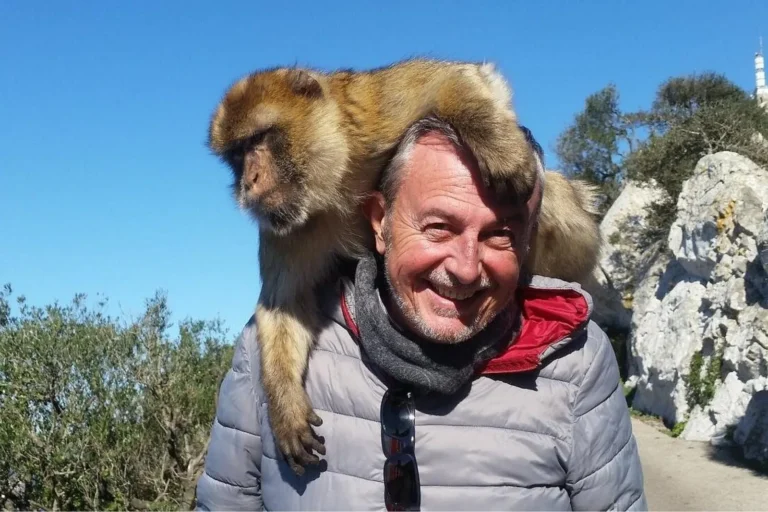
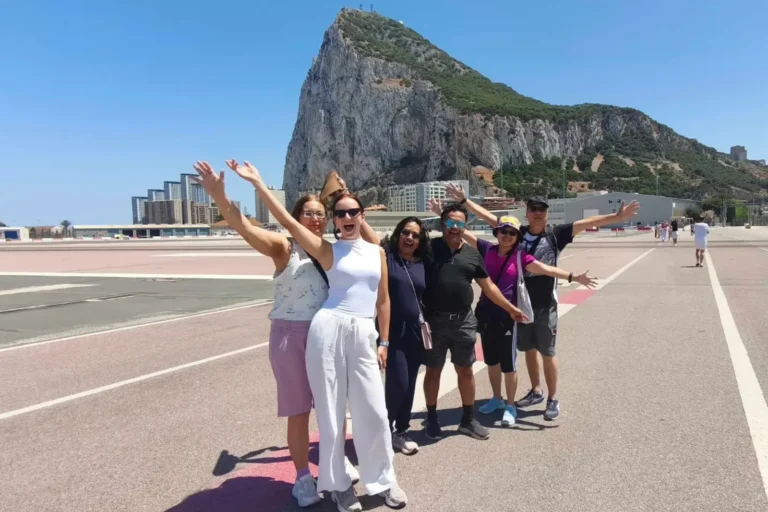
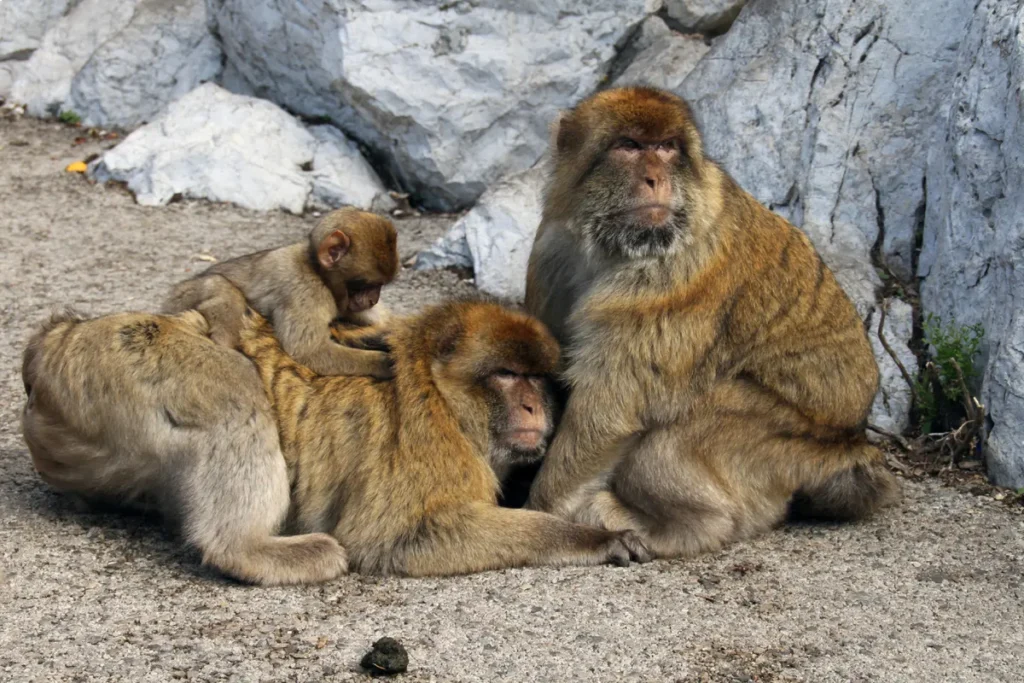
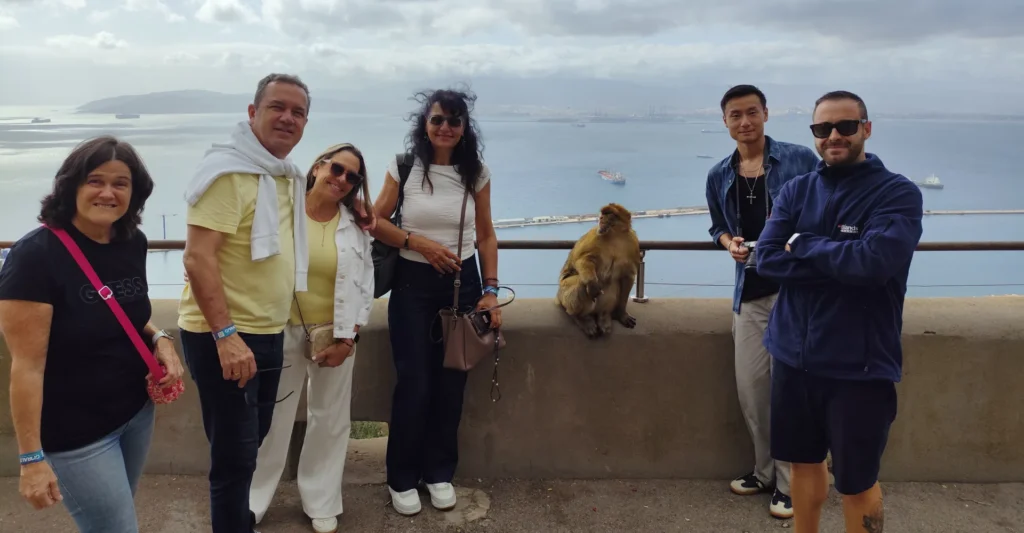
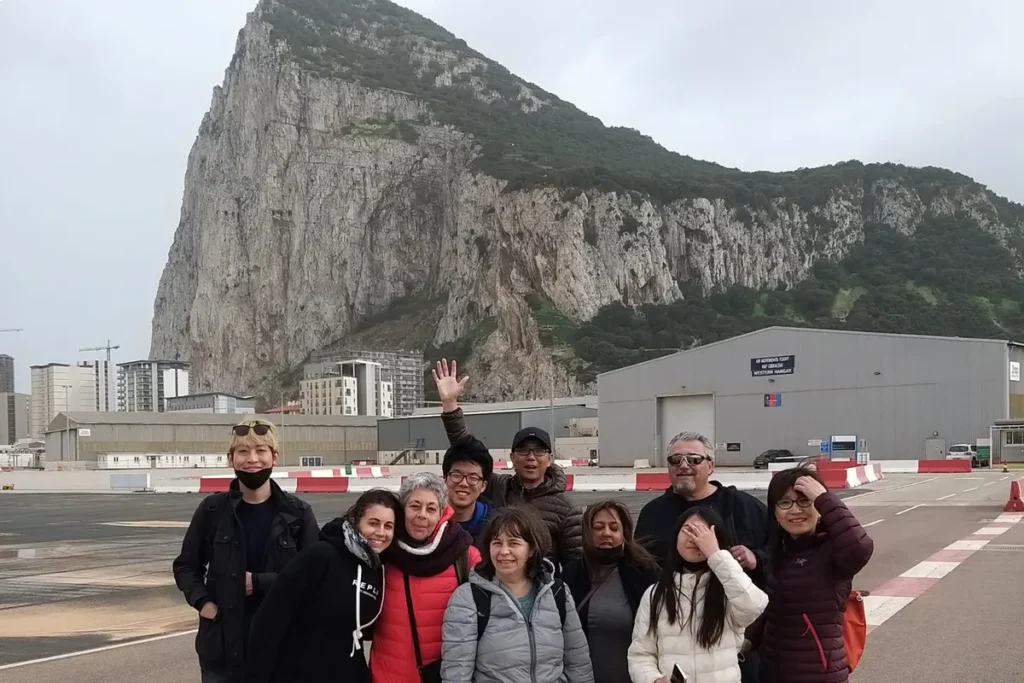
One of the two days is spent in Gibraltar: a British town attached to the south of Spain with a 426-metre block of limestone rising out of it. The Rock Tour goes up into the Nature Reserve for the viewpoint over the Strait, into St Michael’s Cave, and among the Barbary macaques, the only wild monkeys in Europe. There is free time afterwards on Main Street.
Across the water
The transfer runs between Gibraltar and Tarifa, and the fast ferry crosses to Tangier in about an hour. Somewhere in the middle of that crossing the Mediterranean becomes the Atlantic and Europe becomes Africa, which is a rare thing to be able to watch happen.
Tangier
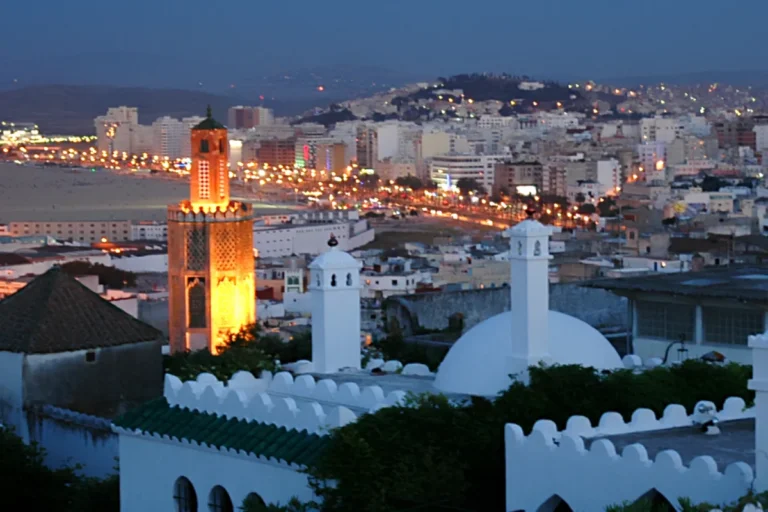
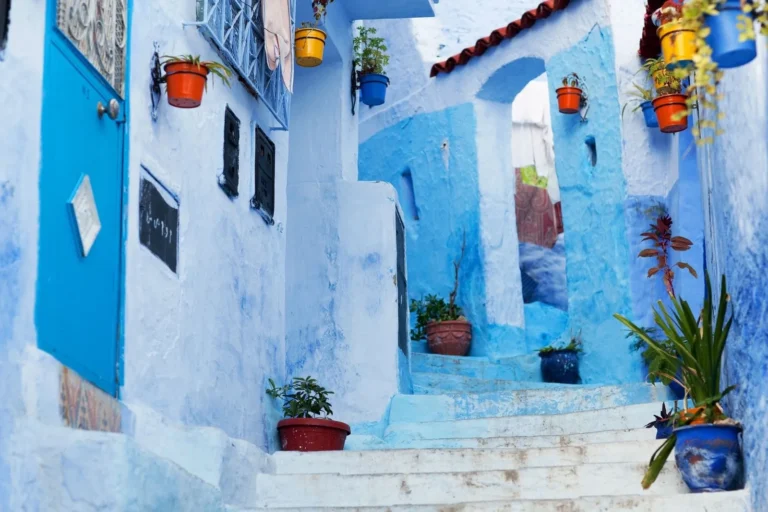
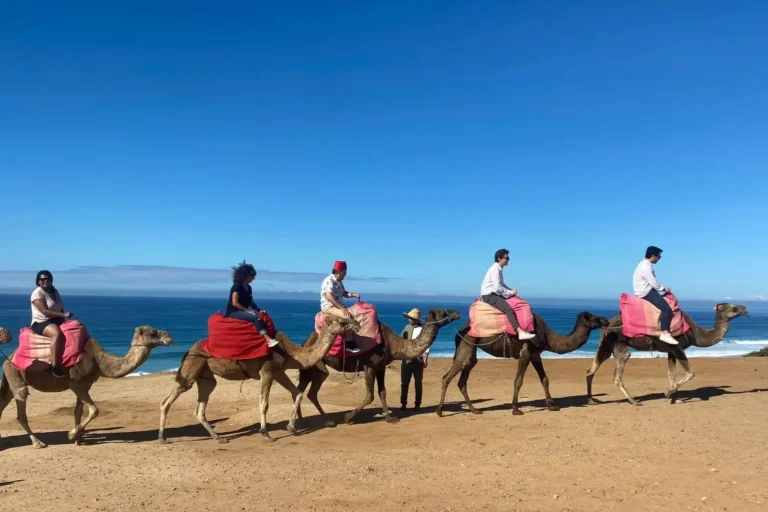
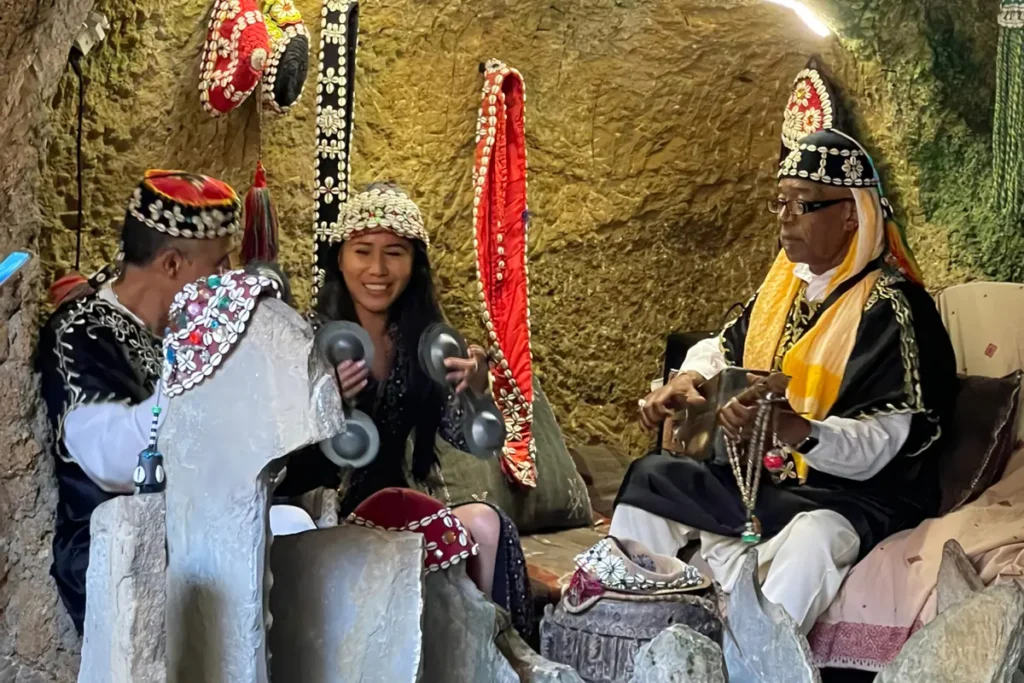
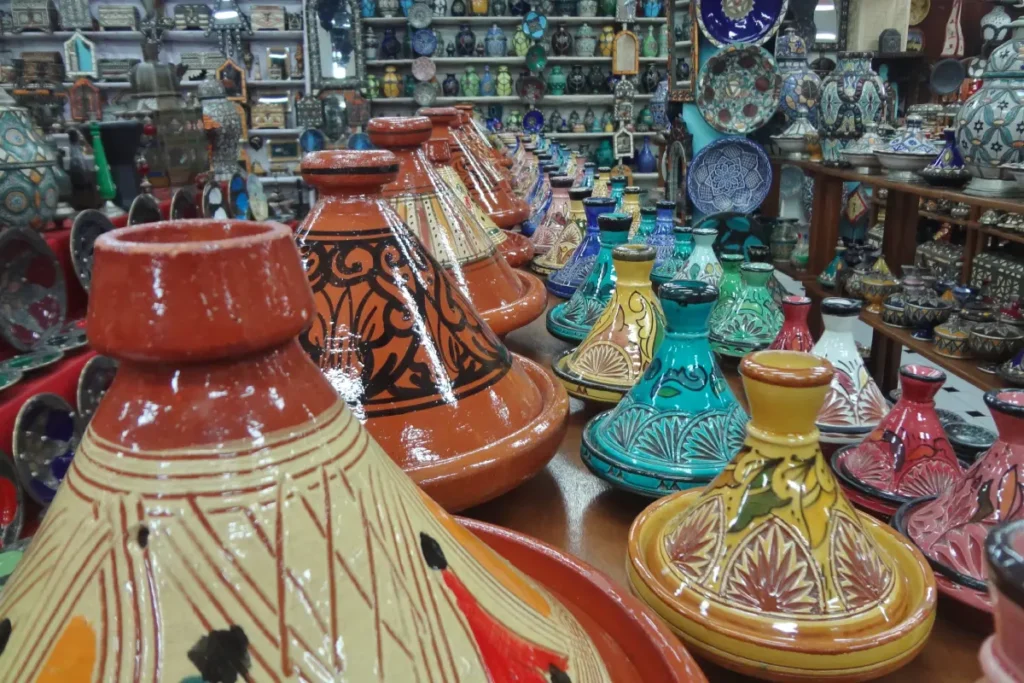
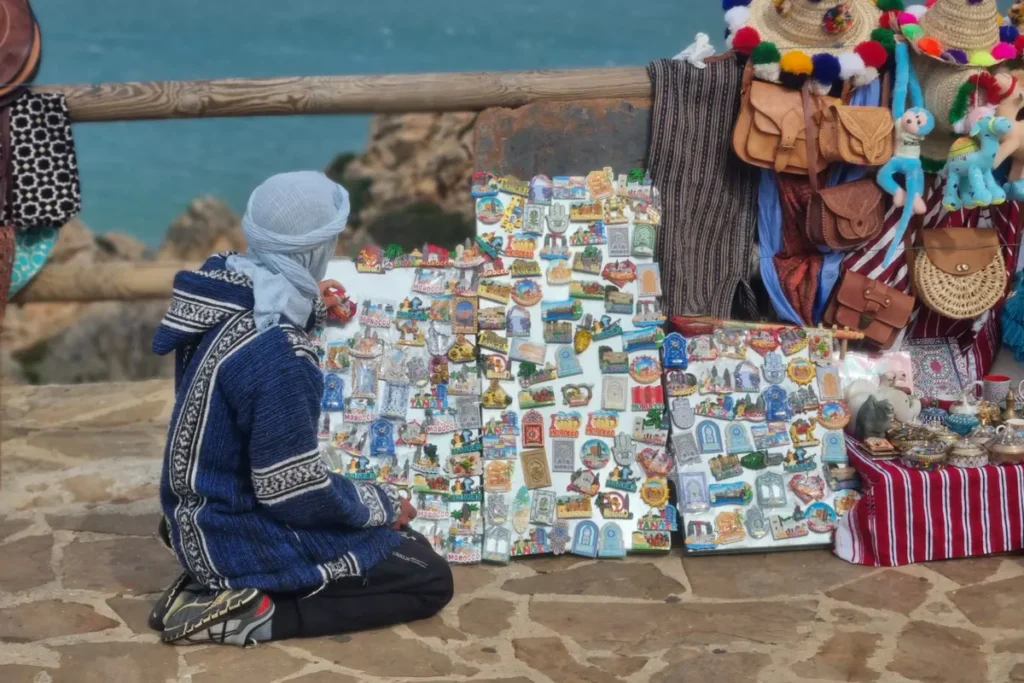
The Moroccan day covers the outskirts and the corniche, a stop on the Atlantic coast where camels rest on the sand, and then the old medina on foot. A traditional Moroccan lunch is included. The shops of the souk take up as much time as you let them.
A night in Africa
The night is spent in a 4 star hotel in Tangier, by the beach, with breakfast the next morning. Which day falls where depends on your date: some departures do Gibraltar first and cross in the afternoon, others cross first and take the Rock on the way home.
Important: the order and format of the route may vary depending on the time of year, the weather, road conditions and each town’s local holidays. Your guide will organize the trip in whatever way works best for the group.
Your questions answered
Frequently asked questions
Yes. Gibraltar has its own border control and Morocco is outside the European Union entirely, so you cross two separate frontiers and a passport is required at both. A national ID card is not enough.
It depends on your date. Some departures start with Gibraltar and cross to Tangier in the afternoon; others cross first and take the Rock on the way back. The booking calendar shows which applies, and the content of both days is the same either way.
Yes. One night in a 4 star hotel in Tangier with breakfast is included. Rooms are allocated by the operator; if you want one to yourself a supplement applies and is arranged when you book.
Two: the traditional Moroccan lunch, drinks excluded, and breakfast at the hotel. Food in Gibraltar, dinner in Tangier and all drinks are at your own expense.
Yes, including entry to the Gibraltar Nature Reserve, the viewpoint over the Strait, St Michael’s Cave and the upper Rock where the macaques live.
No. There is a stop on the Atlantic coast where camels are kept, and a short ride can be arranged there for a small charge paid on the spot. It is optional.
All three are in play. Euros in Spain, pounds in Gibraltar, dirhams in Morocco. Gibraltar takes euros at a poor rate and cards everywhere; Moroccan hotels take cards but the souk does not, and dirhams cannot be bought before you travel.
Spanish and English.
From central Seville. There are three pick-up points and the booking calendar shows which ones are available on your date. The pick-up point is also the drop-off point.
It depends on the bookings for each date, and groups are usually small. In high season the group is split into two or more subgroups: as a rule, groups are no larger than 30 people.
A fair amount over two days. Gibraltar town and the old medina in Tangier are both walked on foot over slopes and uneven streets, although the Rock Tour itself is done by vehicle with stops.
Yes, and there is a reduced rate for children. The monkeys and the camels do most of the work. Children need their own passport, like everyone else.
We would not recommend it. The trip involves two border crossings on foot, a ferry, several changes of vehicle and walking tours over uneven ground.
Yes. Cancellation is free up to 24 hours before the activity.
Planning your crossing of the Strait
Practical questions about this corner of the map, useful background before you travel.
Yes, and the reason is geography rather than rushing. Spain, Gibraltar and Morocco all meet within about 40 kilometres of each other at the Strait, and the sea crossing takes an hour. Few places on earth let you stand in three jurisdictions and two continents over a weekend.
About 14 kilometres at its narrowest, between Punta de Tarifa and Point Cires in Morocco, and around 58 kilometres long. It is the only natural connection between the Atlantic and the Mediterranean, and around a hundred thousand ships pass through it every year.
There is no line, but the conventional boundary runs from Punta de Tarifa south to Point Cires. The waters behave differently on either side: Atlantic water flows in at the surface and denser Mediterranean water flows out underneath it, which is why the currents here are so strong.
Four in total. Into Gibraltar and back out, then out of the Schengen area at Tarifa and into Morocco, and the reverse on the way home. Each has its own control, and passports are stamped separately.
Usually not, but the Strait is a funnel between two land masses and the levante wind can build a swell quickly. Fast ferries are occasionally delayed or cancelled in strong easterlies, which is one reason the itinerary order can change.
Because whoever holds it controls the entrance to the Mediterranean. Phoenicians, Romans, the Umayyad invasion of 711, the British capture of Gibraltar in 1704 and both World Wars all turn on the same fourteen kilometres of water.
Easily, on most days. From Tarifa the Moroccan hills fill the horizon, and from the Rif coast the Rock of Gibraltar and the Spanish sierras are clearly visible. Haze in high summer is the main thing that spoils it.
Spring and autumn. Summer is hot on both sides and the ferries are busiest, and winter brings the strongest easterlies, which are what disrupt sailings. April, May, September and October give the clearest views across the water.