

Everything you need to know
Two-day trip details
To see current prices for each rate (adults, children, students and infants), select your preferred date in the booking calendar. The price shown in the calendar is always the final price.
Check the available days and times directly in the booking calendar: it updates in real time according to the season.
There are three pick-up points in central Seville. The one you choose is also where the trip ends.
C. Trajano 6, Casco Antiguo, 41001 Seville · View on Google Maps
C. Zaragoza 1, Casco Antiguo, 41001 Seville · View on Google Maps
C. Rastro 12A, 41003 Seville · View on Google Maps
Not every pick-up point is available on every date: the booking calendar shows which ones you can choose and the exact time. We recommend arriving with time to spare.
Bring your passport or national ID card. The hotel requires an identity document from every guest at check-in; it is a legal obligation in Spain and Morocco and there is no way around it.
Rooms are allocated by the operator. If you are travelling alone or want a room to yourself, a single supplement applies and is arranged at the time of booking.
Round-trip transport from Seville and a professional guide on the first day.
One night in a 3 or 4 star hotel in Ronda.
A guided visit to a traditional oil mill in Zahara de la Sierra, with a tasting.
Guided visits to the white villages of Zahara de la Sierra and Grazalema, and a walking tour of Ronda.
The second day is free. There is no guided programme: the guide meets the group again in the afternoon for the drive back to Seville.
Food and drink are not included, and neither is admission to any monument in Ronda.
The order of the visits may change depending on the group or the time of year.
Pack light. One night means one small bag, and Ronda is walked on cobbles.
Comfortable footwear. The villages are built on hillsides and Ronda has a gorge in the middle of it.
A layer for the evening. This is mountain country at around 700 metres and it cools down sharply after dark, even in summer.
Plan the free morning before you arrive. The bullring, the Arab Baths and the Mondragon Palace all charge separately and all are worth it.
There is a stop with free time for lunch on the first day. Your guide can make recommendations.
Free cancellation up to 24 hours before the activity. You can cancel from the confirmation email you receive when you book.
The best-rated guide to Seville
First-hand local advice, more than 90 pages in PDF: what to see, where to eat, museums and palaces, day trips, opening hours and prices, and tourist maps of the city. Book any activity with us and it’s yours. Get the guide
 Eduardo BallesterosSeville local and author of the guide
The two-day trip
The white villages, and a night on the edge of the gorge
Ronda empties in the evening. The coaches leave around six and the town returns to the people who live in it, which is the single best argument for staying the night rather than seeing it between two drives.
Day one: into the sierra
The road south out of Seville crosses the Andalusian countryside, past the ruined castle of Aguzaderas, and climbs into the mountains. The first stop is a traditional oil mill in Zahara de la Sierra, where you see how extra virgin olive oil is made by hand and taste what comes out of it.
Zahara and Grazalema
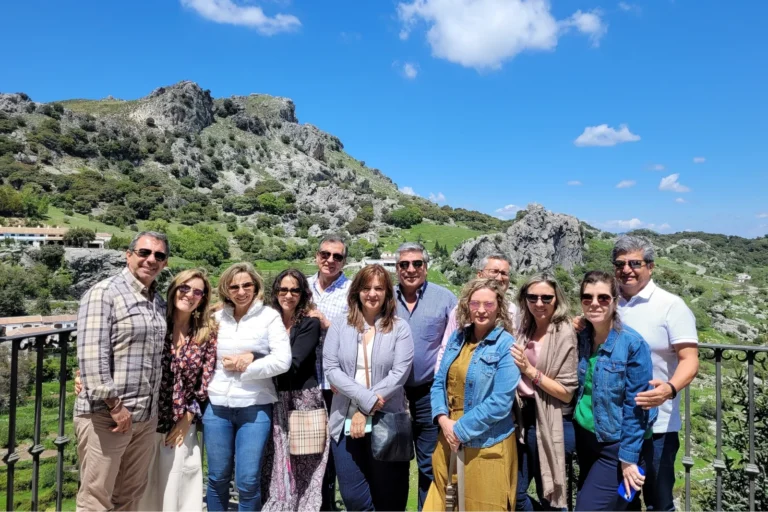
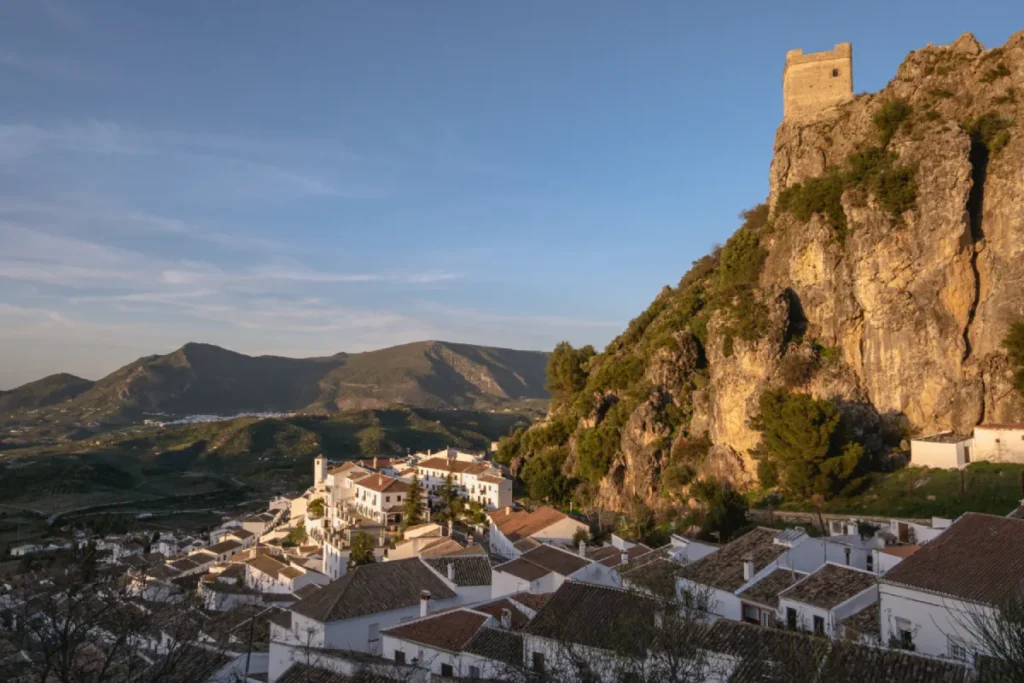
Zahara is stacked up a crag between a reservoir and the peaks, with a Nasrid watchtower above the roofs. From there the route crosses the Sierra de Grazalema, a limestone range that holds the Spanish fir and the Payoya goat, to the village that gives it its name. There is a stop with free time to eat.
Ronda, and the evening
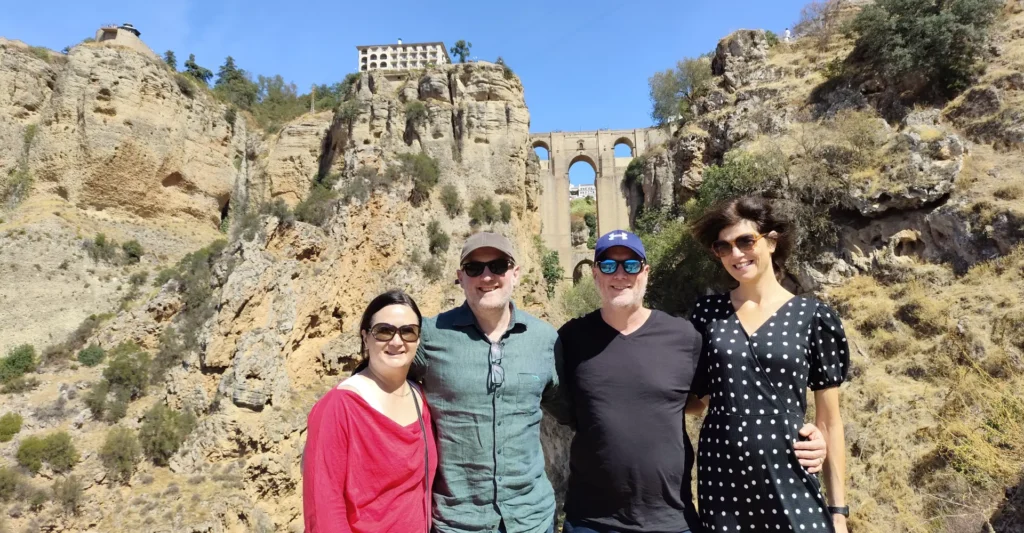
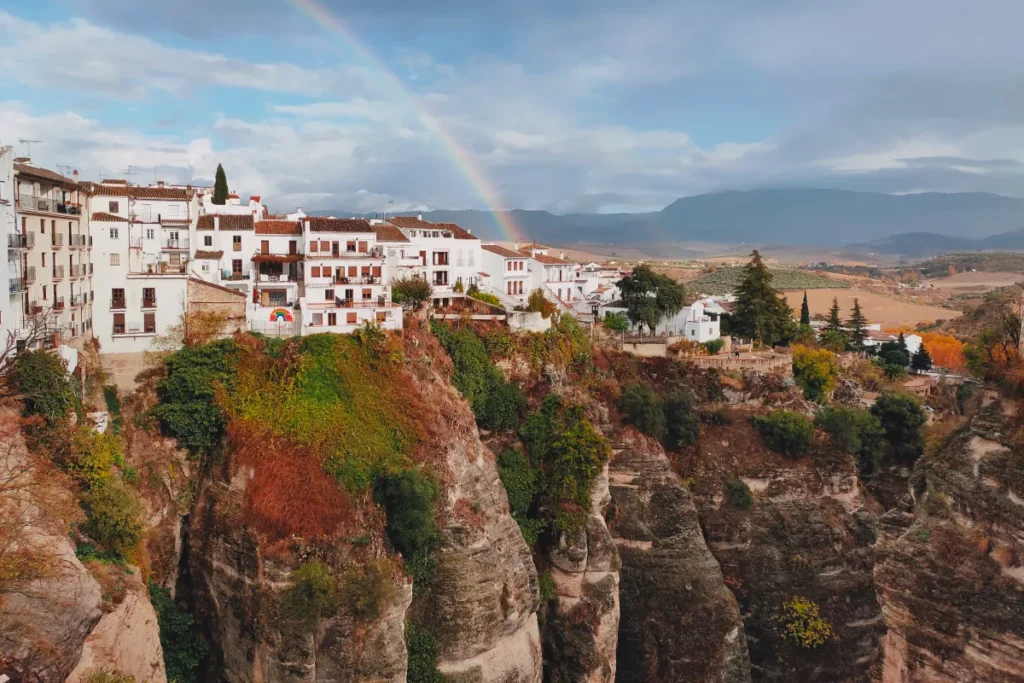
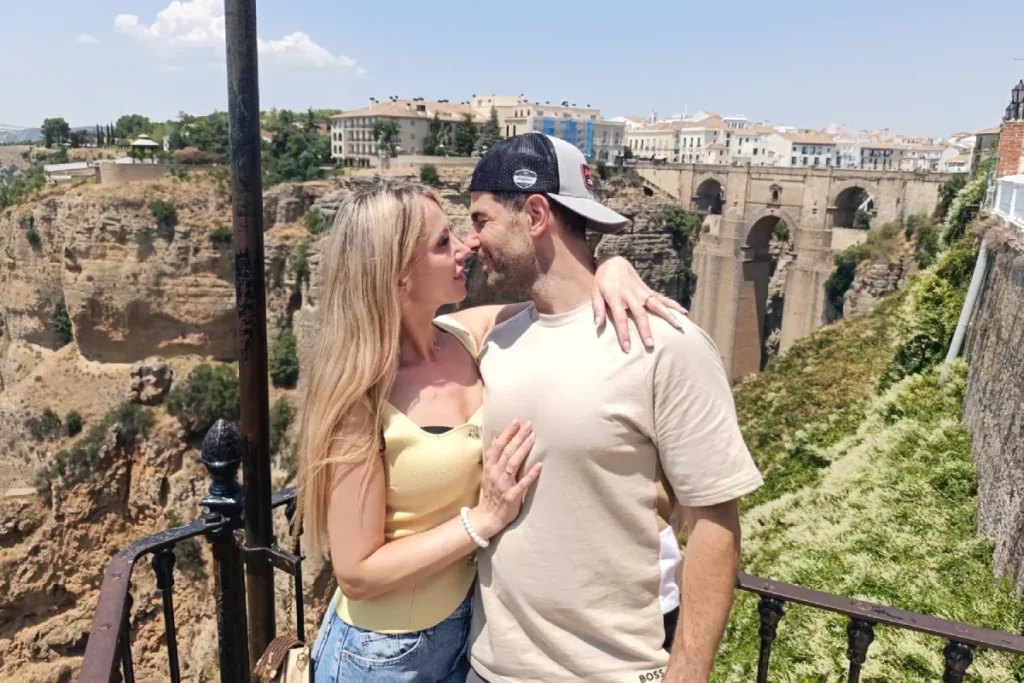
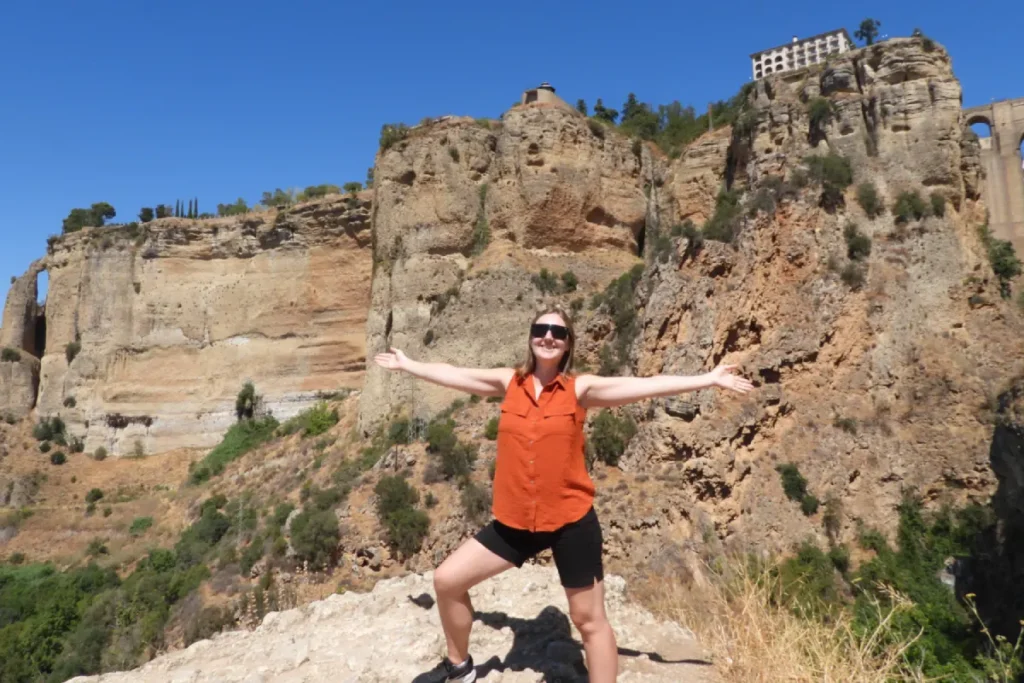
The afternoon is a guided walk through Ronda: the Alameda, the promenade where the bullfighters walked, and the Puente Nuevo spanning a gorge nearly a hundred metres deep. Then you check into the hotel, and the town is yours for the evening.
Day two: Ronda at your own pace
The second day is free and deliberately unprogrammed. The museums, the bullring, the viewpoints along the cliff edge, or a terrace with the whole valley below it. The guide meets the group in the afternoon for the drive back to Seville.
Important: the order and format of the route may vary depending on the time of year, the weather, road conditions and each town’s local holidays. Your guide will organize the trip in whatever way works best for the group.
Your questions answered
Frequently asked questions
Yes. One night in a 3 or 4 star hotel in Ronda is included. Meals are not, and rooms are allocated by the operator; if you want one to yourself a single supplement applies.
No, and we would rather say so plainly. The second day is free time in Ronda with no programme. The guide meets the group again in the afternoon for the return to Seville.
Yes. The guided visit to a traditional oil mill in Zahara de la Sierra and the tasting are both included.
No. The walking tour on the first day takes in the town from the outside. The bullring, the Arab Baths, the Mondragon Palace and the museums all charge separately, and the free second day is when most people visit them.
Time. The day trips see the villages and Ronda between two long drives. This one adds the oil mill, a night in Ronda and a free day, which is when you can actually go inside the monuments and see the town after the coaches have gone.
Spanish, English, French and Italian. You choose when you book. Usually the guide runs the day in one language, although it is sometimes run in two at once, with the guide alternating between them.
From central Seville. There are three pick-up points and the booking calendar shows which ones are available on your date. The pick-up point is also the drop-off point.
Yes, round trip. You travel in a comfortable, air-conditioned vehicle, van, minibus or coach, depending on how many travelers have booked for that date. Some have a toilet on board; if yours does not, you can ask your guide to stop at a service area.
It depends on the bookings for each date, and groups are usually small. In high season the group is split into two or more subgroups: as a rule, groups are no larger than 30 people.
No. There is a stop with free time for lunch on the first day, dinner in Ronda is your own, and breakfast depends on the hotel. Your guide can recommend where to eat.
A fair amount on the first day, and most of it on slopes: the villages are built on hillsides and Ronda is cobbled. The second day is entirely up to you.
Yes, and there is a reduced rate for children. Two days at a slower pace tends to work better than a single ten-hour day, and the gorge does a lot of the work.
We would not recommend it. The visits are made entirely on foot and much of the route is over uneven, cobbled ground.
Yes. Cancellation is free up to 24 hours before the activity.
Planning your time in Ronda
Practical questions about the town, useful background before you travel.
More than almost any other day-trip town in Andalusia. It receives enormous numbers of visitors who arrive after ten and leave by six, and the hours either side of that are quiet, cooler and much better lit. The cliff-edge viewpoints at sunset are the reason people come back.
Go inside the things the day trips walk past. The bullring and its museum, the Arab Baths at the bottom of the gorge, the Mondragon Palace, the House of the Moorish King with its water mine cut down to the river, and the walk along the Camino de los Molinos, which takes you below the Puente Nuevo and gives the view everyone photographs from underneath.
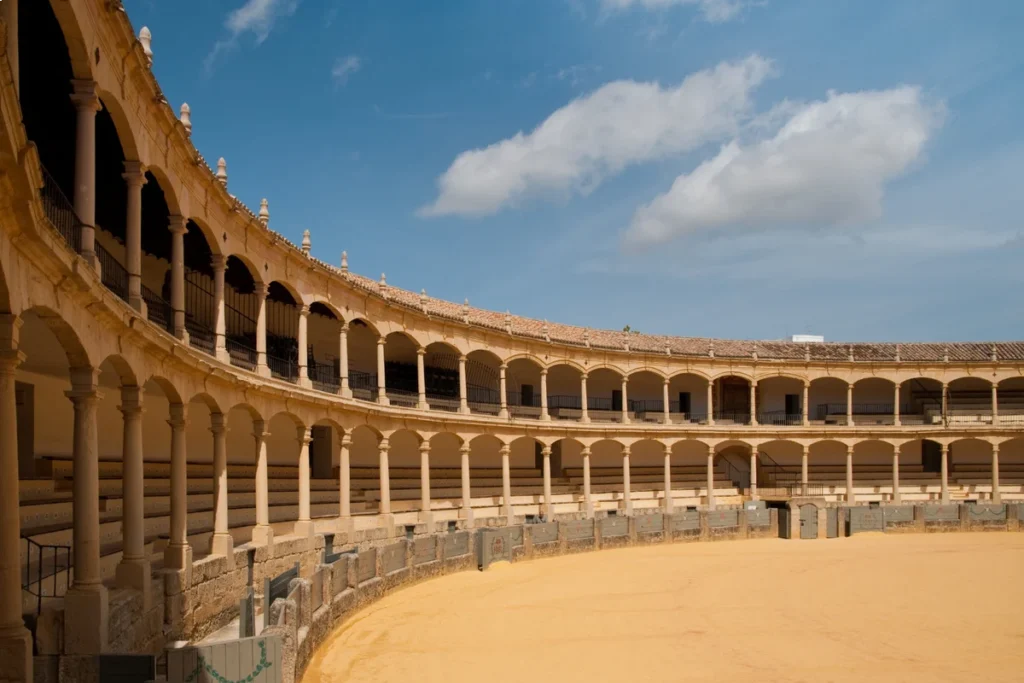
One of the oldest in Spain, finished in 1785, and unusual for being entirely covered by a double arcade in stone rather than open. It is where the modern rules of bullfighting on foot were codified, and it is now open as a museum whether or not the subject interests you.
Around 120 metres at its deepest, cut by the Guadalevin river through the limestone plateau the town sits on. The Puente Nuevo crosses it at about 98 metres above the riverbed and took more than forty years to build.
Both spent time here and both wrote about it. Hemingway drew on Ronda in For Whom the Bell Tolls and praised it as the place to go for a romantic escape, and Orson Welles asked for his ashes to be buried on a farm outside the town, where they remain.
A nineteenth-century public garden laid out along the cliff edge, with balconies projecting over a sheer drop and a view across the whole valley to the sierra. It was paid for, according to local history, by fining people for swearing and for other minor public offences.
About 130 kilometres, but the last stretch is mountain road, so it takes around two hours. That drive is why a day trip there is a long one and why the overnight version exists.
Spring and autumn. It sits at around 720 metres, so summer days are hot but the nights cool sharply, and winter can be genuinely cold with rain in the sierra. September brings the Feria Goyesca, when the bullring and the town dress in eighteenth-century costume.