

Everything you need to know
Day trip details
To see current prices for each rate (adults, children, students and infants), select your preferred date in the booking calendar. The price shown in the calendar is always the final price.
Check the available days and times directly in the booking calendar: it updates in real time according to the season.
There are three pick-up points in central Seville. The one you choose is also where the day ends.
C. Trajano 6, Casco Antiguo, 41001 Seville · View on Google Maps
C. Zaragoza 1, Casco Antiguo, 41001 Seville · View on Google Maps
C. Rastro 12A, 41003 Seville · View on Google Maps
Not every pick-up point is available on every date: the booking calendar shows which ones you can choose and the exact time. We recommend arriving with time to spare.
Round-trip transport from Seville and a professional guide for the day.
A visit to a traditional olive oil mill, with a tasting of local extra virgin olive oil.
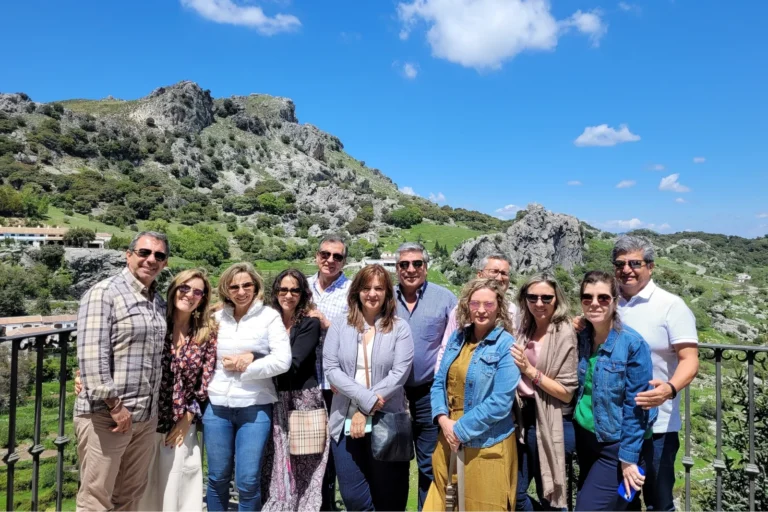
Visits to the white villages of Zahara de la Sierra and Grazalema, and a walking tour of Ronda.
The Ronda Tourist Pass, which covers admission to the Puente Nuevo, the Arab Baths, the House of the Giant, the Joaquin Peinado Museum and the Mondragon Palace.
Food and drink are not included. There is a stop with free time for lunch.
The order of the visits may change depending on the group or the time of year.
Comfortable footwear. The villages are built on hillsides and Ronda is walked over cobbles, with steps down to the Arab Baths.
Bring some water and a snack for the road. In summer add sun protection and a hat.
This is mountain country and it is cooler and wetter than Seville at any time of year, so bring a layer even in summer.
There is a stop with free time for lunch. You can eat at a local bar or restaurant, on which your guide can make recommendations, or bring your own picnic.
The oil mill is a working one. Flat shoes are more comfortable than sandals on its floors.
Free cancellation up to 24 hours before the activity. You can cancel from the confirmation email you receive when you book.
The best-rated guide to Seville
First-hand local advice, more than 90 pages in PDF: what to see, where to eat, museums and palaces, day trips, opening hours and prices, and tourist maps of the city. Book any activity with us and it’s yours. Get the guide
 Eduardo BallesterosSeville local and author of the guide
The day trip
The old frontier, and Ronda with the doors open
The white villages sit along what was once the border between Castile and the Nasrid kingdom of Granada, which is why so many of them are called de la Frontera and why so many have a castle above them. This is the version of the route that goes inside the monuments of Ronda rather than past them.
Out through the countryside, and into an oil mill
The road south crosses the Andalusian campina, with the ruined Aguzaderas Castle standing in the fields, and the land rises as you go. The first stop is a traditional almazara, where you see how the olives are pressed and taste the extra virgin oil made from them. It is the single most Andalusian product there is, and most visitors have never tasted it fresh.
Zahara de la Sierra
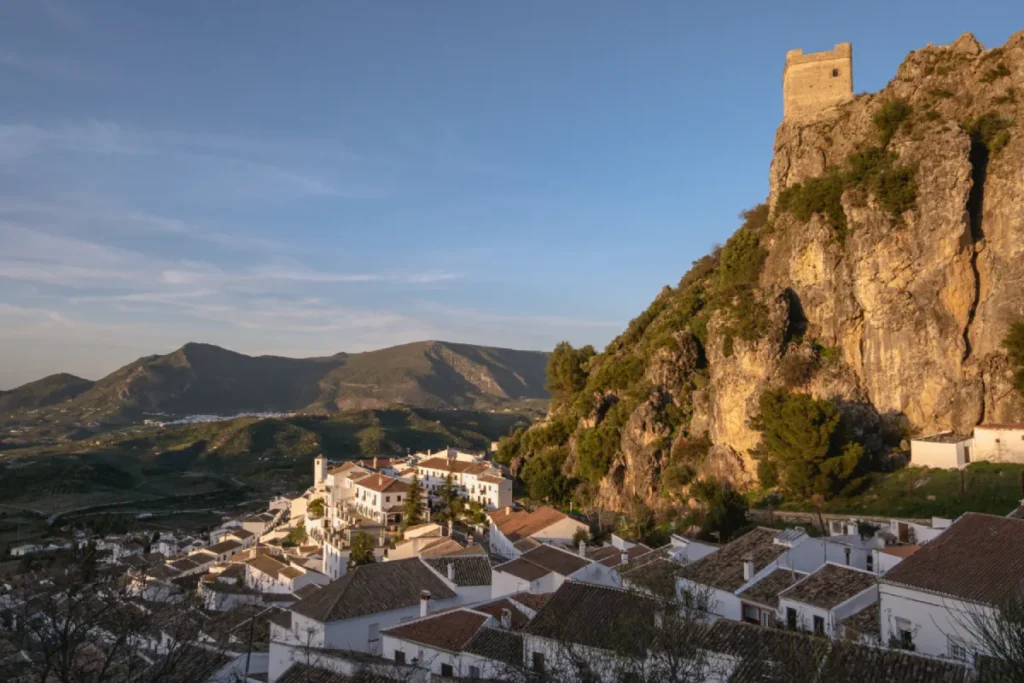
Zahara is stacked up a crag between the mountains and a turquoise reservoir, with a Nasrid watchtower on the summit above the roofs. There is time to walk its narrow streets and take in the view from its natural balconies, which are among the best in the sierra.
The Sierra de Grazalema and its village
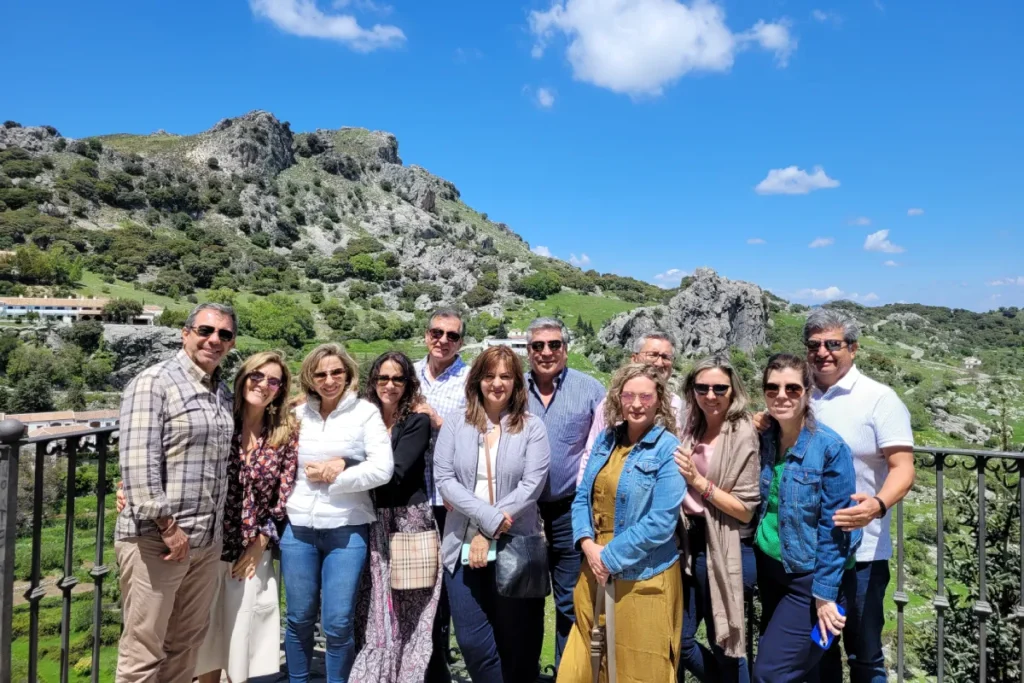
The route crosses the Sierra de Grazalema Natural Park, a limestone range that holds the Spanish fir, a relic conifer from the Ice Age, and the Payoya goat, whose milk makes the cheese the area is known for. There is a stop with free time to eat in one of the villages and to walk its white streets.
Ronda, inside the monuments
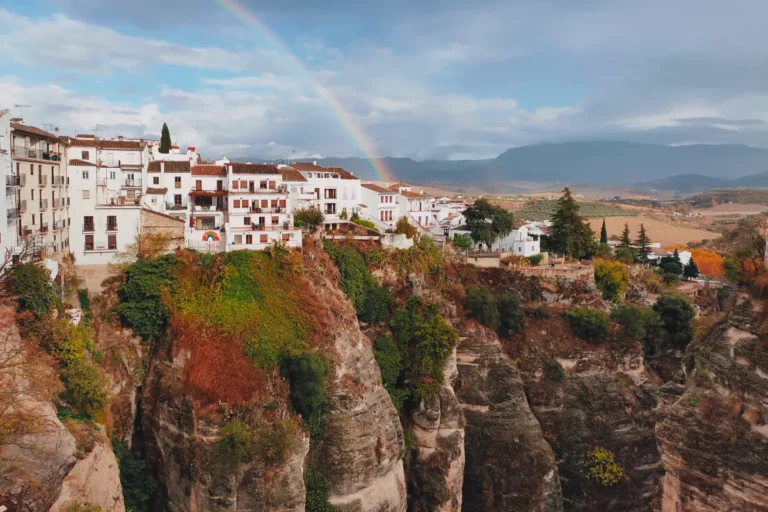
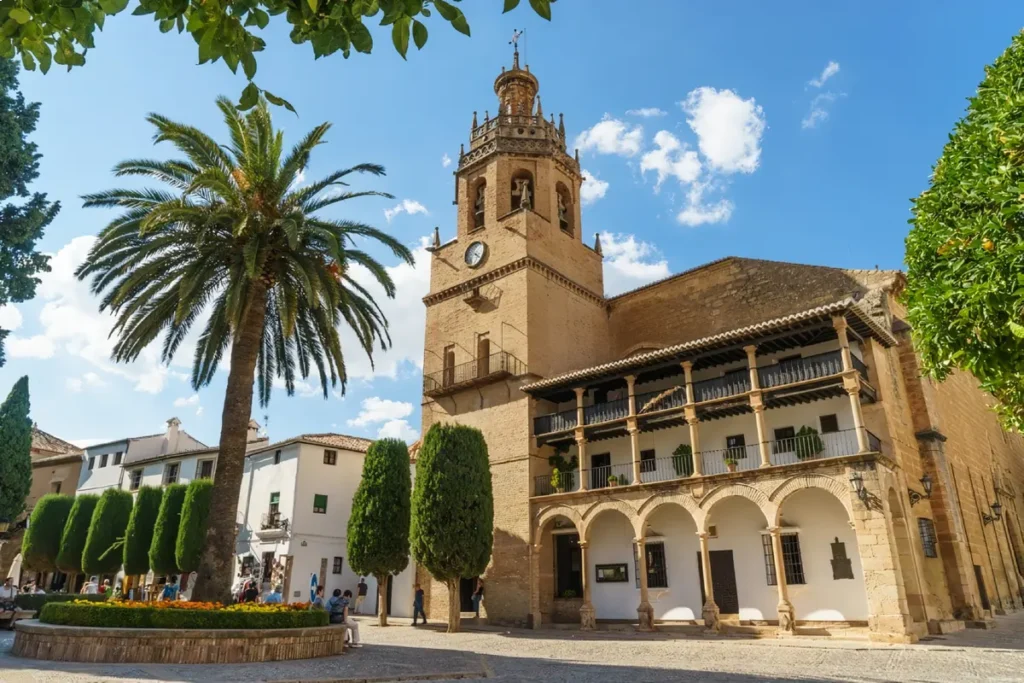
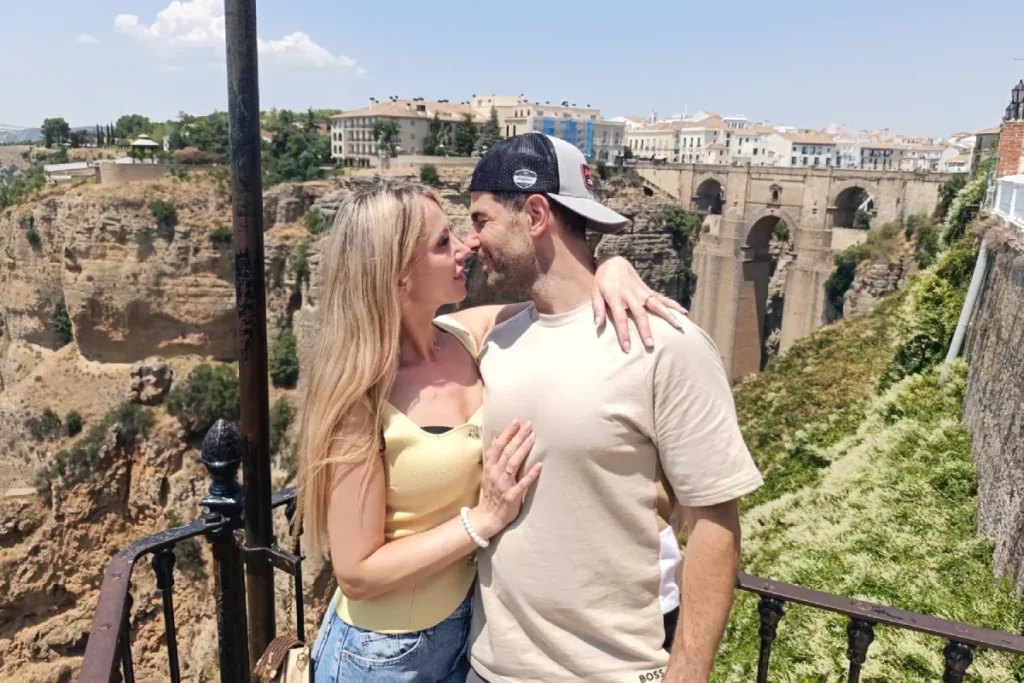
Ronda straddles a gorge more than a hundred metres deep, crossed by the eighteenth-century Puente Nuevo. On this version the walking tour comes with the Ronda Tourist Pass, so the bridge itself, the Arab Baths, the House of the Giant, the Joaquin Peinado Museum and the Mondragon Palace are all included rather than admired from the street.
Important: the order and format of the route may vary depending on the time of year, the weather, road conditions and each town’s local holidays. Your guide will organize the day in whatever way works best for the group.
Your questions answered
Frequently asked questions
Admission to five monuments in Ronda: the Puente Nuevo, the Arab Baths, the House of the Giant, the Joaquin Peinado Museum and the Mondragon Palace. It is included in the price on this version of the route and it is the main thing that sets it apart from our other white villages day trip.
Both trips take in the same white villages and both include the stop at the olive oil mill with its tasting. The difference is Ronda itself: this version adds the Ronda Tourist Pass, so you go inside five of its monuments, while the other one walks the town from the outside and costs less.
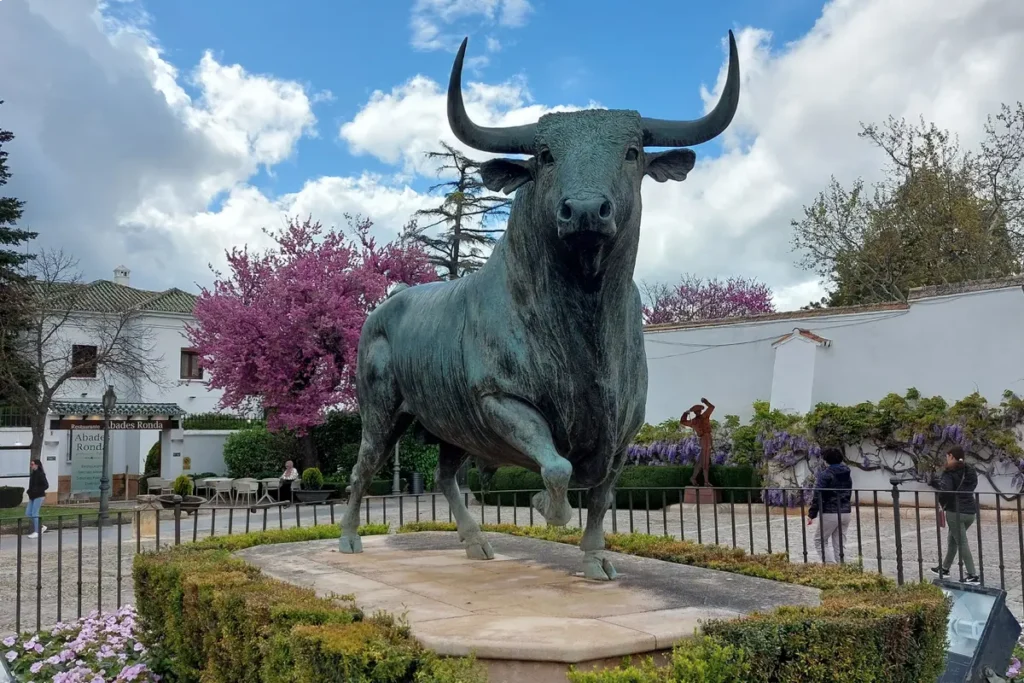
No. The Ronda bullring is not one of the five monuments on the Tourist Pass, and admission to it is not included in the price. You can visit it separately if you have free time.
Yes. The visit to a traditional oil mill and the tasting of local extra virgin olive oil are both included.
Around ten hours. The exact departure time for your date appears in the booking calendar.
Spanish, English, French and Italian. You choose when you book. French and Italian need a minimum of four travelers to be guaranteed; if that number is not reached, the day runs in English or Spanish.
From central Seville. There are three pick-up points and the booking calendar shows which ones are available on your date. The pick-up point is also the drop-off point.
Yes, round trip. You travel in a comfortable, air-conditioned vehicle, van, minibus or coach, depending on how many travelers have booked for that date. Some have a toilet on board; if yours does not, you can ask your guide to stop at a service area.
It depends on the bookings for each date, and groups are usually small. In high season the group is split into two or more subgroups: as a rule, groups are no larger than 30 people.
No. There is a stop with free time for lunch in one of the villages, at a local bar or restaurant, on which your guide can make recommendations, or you can bring your own picnic.
A fair amount, and most of it on slopes. The villages are built on hillsides, Ronda is walked over cobbles, and the Arab Baths sit at the bottom of the gorge, which means going down and back up.
Yes, and there is a reduced rate for children. It is a long day with a good deal of walking uphill, so it suits children who are used to it.
We would not recommend it. The visits are made entirely on foot and much of the route is over uneven, cobbled ground.
Yes. Cancellation is free up to 24 hours before the activity.
Planning your visit to Ronda and the white villages
Practical questions about the sierra and its monuments, useful background before you travel.
The bridge that crosses the Tajo gorge in the middle of the town, finished in 1793 after more than forty years of building. It stands about 98 metres above the river. The chamber inside the central pier, once used as a prison and a store, is what you visit when you go inside it.
A thirteenth-century hammam at the bottom of the gorge, by the old Arab bridge, and among the best preserved in Spain. The three vaulted chambers for cold, warm and hot rooms still stand, lit by star-shaped skylights, along with the water wheel that fed them.
A fourteenth-century Moorish palace, later remodelled for the Catholic Monarchs, now the municipal museum. Its patios and its garden looking out over the valley are the reason to go in, more than the collection.
A painter from Ronda, born in 1898, who spent most of his working life in Paris and was part of the circle around Picasso. The museum devoted to him sits in a Renaissance palace in the old town and holds several hundred of his works.
It has to be pressed mechanically without heat or chemicals, come in below a strict limit for free acidity, and pass a taste panel with no detectable defects. Everything else is simply virgin or refined oil. Andalusia produces more of it than any other region on earth.
A cheese made in the Sierra de Grazalema from the milk of the Payoya goat, a local breed that came close to disappearing and was brought back by the cheesemakers who needed it. It is one of the most awarded Spanish cheeses and you will find it in every bar in the sierra.
It records the highest rainfall in Spain, because Atlantic weather hits the limestone wall of the range and drops everything it is carrying. That is why the sierra is green when the rest of Andalusia is brown, and why the pinsapo, a fir left over from the Ice Age, survives here and almost nowhere else.
White because lime whitewash reflects the sun, seals the walls and disinfects them, a habit that goes back centuries. De la Frontera because for more than two hundred years this line of hills was the border between Castile and the Nasrid kingdom of Granada, and the towns that sat on it kept the name after the border moved.