

Everything you need to know
Half-day trip details
To see current prices for each rate (adults, children, students and infants), select your preferred date in the booking calendar. The price shown in the calendar is always the final price.
Check the available days and times directly in the booking calendar: it updates in real time according to the season.
You are picked up at your hotel or accommodation in central Seville, and dropped off there at the end. If the vehicle cannot reach your address, the pick-up is at the nearest accessible point.
Pick-up at your accommodation is only available if you are staying in central Seville. If you are staying outside it, choose C. Rastro 12A, 41003 Seville as your pick-up point when you book and make your own way there. · View on Google Maps
Once you have booked, the exact time and pick-up point are confirmed with you by email or telephone. We recommend being ready a few minutes early.
Round-trip transport from Seville and a professional guide.
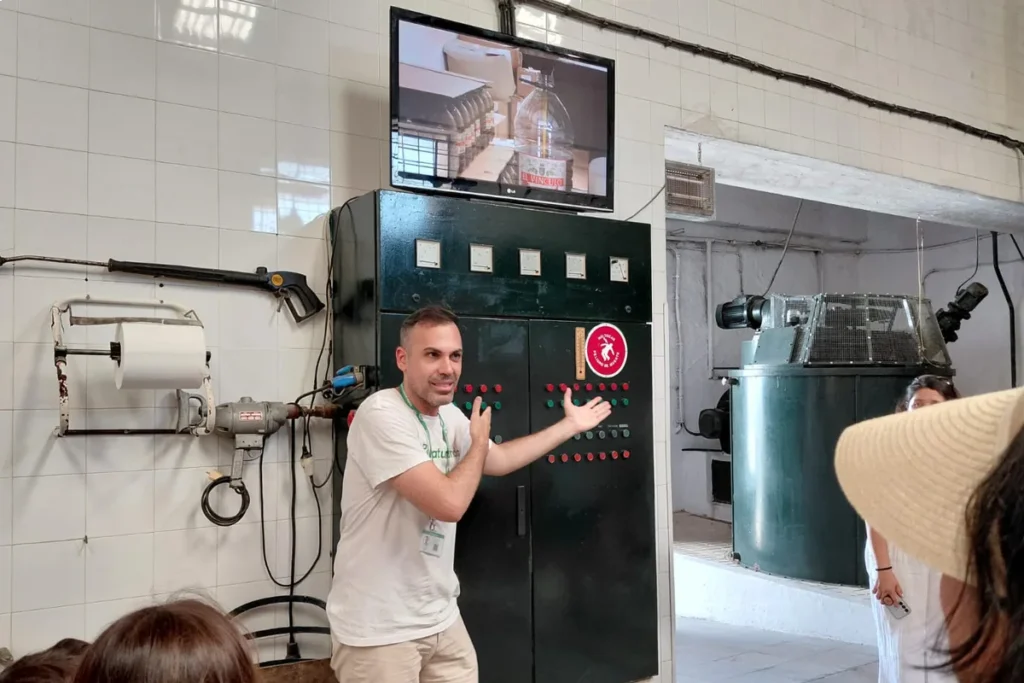
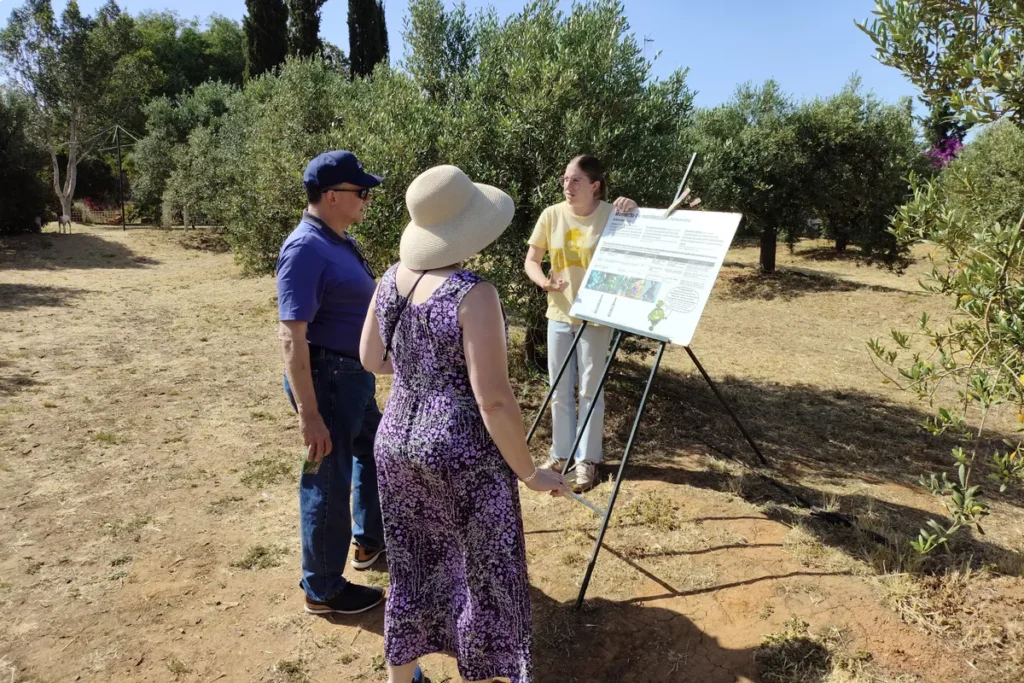
A guided tour of the estate and its facilities, including the olive grove and the mill.
An olive oil tasting with a pairing of extra virgin oils.
Food and drink beyond the tasting are not included. This is a half-day activity and there is no meal stop.
Flat, closed shoes. You walk on grove floor and on the tiled floors of a working mill.
Sun protection and a hat in the warmer months: the olive grove is open ground.
Come with an appetite rather than after a large meal. Oil is tasted neat, from small blue glasses, and it works better on a clear palate.
It is a four-hour activity, so you are back in Seville with most of the day still ahead of you.
Free cancellation up to 24 hours before the activity. You can cancel from the confirmation email you receive when you book.
Ways to visit
Choose how you visit
Everything on this page describes the shared half-day trip. The same visit is also sold in other formats, each with its own group size, languages and price, and every one of them is booked right here.
Shared half-day trip
From €89per adult
- GroupRegular group
- LanguagesEN / ES / FR / IT, chosen when you book
The same four hours as this page describes, in a regular group, with transport from Seville, the tour of the estate and the oil tasting.
Check datesPrivate group
From €377per group
- GroupYour party only
- LanguagesEN / ES / FR / IT, chosen when you book
The same morning for your party alone, priced per group rather than per person, with pick-up at your accommodation in Seville.
The best-rated guide to Seville
First-hand local advice, more than 90 pages in PDF: what to see, where to eat, museums and palaces, day trips, opening hours and prices, and tourist maps of the city. Book any activity with us and it’s yours. Get the guide
 Eduardo BallesterosSeville local and author of the guide
The half-day trip
Liquid gold, from the tree to the glass
Spain produces more olive oil than any other country on earth, and Andalusia produces most of Spain’s. This half day goes out to a century-old estate in the province of Seville to see how it is actually made, and then to taste it properly.
Out to the hacienda
A short drive from Seville takes you into the countryside and one of the old Andalusian haciendas, the fortified farm estates that organised olive production here for centuries. The oil trade became serious business from the seventeenth century onwards, and the buildings show it.
Into the grove
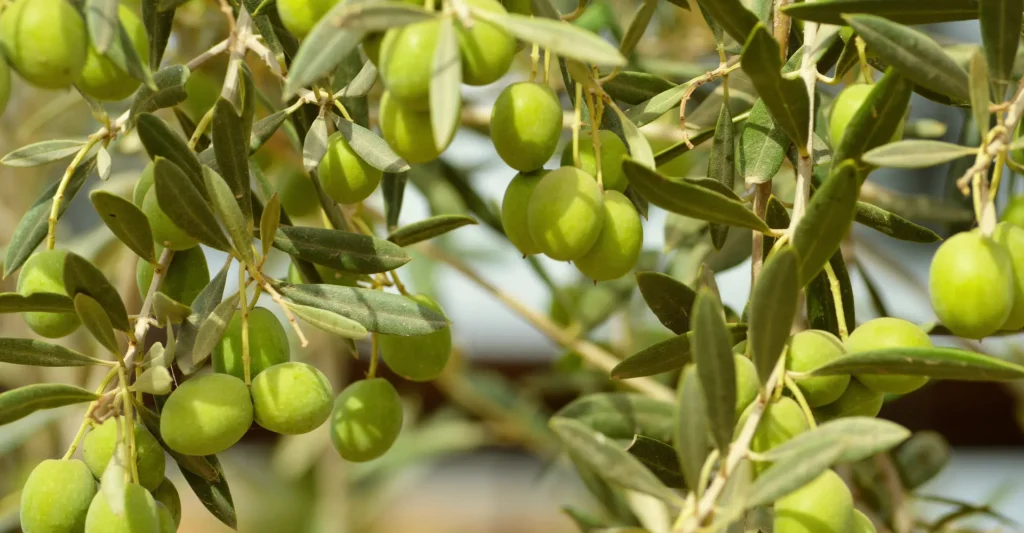
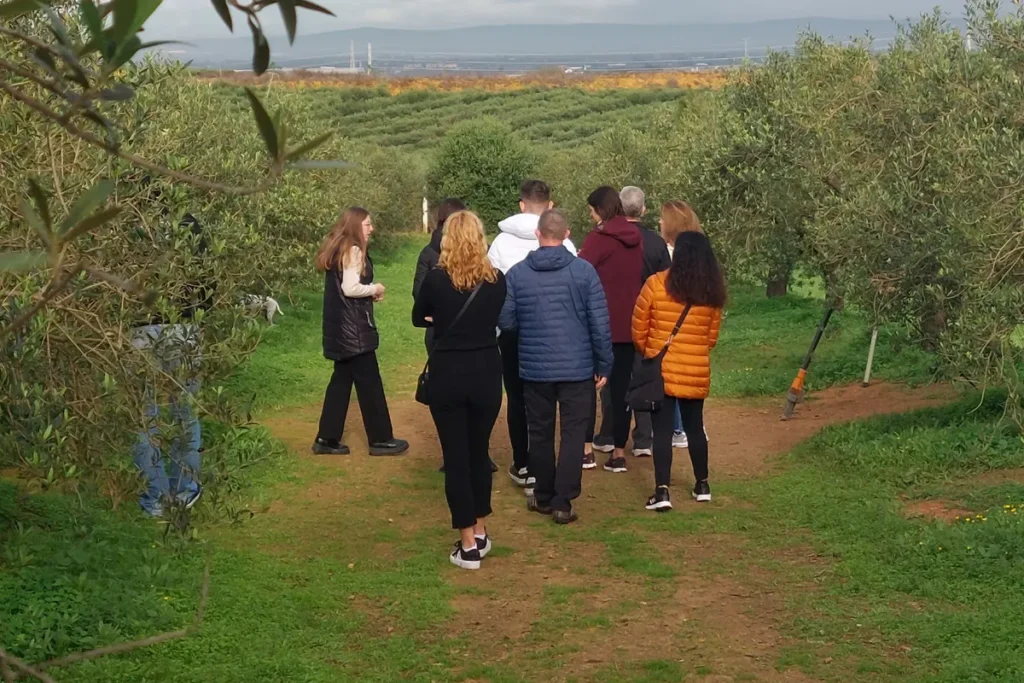
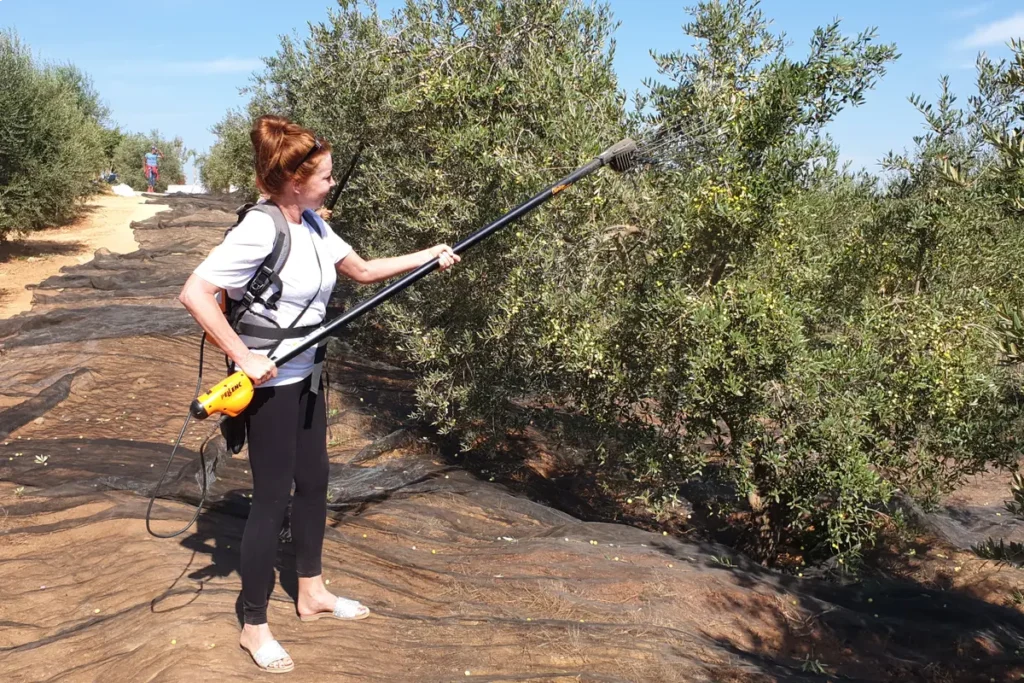
The visit starts among the trees, where the guide explains how the fruit is grown and picked. Harvesting is still done in part by beating the branches with long poles onto nets below, a method old enough to appear on Roman mosaics and still the gentlest way to bring the fruit down undamaged.
The mill
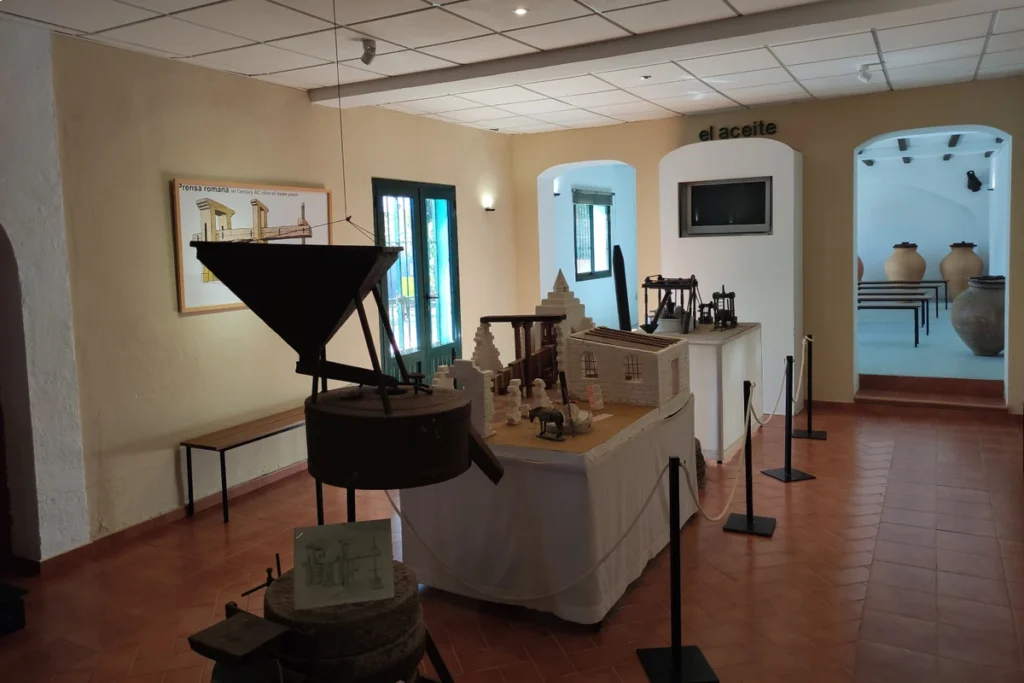
From the grove you follow the olives into the mill: washing, crushing, malaxing and separating, and the reason the good stuff never sees heat. You see both the old stone press kept from the estate’s earlier life and the modern line that does the work now.
The tasting
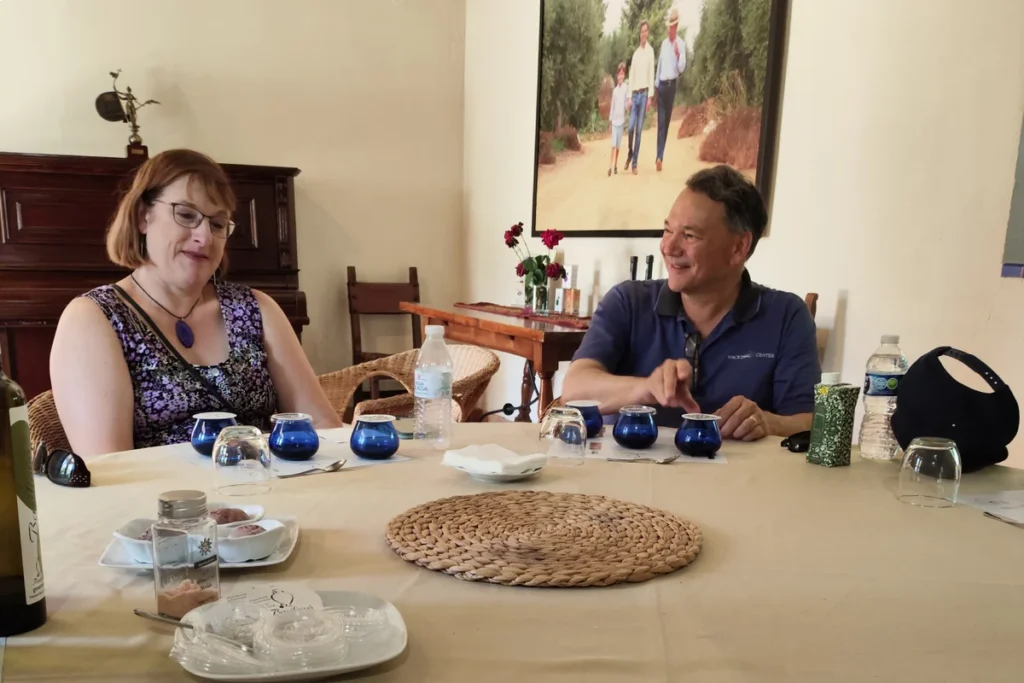
The visit ends with a tasting of extra virgin oils, served the way professionals do it: warmed in the hand, in a small blue glass so the colour cannot prejudice you, and paired to show what different varieties do. Most visitors leave having learned that the peppery catch at the back of the throat is a good sign.
Important: the order and format of the route may vary depending on the time of year, the weather, road conditions and each town’s local holidays. Your guide will organize the trip in whatever way works best for the group.
Your questions answered
Frequently asked questions
Around four hours in total, including the drive each way. It is a half-day activity, so you are back in Seville with the rest of the day free.
Yes. The guided tour of the estate and the olive oil tasting are both included in the price.
Somewhat. The mill only runs during the harvest, roughly from late autumn into winter, so at that time of year you may see it working. Outside the harvest the machinery is explained rather than in motion, and the tasting is the same all year.
Estates generally sell their own oil on site, so in normal circumstances yes, at your own expense. It is not part of the price and nobody is expected to buy anything.
Nothing at all. The visit is built for people who have never thought about it, and the tasting is the part where most of the learning happens.
Spanish, English, French and Italian. You choose when you book. Usually the guide runs the day in one language, although it is sometimes run in two at once, with the guide alternating between them.
You are picked up at your hotel or accommodation in central Seville, and that is also where the trip ends. After you book, the exact time and pick-up point are confirmed with you by email or telephone. If you are staying outside central Seville, choose C. Rastro 12A as your pick-up point instead and make your own way there.
Yes, round trip. You travel in a comfortable, air-conditioned vehicle, van, minibus or coach, depending on how many travelers have booked for that date. Some have a toilet on board; if yours does not, you can ask your guide to stop at a service area.
It depends on the bookings for each date, and groups are usually small. In high season the group is split into two or more subgroups: as a rule, groups are no larger than 30 people. If you would rather not share the vehicle with anyone, you can book it as a private group.
No, and there is no meal stop. Beyond the tasting itself, food and drink are not included.
Yes, and there is a reduced rate for children and students. The grove and the mill machinery usually hold their attention better than the tasting does.
Partly. The mill and the estate buildings are mostly on the level, but the olive grove is walked on uneven ground.
Yes. Cancellation is free up to 24 hours before the activity.
Planning your olive oil visit
Practical questions about Andalusian olive oil, useful background before you travel.
Climate and scale. Olives want hot dry summers and mild wet winters, which is exactly what the Guadalquivir valley provides, and the region has been planting them since the Phoenicians. Spain produces roughly half the world’s olive oil, and Andalusia produces around four fifths of Spain’s.
In a small blue glass, so colour cannot influence you, warmed in the palm with a hand over the top to release the aroma. You smell first, then take a small sip and draw air across it through your teeth, which sounds ridiculous and is exactly what the professionals do.
Because of oleocanthal, a natural compound that irritates the back of the throat and is associated with anti-inflammatory properties. That peppery catch, and a touch of bitterness, are marks of fresh, healthy oil rather than faults. Oil that tastes of nothing is usually old.
Picual dominates, robust and peppery and very stable, which is why it is the one to cook with. Hojiblanca is softer with a bitter almond finish. Arbequina is mild, sweet and fruity, and the easiest for newcomers. Manzanilla, grown around Seville, is mostly eaten as a table olive.
From late October through to February, depending on the variety and how green the producer wants the oil. The earliest pickings give the greenest, most bitter and most expensive oils; later fruit gives more oil but less character.
Away from light, heat and air, which are its three enemies. A dark bottle in a cupboard, not on the windowsill next to the hob, and used within a year of harvest. Unlike wine it does not improve with keeping.
A large agricultural estate built around olive production, usually with its own mill, chapel, worker housing and a fortified gateway. They spread across the countryside around Seville from the sixteenth century and many of the surviving ones are protected buildings.
If you have ever enjoyed a wine tour, the format is similar and the product is one you use every day. The part most people find unexpectedly interesting is discovering that supermarket oil and freshly pressed oil are barely the same thing.