

Everything you need to know
Half-day trip details
To see current prices for each rate (adults, children, students and infants), select your preferred date in the booking calendar. The price shown in the calendar is always the final price.
Check the available days and times directly in the booking calendar: it updates in real time according to the season.
You are picked up at your hotel or accommodation in central Seville, and dropped off there at the end. If the vehicle cannot reach your address, the pick-up is at the nearest accessible point.
Pick-up at your accommodation is only available if you are staying in central Seville. If you are staying outside it, choose C. Rastro 12A, 41003 Seville as your pick-up point when you book and make your own way there. · View on Google Maps
Once you have booked, the exact time and pick-up point are confirmed with you by email or telephone. We recommend being ready a few minutes early.
Round-trip transport from Seville and a professional guide.
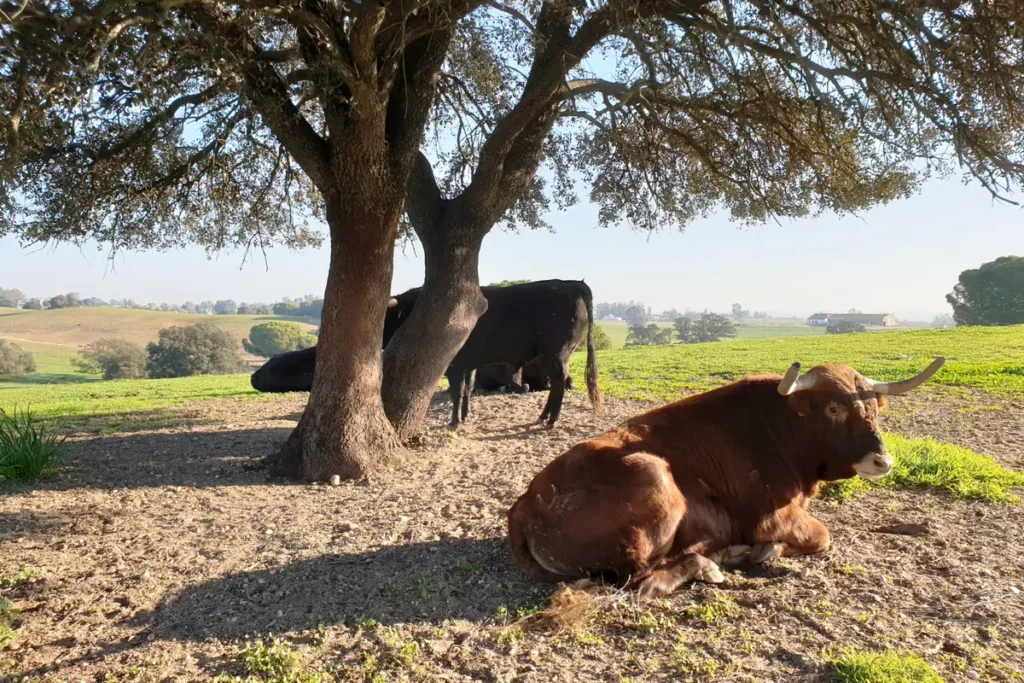
A guided tour of the ranch and the chance to see the fighting bulls in the open pasture where they live.
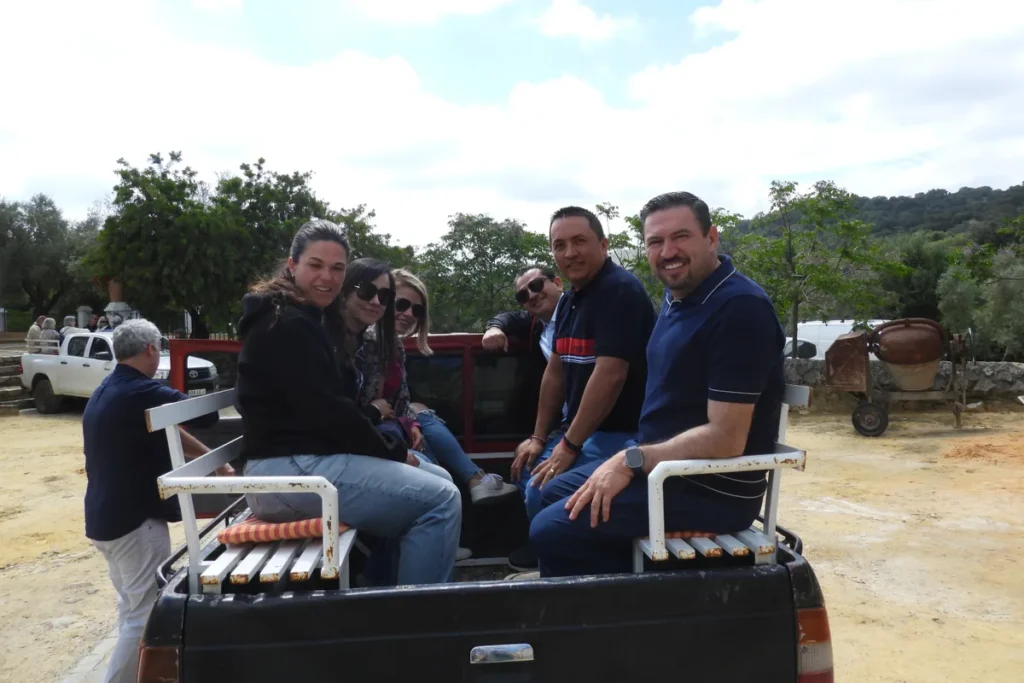
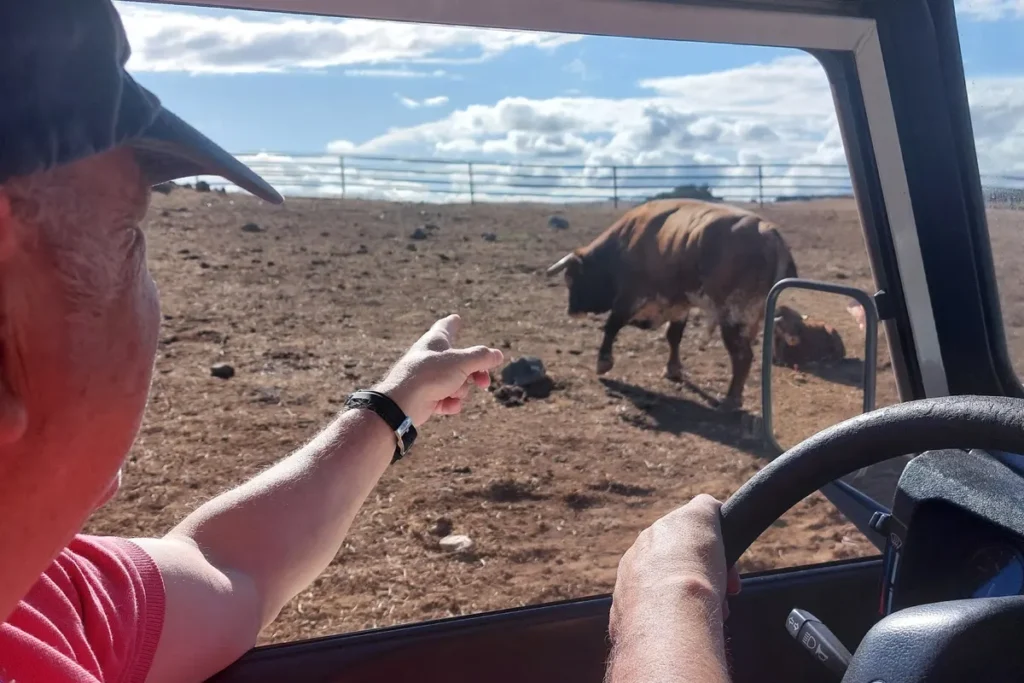
Much of the tour is made from the ranch vehicle, since the animals are not approached on foot.
Food and drink are not included, although the visit usually ends with a light Andalusian snack at the estate.
This is a visit to a breeding estate, not a bullfight. No bull is fought or harmed during it.
Closed shoes you do not mind getting dusty. This is a working farm.
Sun protection and a hat in the warmer months: the dehesa is open ground with scattered shade.
Bring some water.
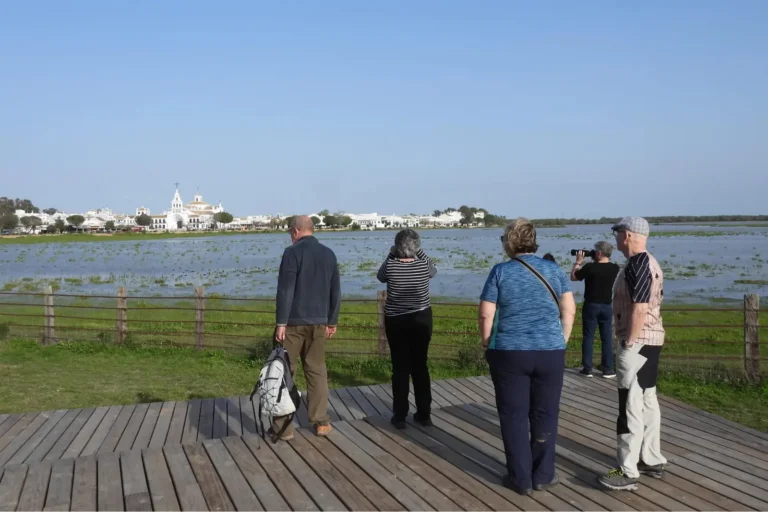
Bring a camera with some zoom if you have one. The animals are watched from a distance for obvious reasons.
It is a four-hour activity, so you are back in Seville with most of the day still ahead of you.
Free cancellation up to 24 hours before the activity. You can cancel from the confirmation email you receive when you book.
The best-rated guide to Seville
First-hand local advice, more than 90 pages in PDF: what to see, where to eat, museums and palaces, day trips, opening hours and prices, and tourist maps of the city. Book any activity with us and it’s yours. Get the guide
 Eduardo BallesterosSeville local and author of the guide
The half-day trip
An animal bred for one thing, on the land that shaped it
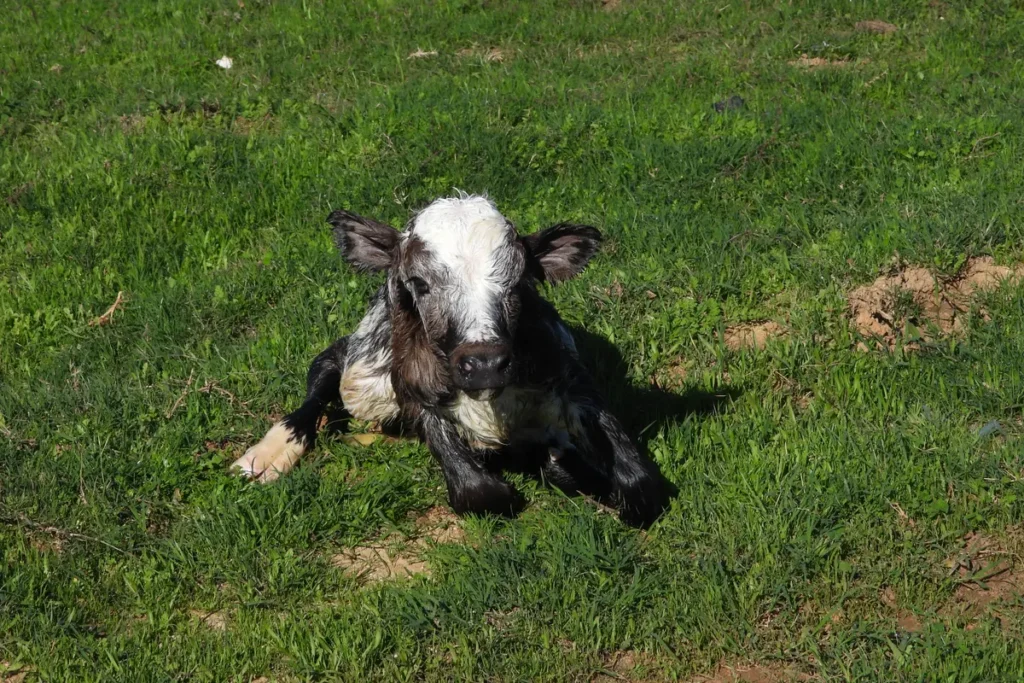
The fighting bull is a distinct breed, raised in a way almost no other cattle are: outdoors, at low density, for four to six years, on hundreds of hectares of oak pasture. Whatever you think of what happens afterwards, the way these animals live is worth seeing, and it is what this visit is about.
Out into the countryside
A short drive takes the group from Seville out into the surrounding countryside and through the gates of a working ganaderia, a breeding estate that runs to hundreds of hectares. One of the people who works it meets the group.
The animals in the pasture
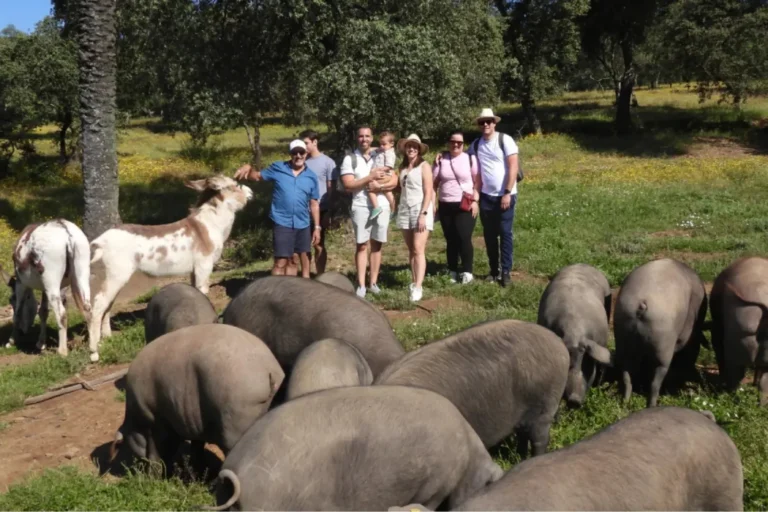
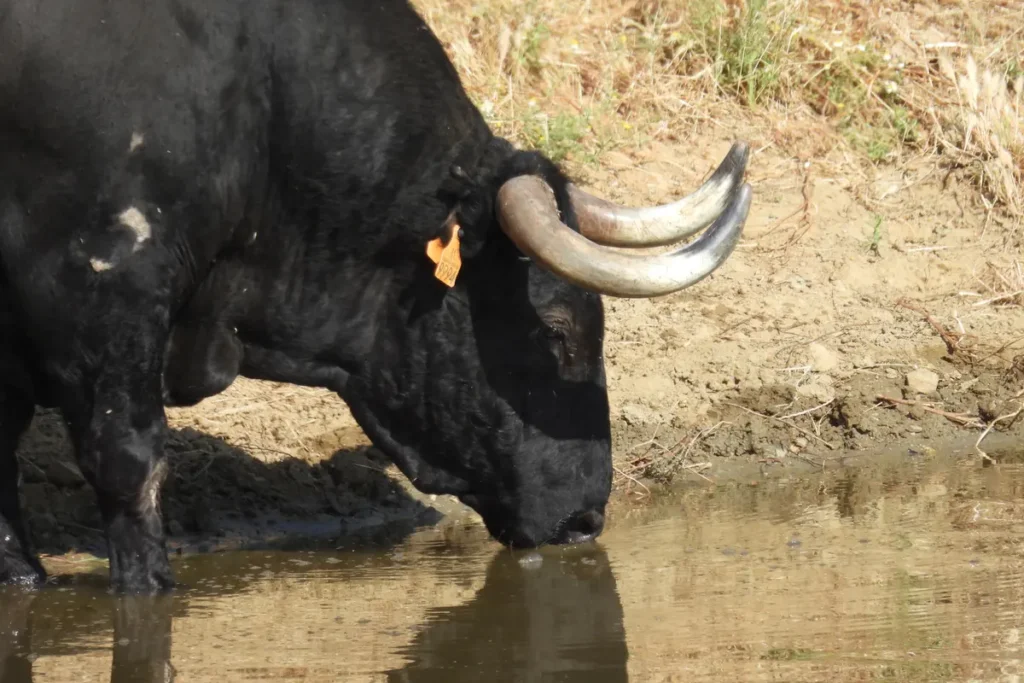
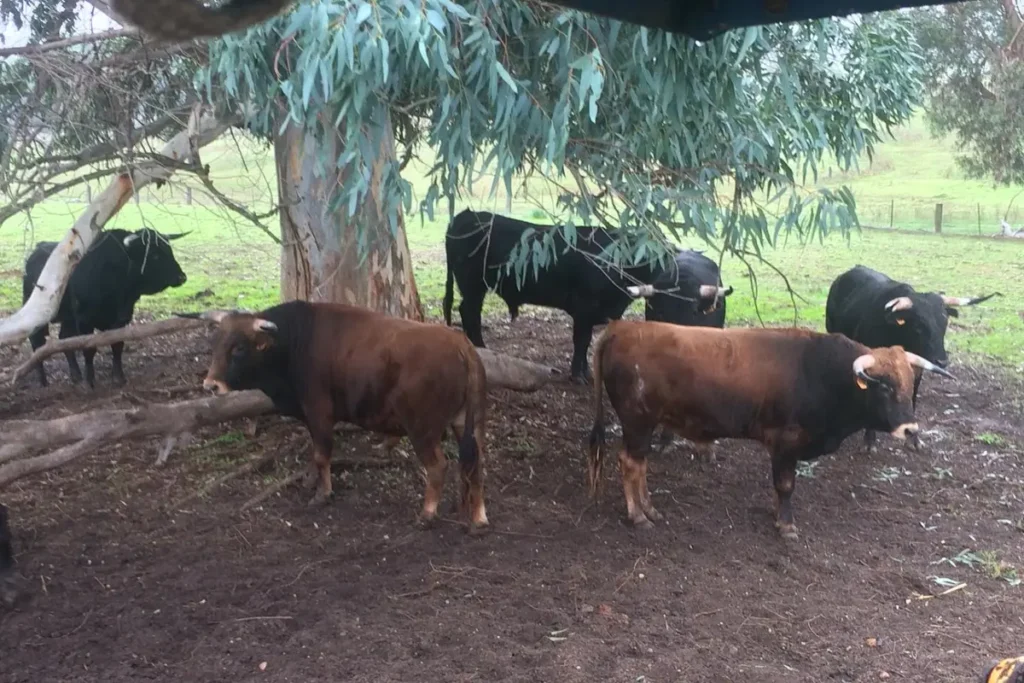
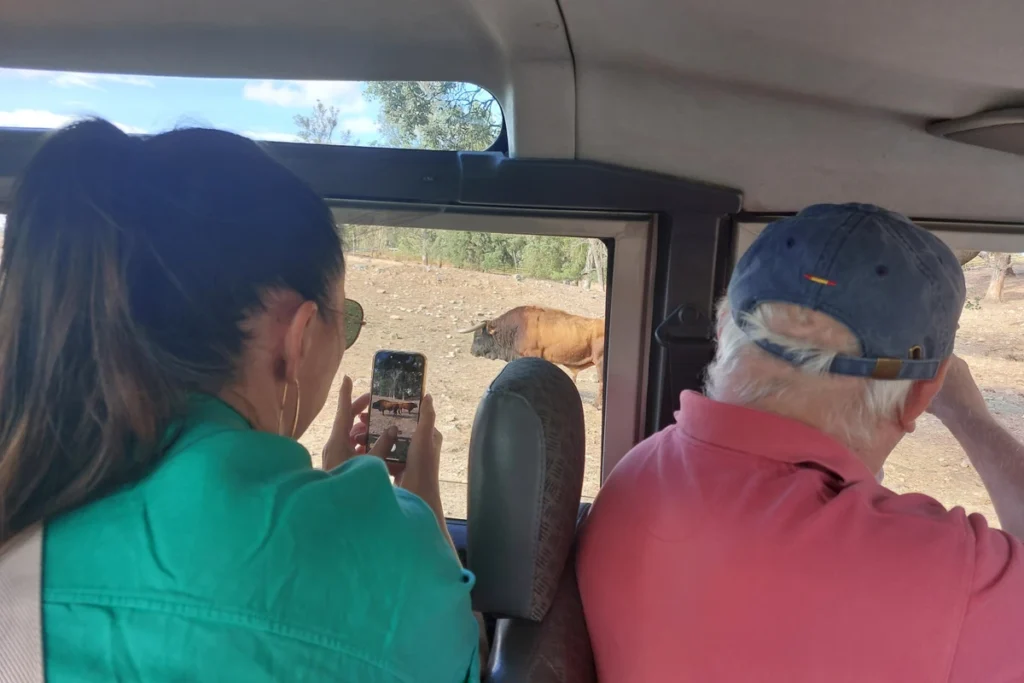
Much of the visit is made from the estate vehicle, driving out among the herds. The bulls live in family groups on open ground and are left largely alone, which is the point: an animal that is handled becomes unpredictable in ways the breeders do not want. You watch them from a distance, resting under the trees and at the water.
How a herd is run
Your host explains the daily work of the estate and how the bloodlines, the encastes, are selected and kept separate. It is a conversation about genetics, land management and a very long timescale, and it is the part that most surprises visitors who arrived expecting something else.
The tienta ring, and a bite to eat
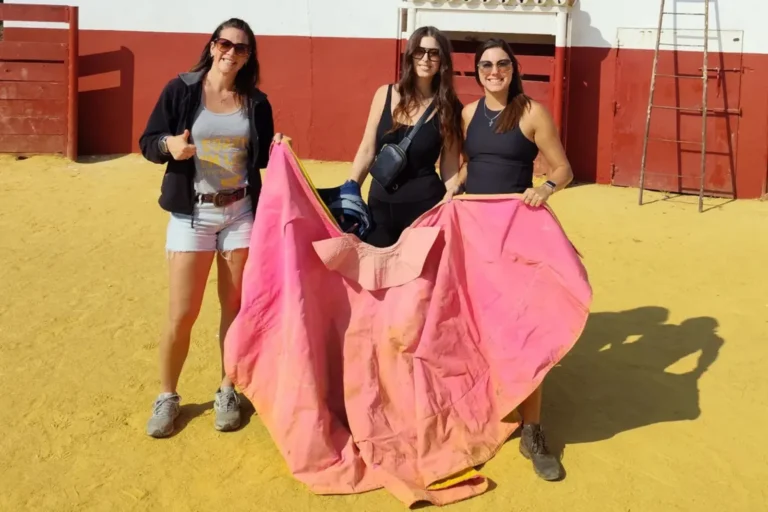
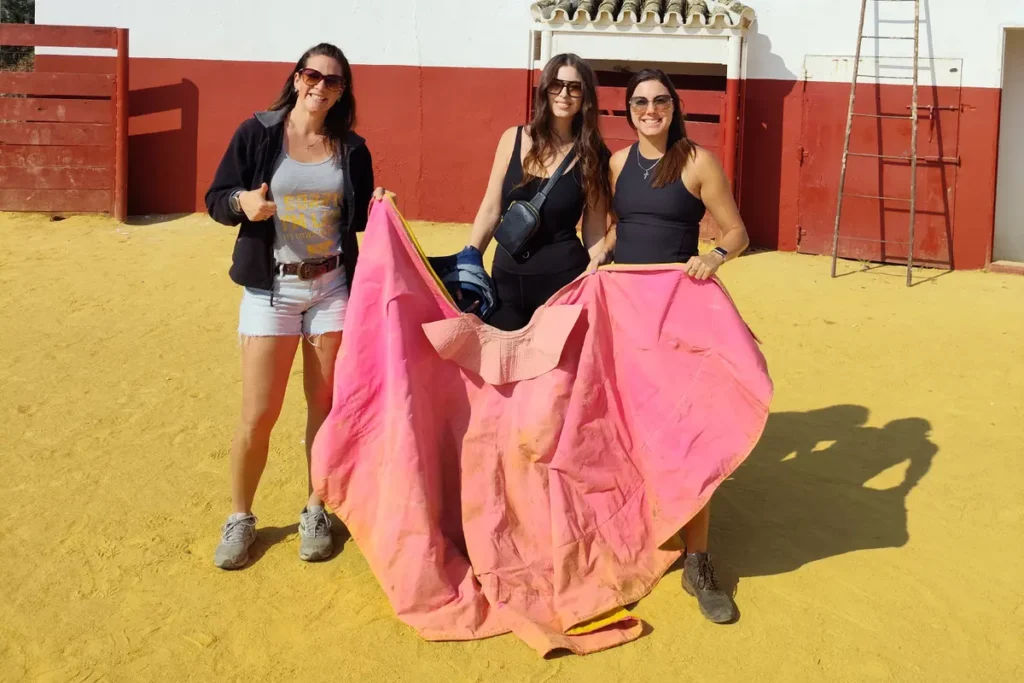
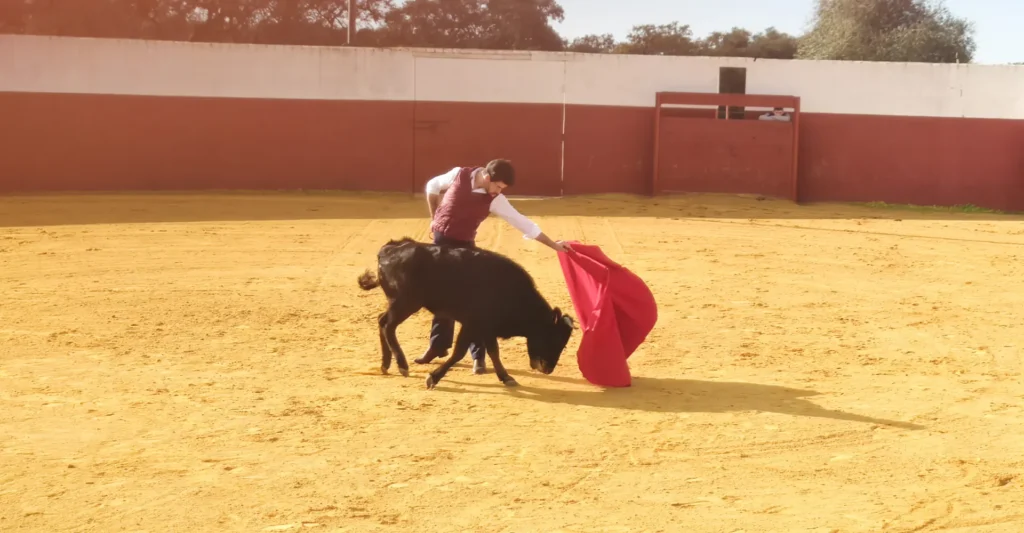
The walk takes in the estate buildings, among them the small ring where the young females are tested for temperament, which is how the breeding decisions are made. The visit usually closes with a light Andalusian snack before the drive back to Seville.
Important: the order and format of the route may vary depending on the time of year, the weather, road conditions and each town’s local holidays. Your guide will organize the trip in whatever way works best for the group.
Your questions answered
Frequently asked questions
No. This is a visit to a breeding estate to see the animals in the field and to learn how the herd is run. No bull is fought or harmed during the visit, and there is no performance of any kind.
Around four hours in total, including the drive each way. It is a half-day activity, so you are back in Seville with the rest of the day free.
No, and deliberately so. Most of the tour is made from the estate vehicle and the animals are watched at a distance. They are not tame and nobody approaches them on foot.
Yes, provided you follow what your host tells you. The estate does this regularly, the route is designed around keeping a safe distance, and the vehicle is the reason the animals stay unbothered.
Spanish, English, French and Italian. You choose when you book. French and Italian need a minimum of three travelers to be guaranteed; if that number is not reached, it runs in English or Spanish.
You are picked up at your hotel or accommodation in central Seville, and that is also where the trip ends. After you book, the exact time and pick-up point are confirmed with you by email or telephone. If you are staying outside central Seville, choose C. Rastro 12A as your pick-up point instead and make your own way there.
Yes, round trip. You travel in a comfortable, air-conditioned vehicle, van, minibus or coach, depending on how many travelers have booked for that date. Some have a toilet on board; if yours does not, you can ask your guide to stop at a service area.
It depends on the bookings for each date, and groups are usually small. In high season the group is split into two or more subgroups: as a rule, groups are no larger than 30 people.
The visit usually ends with a light Andalusian snack at the estate. Beyond that, food and drink are not included and there is no meal stop.
Not much. The pasture is crossed in the vehicle and the walking is around the estate buildings and the tienta ring, on flat but uneven farm ground.
Yes, and there is a reduced rate for children. It works essentially as a farm visit: large animals seen from a vehicle, in the open.
Partly. Most of the tour is seated in the vehicle, which helps, but the estate vehicle is high to climb into and the farm ground is uneven.
Yes. Cancellation is free up to 24 hours before the activity.
Planning your visit to the dehesa
Practical questions about the animal and the tradition, useful background before you travel.
A distinct cattle breed, the Lidia, selected over centuries not for meat or milk but for a defensive temperament. It is smaller and leaner than a commercial beef animal, with a different skeleton and a different reaction to being approached, and it has been bred in the Iberian Peninsula for around five hundred years.
Extensively, which in practice means a handful of animals per hectare on open pasture, with minimal human contact. They live four to six years before leaving the estate, against around eighteen months for beef cattle. The economics only work because the land is cheap and the animal is valuable.
The test that decides which animals breed. It is carried out on the young females, in a small private ring on the estate, to assess how they respond. The males are never tested this way: a bull that has faced a cape once learns from it, so by rule it can only ever enter a ring once.
A bloodline. Every ganaderia traces its herd to one of a limited number of historical foundation stocks, each with its own physical traits and behaviour, and they are kept strictly separate. Breeders talk about encastes the way vine growers talk about grape varieties.
Everything. The dehesa is the oak pasture of southwest Spain, and raising fighting bulls is one of the few economic uses that keeps it intact rather than ploughed or built on. Ecologists who have no interest in the bullring often note that these estates preserve a habitat that is disappearing elsewhere.
That is a judgement each visitor makes for themselves. What the visit consists of is seeing the animals in the field and learning how the land and the herd are managed. It does not include a bullfight and the estate does not stage one.
Mostly across the provinces of Seville, Cadiz and Huelva, on the dehesa and the marshland pastures of the lower Guadalquivir. The province of Seville alone holds dozens of registered breeding estates.
Yes, and it is legally protected as cultural heritage at national level, although attendance has fallen a long way over recent decades and some regions and towns have restricted or abandoned it. Opinion in Spain is genuinely divided, and it splits sharply by age.