


Everything you need to know
Day trip details
To see current prices for each rate (adults, children, students and infants), select your preferred date in the booking calendar. The price shown in the calendar is always the final price.
Check the available days and times directly in the booking calendar: it updates in real time according to the season.
There are three pick-up points in central Seville. The one you choose is also where the day ends.
C. Trajano 6, Casco Antiguo, 41001 Seville · View on Google Maps
C. Zaragoza 1, Casco Antiguo, 41001 Seville · View on Google Maps
C. Rastro 12A, 41003 Seville · View on Google Maps
Not every pick-up point is available on every date: the booking calendar shows which ones you can choose and the exact time. We recommend arriving with time to spare.
Round-trip transport from Seville and a professional guide for the day.
A guided walking tour of the historic centre of Cordoba, taking in the Roman Bridge, the Jewish Quarter and the flower-filled courtyards.
A short stop in the white town of Carmona on the way, with time for a coffee.
Free time in Cordoba afterwards.
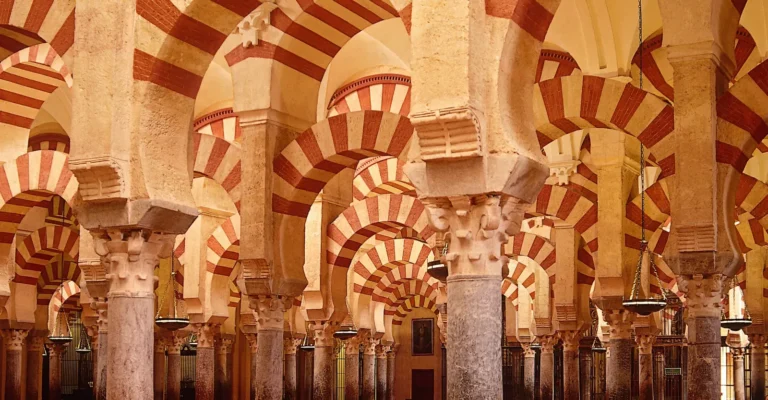
Admission to the Mosque-Cathedral is not included on this version, and the guided walk does not go inside it. We run a separate day trip that does.
Food and drink are not included. There is a break with free time for lunch.
The order of the visits may change depending on the group or the time of year.
Comfortable footwear. The centre of Cordoba is visited entirely on foot, over cobbles and narrow lanes.
Bring some water and a snack for the road. In summer add sun protection and a hat: Cordoba is one of the hottest cities in Spain and there is little shade in the Juderia at midday.
There is a break with free time for lunch. You can eat at a local bar or restaurant, on which your guide can make recommendations, or bring your own picnic.
If seeing the inside of the Mosque-Cathedral matters to you, take the version of this day trip that includes it rather than trying to fit it into the free time.
Free cancellation up to 24 hours before the activity. You can cancel from the confirmation email you receive when you book.
The best-rated guide to Seville
First-hand local advice, more than 90 pages in PDF: what to see, where to eat, museums and palaces, day trips, opening hours and prices, and tourist maps of the city. Book any activity with us and it’s yours. Get the guide
 Eduardo BallesterosSeville local and author of the guide
The day trip
A caliphate capital, on foot and without the queue
For a while in the tenth century Cordoba was the largest city in Europe and the seat of a caliphate that reached most of the peninsula. What it left behind is a dense, walkable old town of lanes, courtyards and a Roman bridge, and you can take it in properly in a day.
A coffee in Carmona on the way
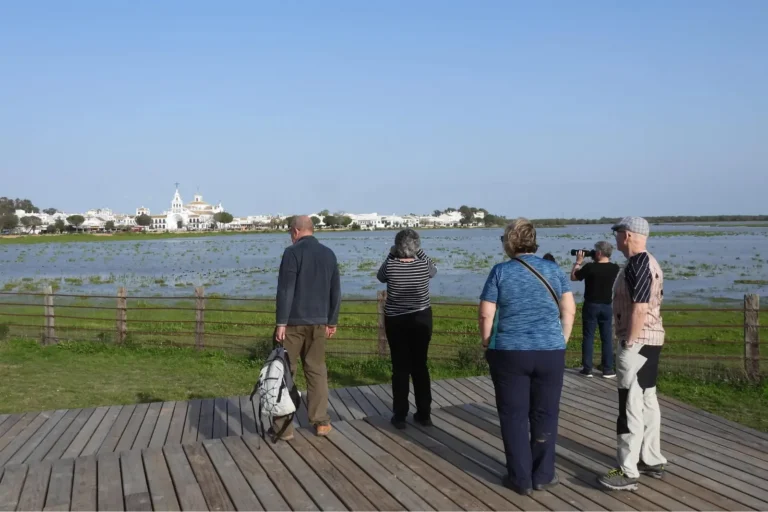
The road north out of Seville stops first in Carmona, a white town on a low hill with Roman gates still standing in its walls. It is a short stop, long enough to stretch your legs and have a coffee, before the hour or so on to Cordoba through country dotted with olive trees.
The Roman Bridge and the Guadalquivir
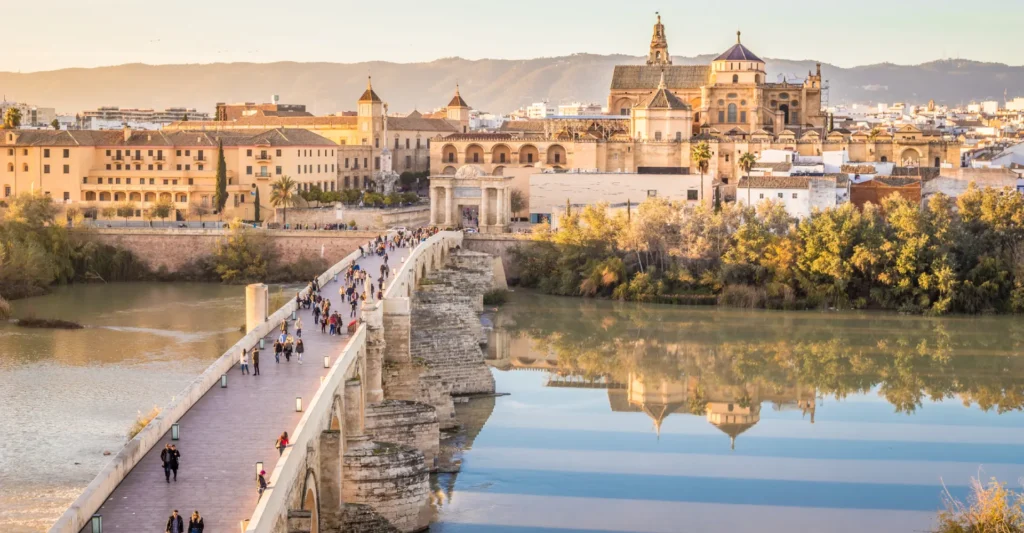
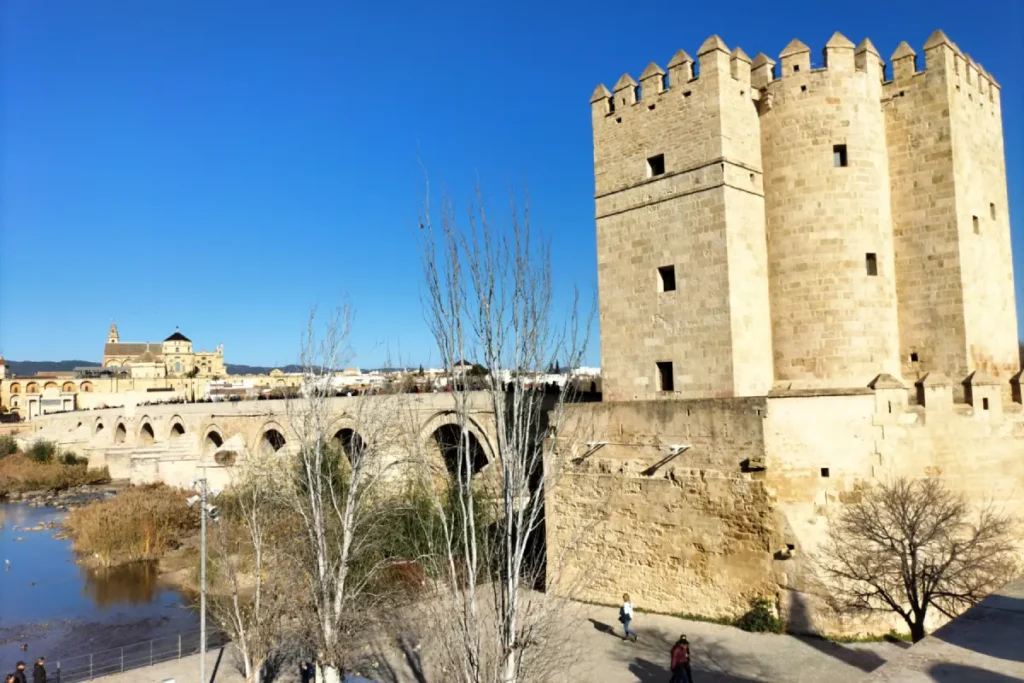
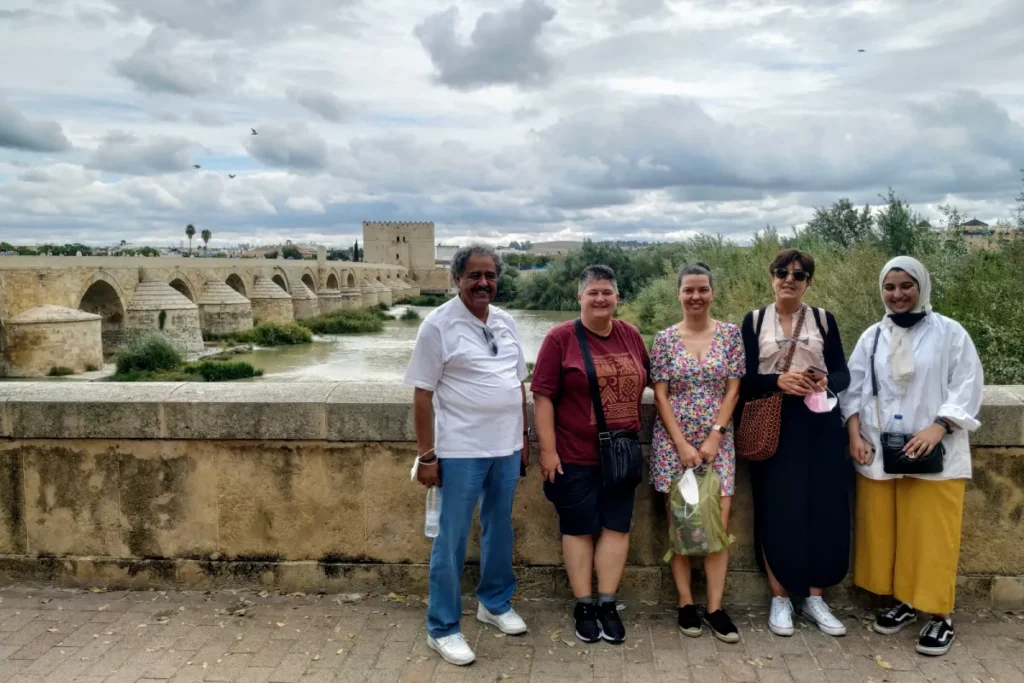
The walking tour begins by the river. The Roman bridge has carried traffic across the Guadalquivir in one form or another for two thousand years, and the Calahorra Tower guarding its far end was built to defend it. From the middle of it you get the view of the old city that everyone photographs.
The Juderia
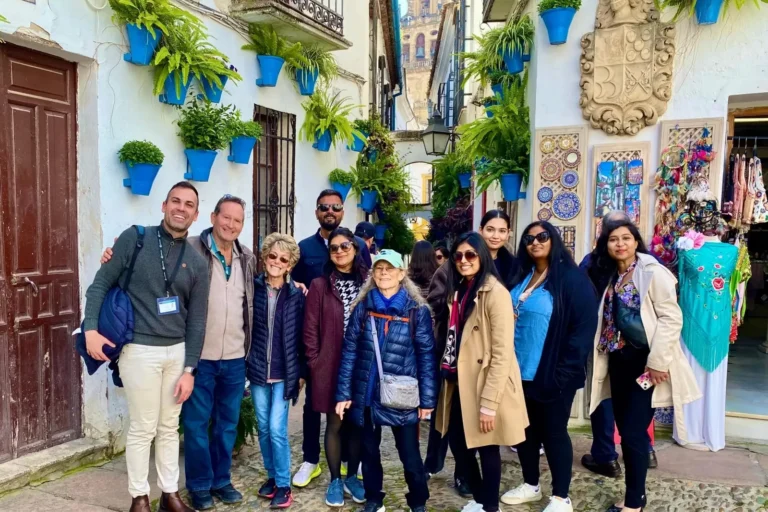
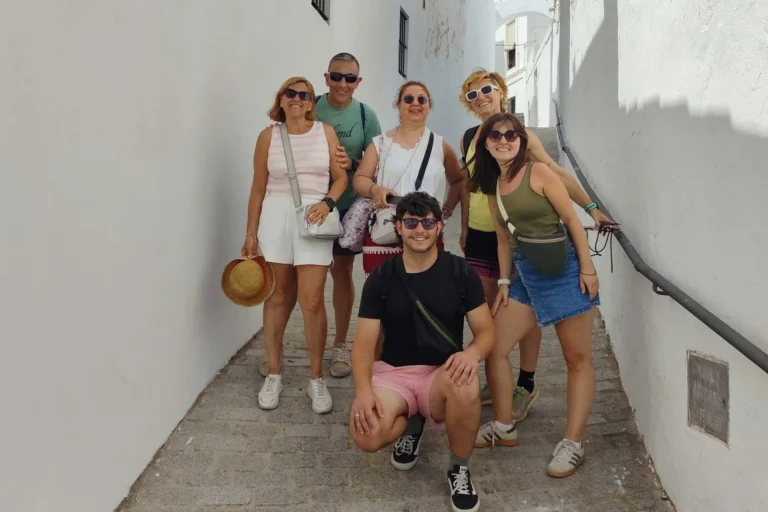
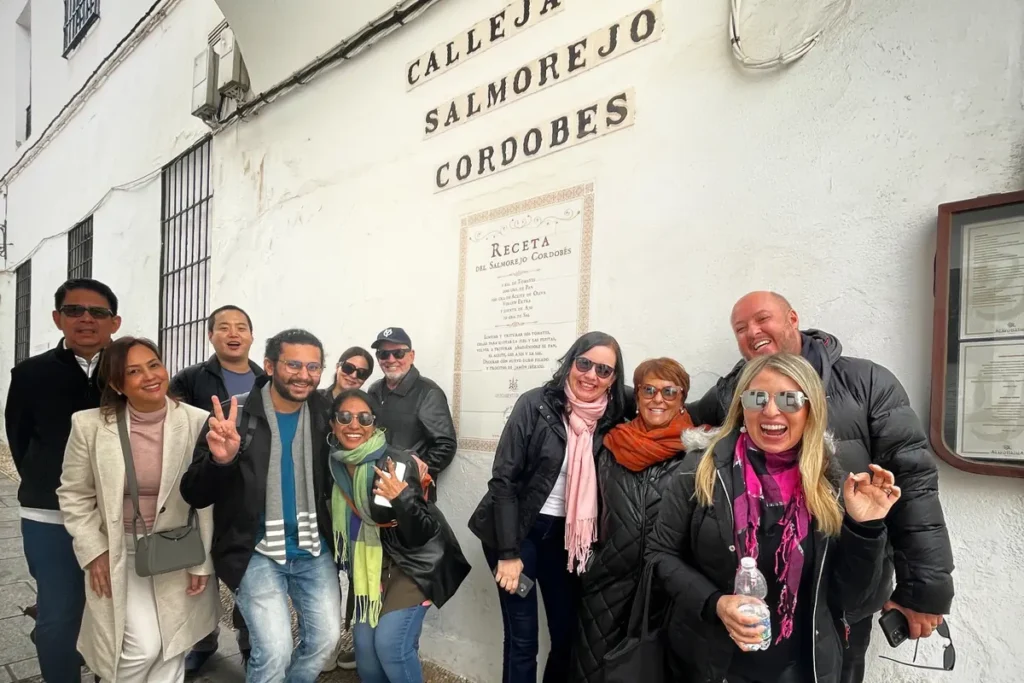
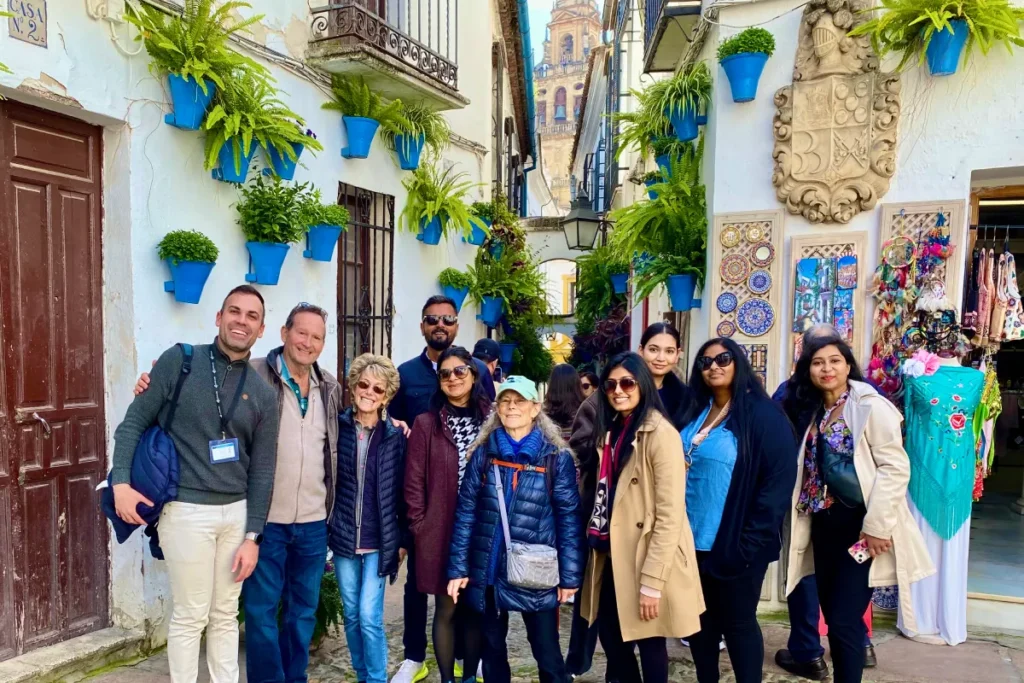
The medieval Jewish Quarter is a knot of whitewashed lanes barely wide enough for two people, opening now and then into small squares. The guide walks it with you and explains what you are looking at, which in a place this compressed makes the difference between a pretty street and a legible one.
The courtyards, and free time
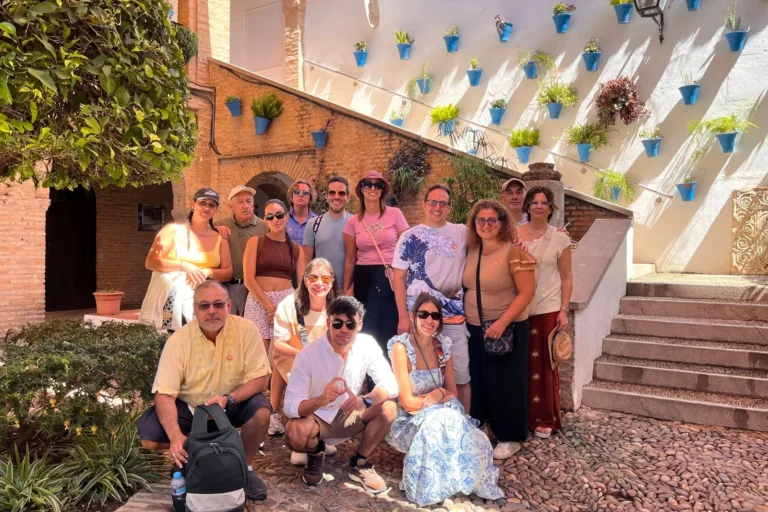
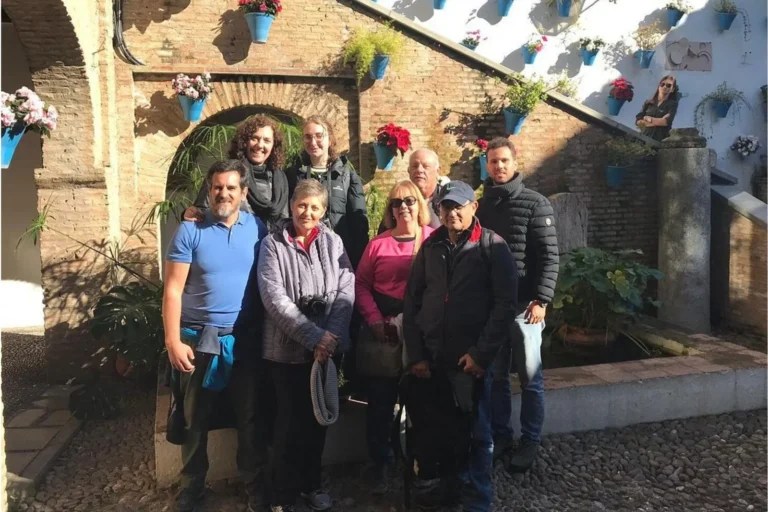
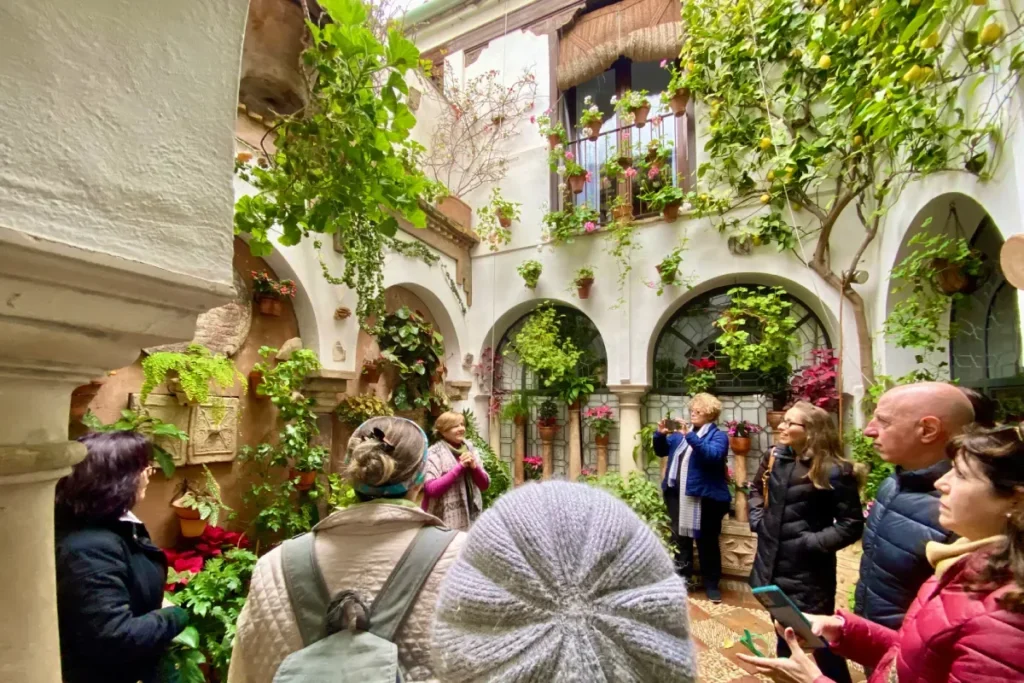
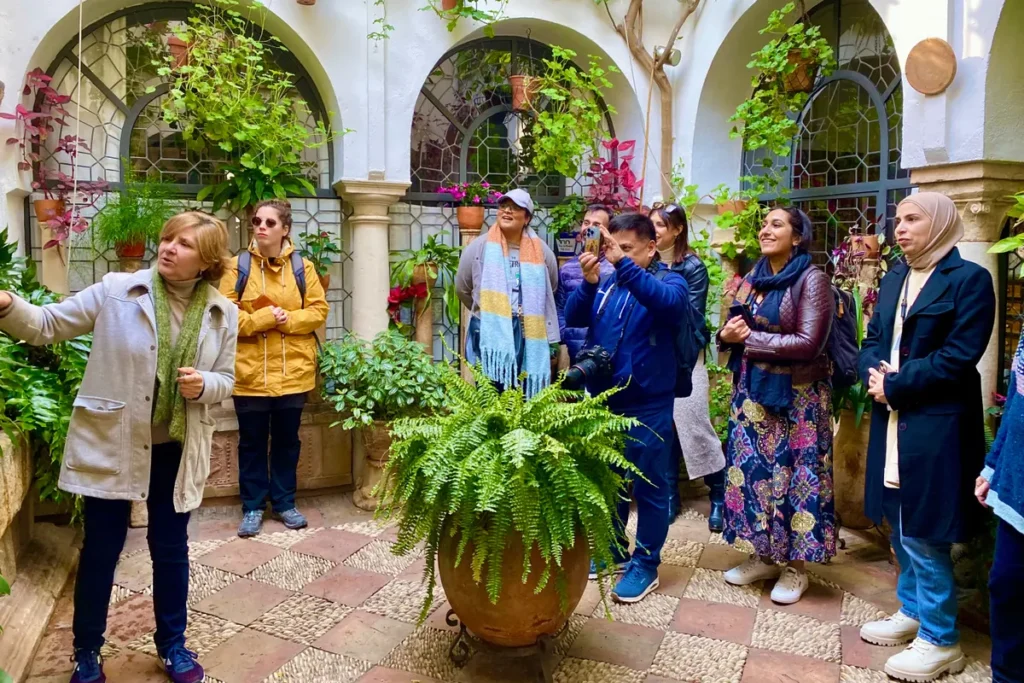
Cordoba’s patios are recognized by UNESCO: private courtyards that residents fill with geraniums and ferns and, in the right season, open to visitors. The route takes in some of the most colourful corners of the old town, and afterwards the time is yours to eat and wander.
Important: the order and format of the route may vary depending on the time of year, the weather, road conditions and each town’s local holidays. Your guide will organize the day in whatever way works best for the group.
Your questions answered
Frequently asked questions
No. This version walks the historic centre, the Roman Bridge, the Jewish Quarter and the courtyards, but does not go inside the Mosque-Cathedral. We run a separate day trip with the admission included, and if the monument is the reason you are going, that is the one to take.
It is possible but not something to count on. The monument works with timed entry slots that sell out first thing in spring and summer, and a proper visit takes over an hour. The free time here is meant for lunch and a wander.
Yes, briefly. It is a short stop for a coffee and a look at the town rather than a guided visit, and it breaks up the drive.
Around ten hours. The exact departure time for your date appears in the booking calendar.
Yes. A professional guide leads the walk through the historic centre. The time afterwards is free.
No. There is a break with free time for lunch in Cordoba, at a local bar or restaurant, on which your guide can make recommendations, or you can bring your own picnic.
Spanish, English, French and Italian. You choose when you book. Usually the guide runs the day in one language, although it is sometimes run in two at once, with the guide alternating between them.
From central Seville. There are three pick-up points and the booking calendar shows which ones are available on your date. The pick-up point is also the drop-off point.
Yes, round trip. You travel in a comfortable, air-conditioned vehicle, van, minibus or coach, depending on how many travelers have booked for that date. Some have a toilet on board; if yours does not, you can ask your guide to stop at a service area.
It depends on the bookings for each date, and groups are usually small. In high season the group is split into two or more subgroups: as a rule, groups are no larger than 30 people.
A fair amount. The historic centre is visited entirely on foot over cobbled streets and narrow lanes, so comfortable shoes make a real difference.
Yes, and there is a reduced rate for children. It is a long day with a good deal of walking, so it suits children who are used to it.
We would not recommend it. The visits are made entirely on foot and much of the route is over uneven, cobbled ground.
Yes. Cancellation is free up to 24 hours before the activity.
Planning your visit to Cordoba
Practical questions about the city and the stop on the way, useful background before you travel.
Yes, though it depends what you came for. The Juderia, the Roman bridge, the courtyards and the riverside are the fabric of the city and they are all outdoors and free. What you miss is one extraordinary interior. Many visitors do the walk one day and the monument another.
Sitting on a ridge above the plain with a Roman past still visible in the street plan. Its Puerta de Sevilla is a Carthaginian and Roman gate rebuilt by successive rulers, and its Roman necropolis, on the edge of town, is one of the largest excavated in Spain.
Because for around a century it was the capital of the Caliphate of Cordoba and, by most estimates, the largest city in Western Europe, with libraries, running water and street lighting when other capitals had none. That period ended in civil war in 1031, and the city never regained the position.
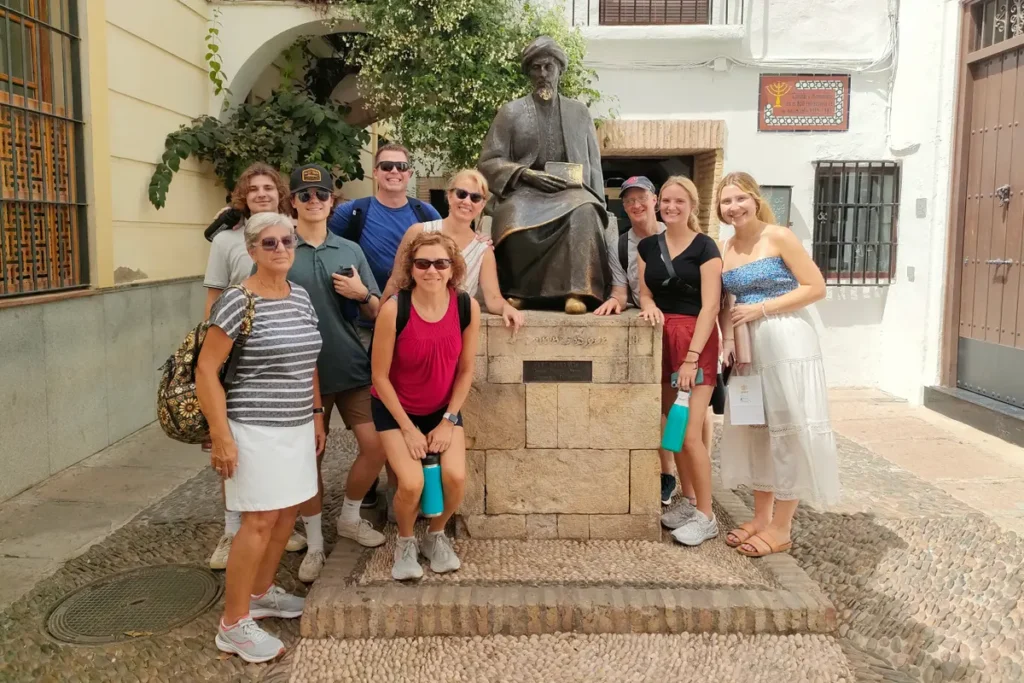
The medieval Jewish Quarter, a UNESCO-listed maze of whitewashed lanes northwest of the Mosque. It holds one of only three medieval synagogues still standing in Spain, built in 1315, and the statue of Maimonides, the philosopher and physician born here in 1138.
The fortified gate at the southern end of the Roman bridge, built by the Almohads in the twelfth century to defend the crossing. It now holds a small museum, and the climb to its roof gives the classic view back across the bridge to the old city.
A palace city built from 936 outside Cordoba by the first caliph, abandoned and sacked within seventy years, and buried until the twentieth century. It is a UNESCO World Heritage Site in its own right, about eight kilometres west of the city, and needs its own visit.
A day covers the old town comfortably, because everything sits within a fifteen-minute walk. Two days lets you add the Mosque-Cathedral without rushing, the Alcazar and Medina Azahara.
Yes, and that is its great advantage over Granada or Toledo. The old town is flat, compact and closed to most traffic. The only difficulty is the surface, which is cobbled almost everywhere, and the heat in high summer.