

Everything you need to know
Walking tour details
To see current prices for each rate (adults, children and infants), select your preferred date in the booking calendar. The price shown in the calendar is always the final price.
The tour runs on a few days of the week only. Select your date in the booking calendar to see whether there is an English departure and at what time.
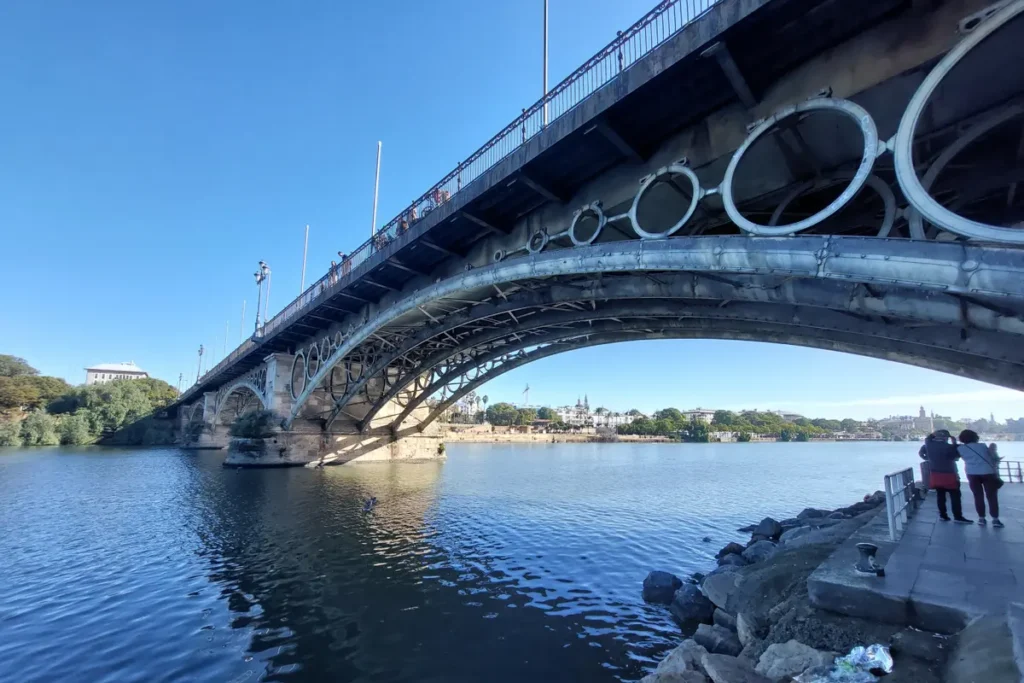
The group meets in Triana, at the Capilla del Carmen on the Plaza del Altozano, right at the far end of the Triana bridge.
Puente de Isabel II 23, 41010 Seville · View on Google Maps
Please arrive a few minutes early, so that the whole group can set off together.
A guided walk of about two hours through Triana with an official guide.
A ticket to the flamenco show at the end of the walk, at a venue in the quarter.
Two hours on your feet, outdoors, on flat streets along the river. Comfortable shoes, and in summer a hat and water.
The walk is circular: it starts and ends at the same place, on the Triana side of the bridge.
Cancellation is free up to 24 hours before the activity.
The best-rated guide to Seville
First-hand local advice, more than 90 pages in PDF: what to see, where to eat, museums and palaces, day trips, opening hours and prices, and tourist maps of the city. Book any activity with us and it’s yours. Get the guide
 Eduardo BallesterosSeville local and author of the guide
The walking tour
The other side of the river, which does not think of itself as the other side
Triana begins where Seville ends, across the Guadalquivir, and it has spent most of its history insisting it is a town in its own right. Its origins go back to the founding of the city by the Phoenician merchant Melkart, later renamed Hercules, and it became famous for two things above all: flamenco and pottery.
A quarter in two halves
The walk is circular, and it takes in both Trianas: to the south the old port, where the sailors lived, and to the north the industrial half, where the kilns were. Between them the Triana bridge, Calle Pureza and Calle San Jacinto, which is the spine of the place.
What you stop at
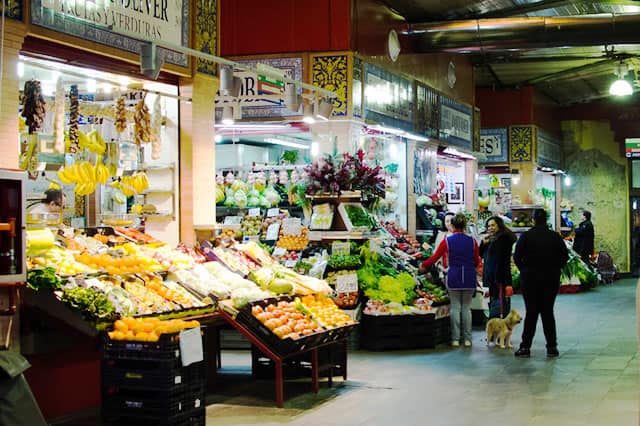
The Capilla del Carmen at the foot of the bridge, the covered market, the castle of San Jorge underneath it, the church of Santa Ana — the oldest parish in Seville — the house of the Esperanza de Triana, and the old Cava de los Gitanos, which is where flamenco is generally agreed to have started.
Calle Betis, and the things nobody points out
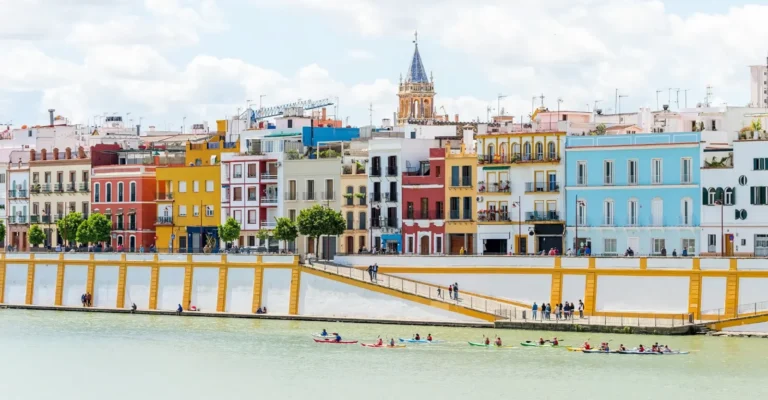
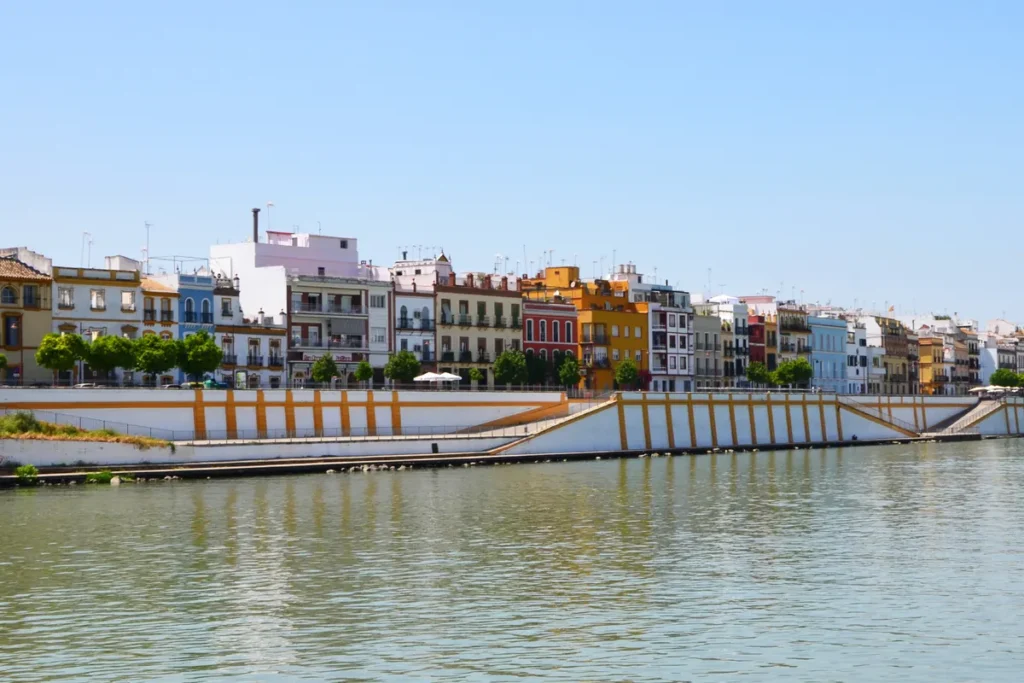
The route walks the length of Calle Betis, with the coloured house fronts on one side and the whole of Seville on the other, and stops at two places most visitors pass without noticing: the Patio de Monipodio, which Cervantes put in a story, and what is left of the old University of Mareantes, where pilots were trained for the Atlantic crossing.
Legends, mostly
This is a quarter that tells stories about itself, and the guide tells them: the anecdotes, the traditions, the Holy Week rivalry that everyone here takes entirely seriously, and the events the neighbourhood has decided to remember its own way.
And then the show
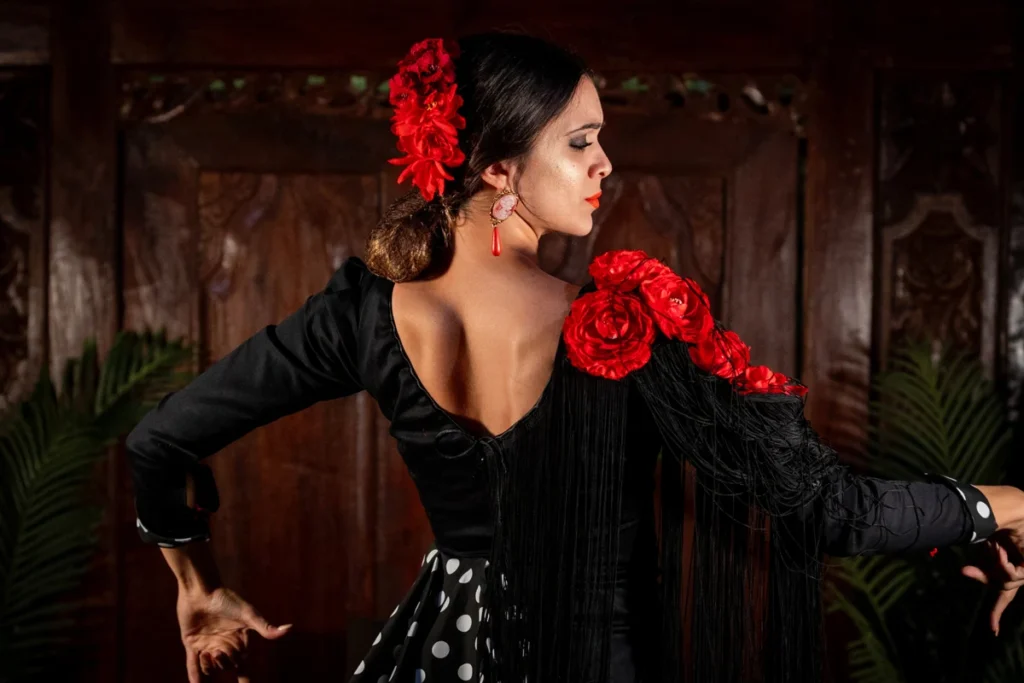
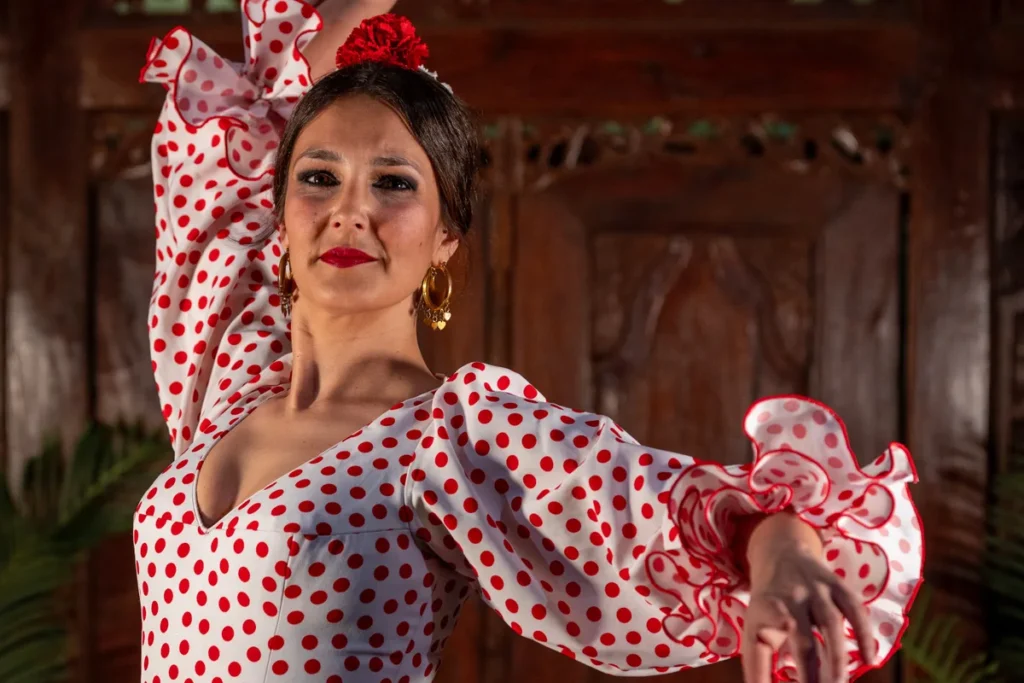
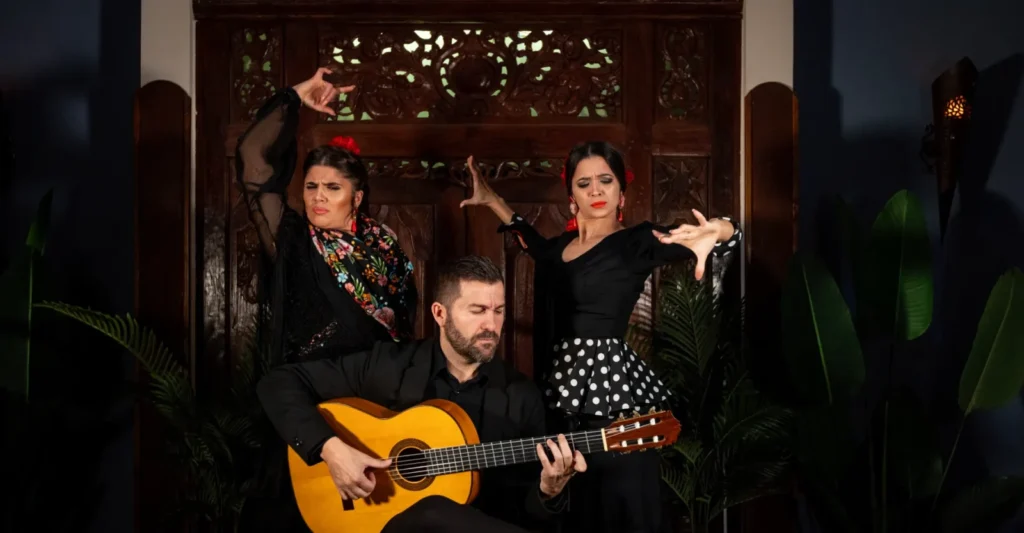
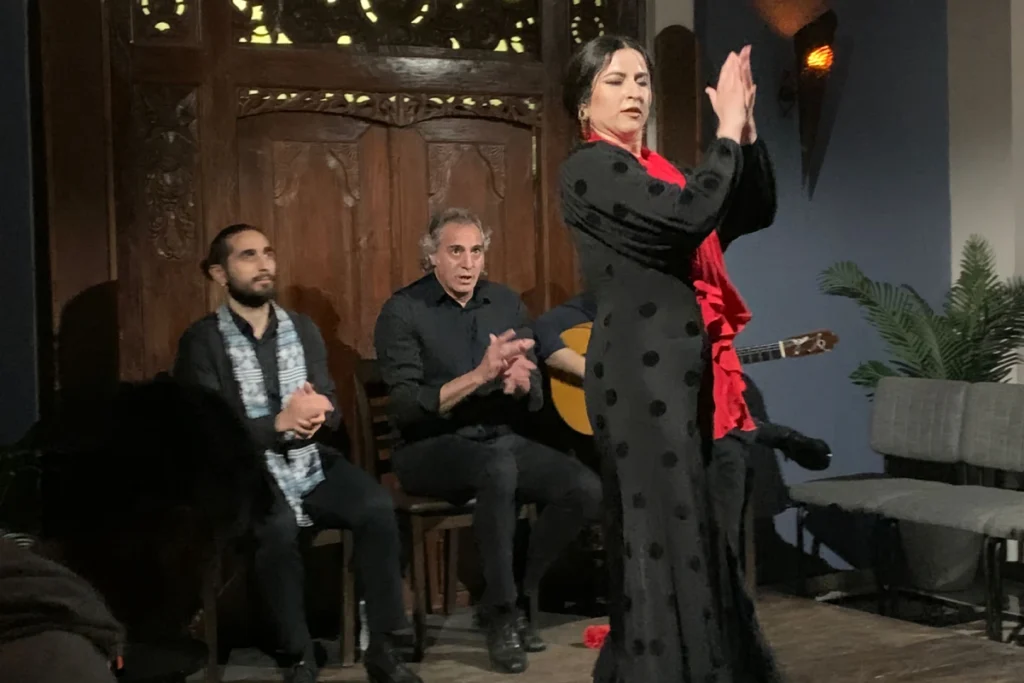
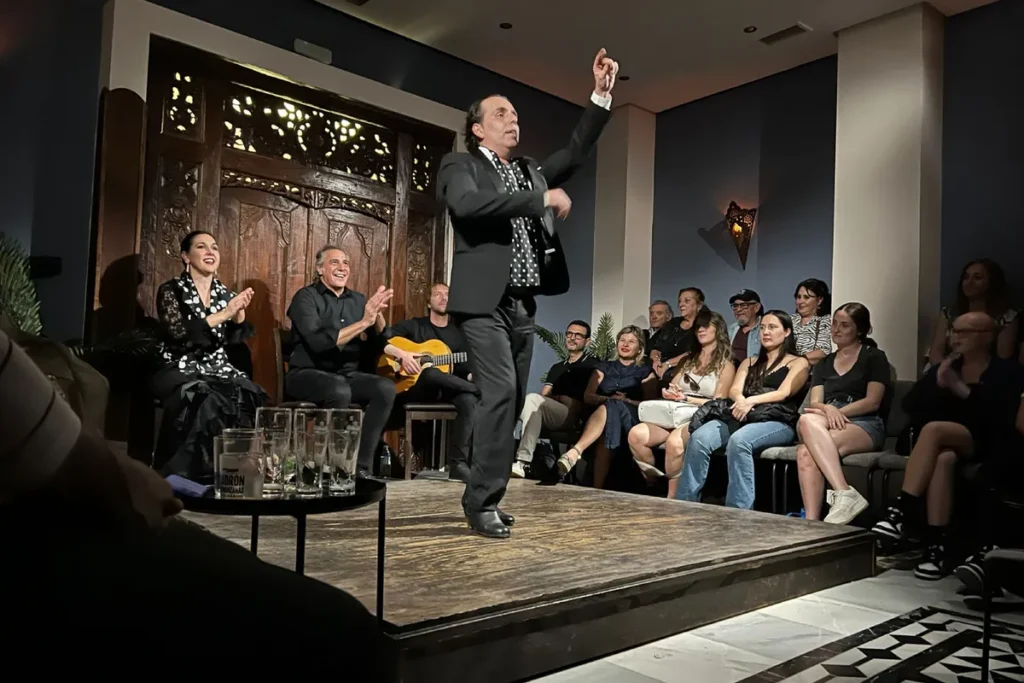
The walk ends at a flamenco venue in the quarter, and the ticket is part of your booking. Triana is where the art came from, and hearing it a few streets from the Cava de los Gitanos, after two hours of being told why that matters, is not the same as hearing it anywhere else.
Your questions answered
Frequently asked questions
About two hours in total, the walk and the show together.
At the Capilla del Carmen on the Plaza del Altozano, at the Triana end of the Triana bridge. It is about fifteen minutes on foot from the Cathedral.
Yes. Your booking covers the guided walk and the entrance to the show at the end. There is nothing to buy at the door.
At a flamenco venue in Triana itself, a few minutes from where the walk ends. Your guide takes the group there.
No. The walk is from the outside; what the price adds to the walk is the show.
Yes. The same walk on its own runs on the same days, from the same place, and costs less.
The walk booked on this page is given in English. The same walk also runs in Spanish, on its own dates.
The flamenco show itself needs no translation.
Yes. Cancellation is free up to 24 hours before the activity.
Planning your evening in Triana
Practical questions about the quarter and about flamenco, useful background before you travel.
Because this is where it came from. The Cava de los Gitanos, a few streets from where the show is, is where flamenco took the shape it now has, and Triana has never stopped producing the people who perform it.
The stretch of Triana where the gitano families lived until they were moved out in the middle of the 20th century. The buildings have gone; the claim that flamenco was born there has not.
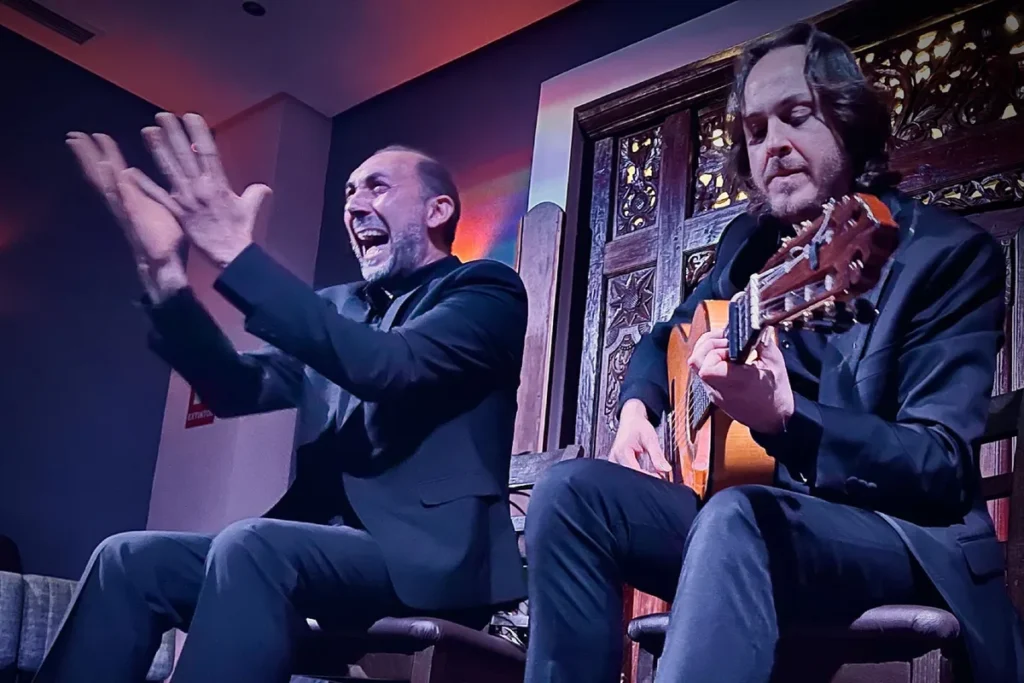
Usually three or four performers — a singer, a guitarist and one or two dancers — working through a set of different palos, which are the forms flamenco is built from. It is loud, close and not a folklore display.
It is the part of Seville that feels least arranged for visitors, and Calle Betis gives you the best view of the city there is. Even without the show it is worth the fifteen-minute walk.
Whatever you walked in. Flamenco venues in Seville have no dress code, and this one comes at the end of two hours outdoors.