

Everything you need to know
Walking tour details
To see current prices for each rate (adults, children and infants), select your preferred date in the booking calendar. The price shown in the calendar is always the final price.
The tour runs on a few days of the week only, and each language has its own dates. Select your date in the booking calendar to see whether there is an English departure.
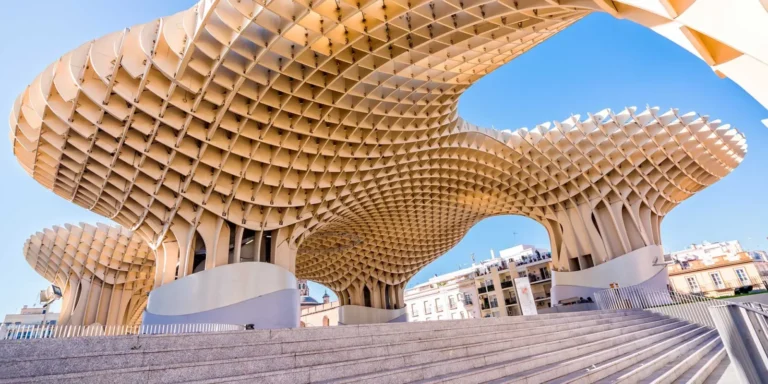
The group meets at the Metropol Parasol, the timber canopy everyone in Seville calls Las Setas. Your guide waits on the main steps of the front building, the side facing the road.
Pl. de la Encarnación, 41003 Seville · View on Google Maps
Please arrive a few minutes early, so that the whole group can set off together.
A guided walk of about three and a half hours through the northern half of the old town, with an official guide.
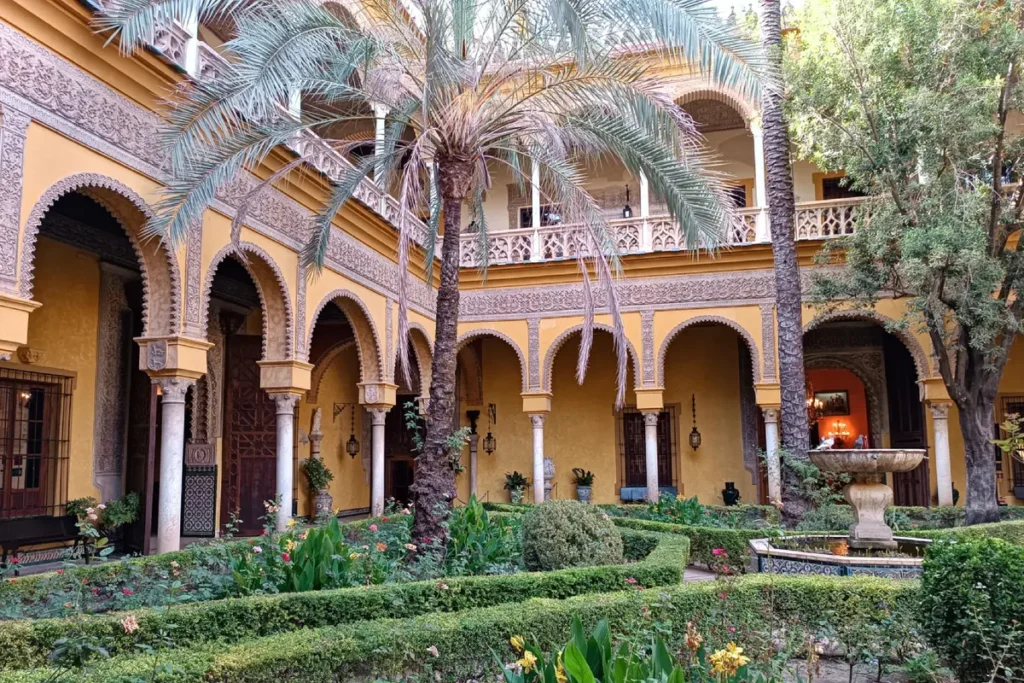
Entrance to the Palacio de las Dueñas, where the tour ends: the gardens and the rooms of the house.
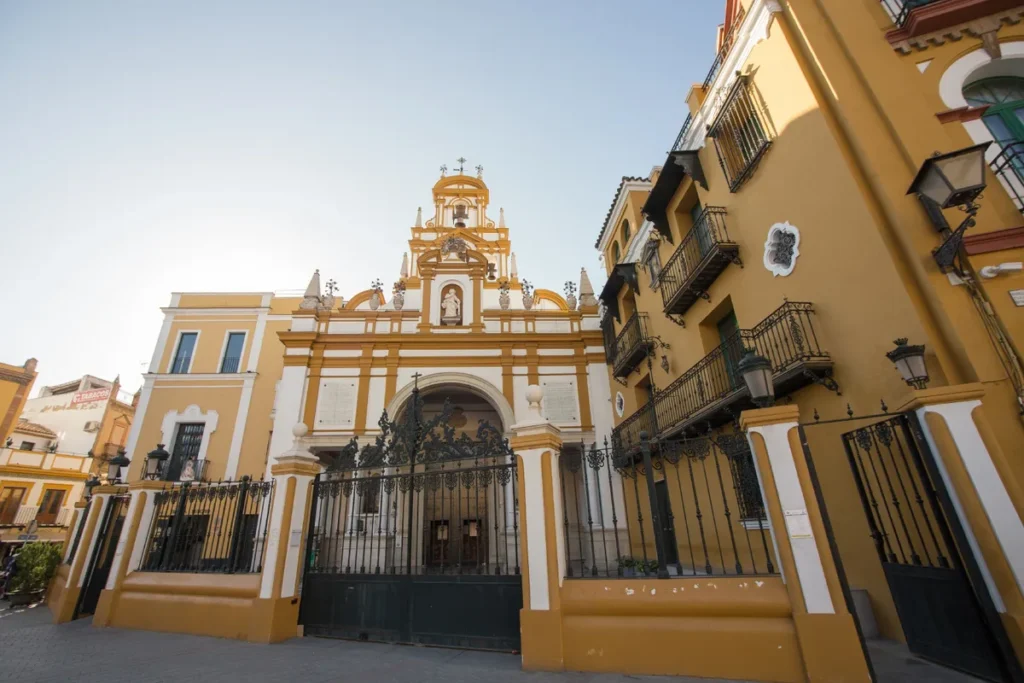
Entrance to the Basilica of La Macarena, to see the image the quarter is famous for.
Three and a half hours on your feet, almost all of it outdoors. Comfortable shoes, and in summer a hat and water.
It is a long walk but not a hard one: flat streets the whole way, and it finishes sitting in the gardens of a palace.
Cancellation is free up to 24 hours before the activity.
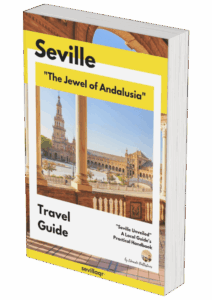
The best-rated guide to Seville
First-hand local advice, more than 90 pages in PDF: what to see, where to eat, museums and palaces, day trips, opening hours and prices, and tourist maps of the city. Book any activity with us and it’s yours. Get the guide
 Eduardo BallesterosSeville local and author of the guide
The walking tour
The half of the old town the tour buses never reach
Almost everything written about Seville is about the ten streets around the Cathedral. This walk goes the other way: north, up the line of the old Roman cardo maximus, through the working quarters where the city actually lives, and it ends inside one of the great private houses of Spain.
Starting under Las Setas
The route begins at the Metropol Parasol, the timber canopy that covers the Plaza de la Encarnación and sits on top of a Roman excavation — the most modern thing in Seville standing directly on the oldest. From there it goes into Calle Feria, past the church of San Juan de la Palma, to the street market that is one of the oldest still trading anywhere.
Into the Macarena
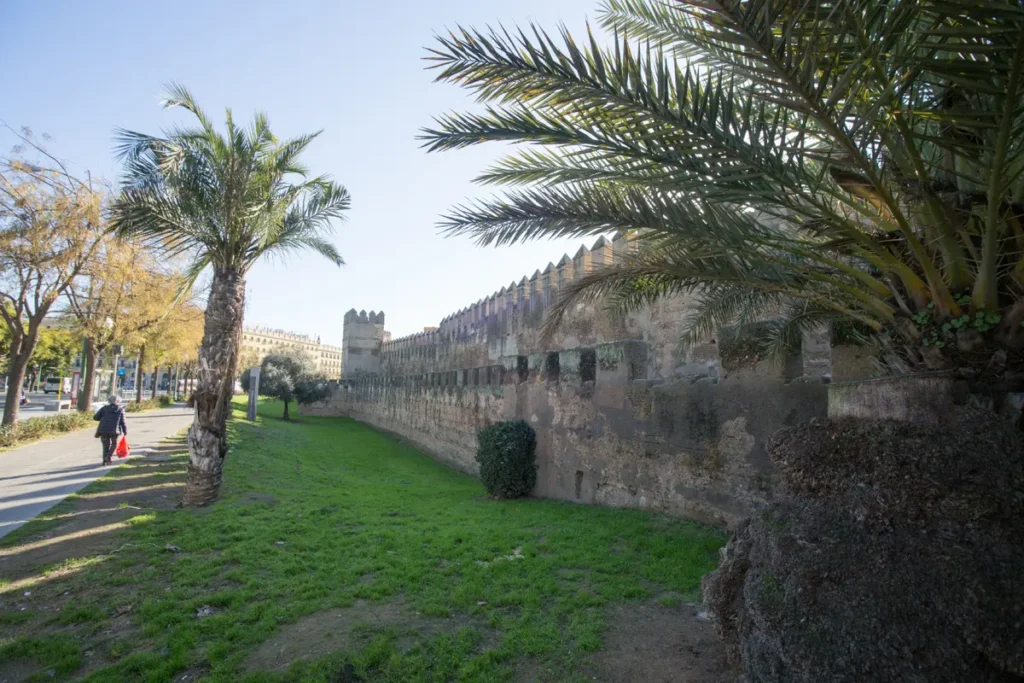
The Mudejar palace of the Marquises of La Algaba, the church of Omnium Sanctorum, and then the heart of the quarter: the Basilica of La Macarena, where you go in to see the image that matters most to this city, and outside it the surviving stretch of medieval wall with one of its gates still standing.
Up Calle San Luis
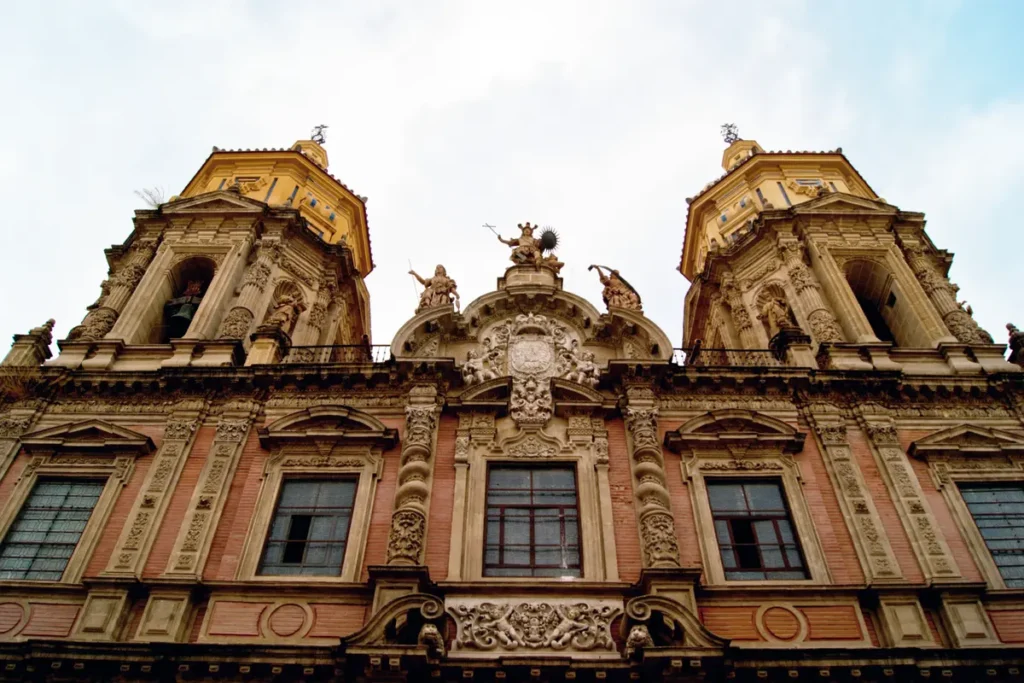
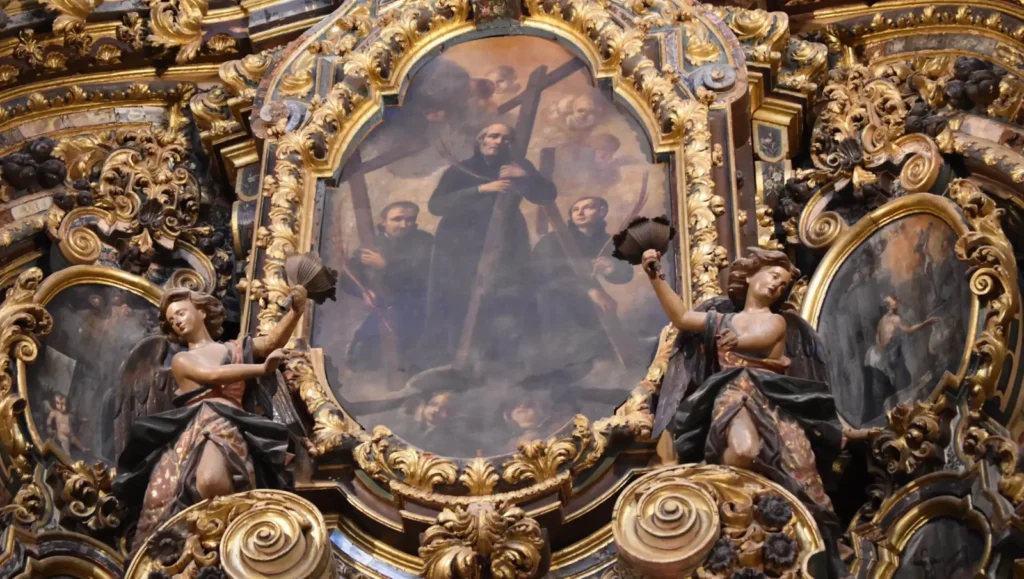
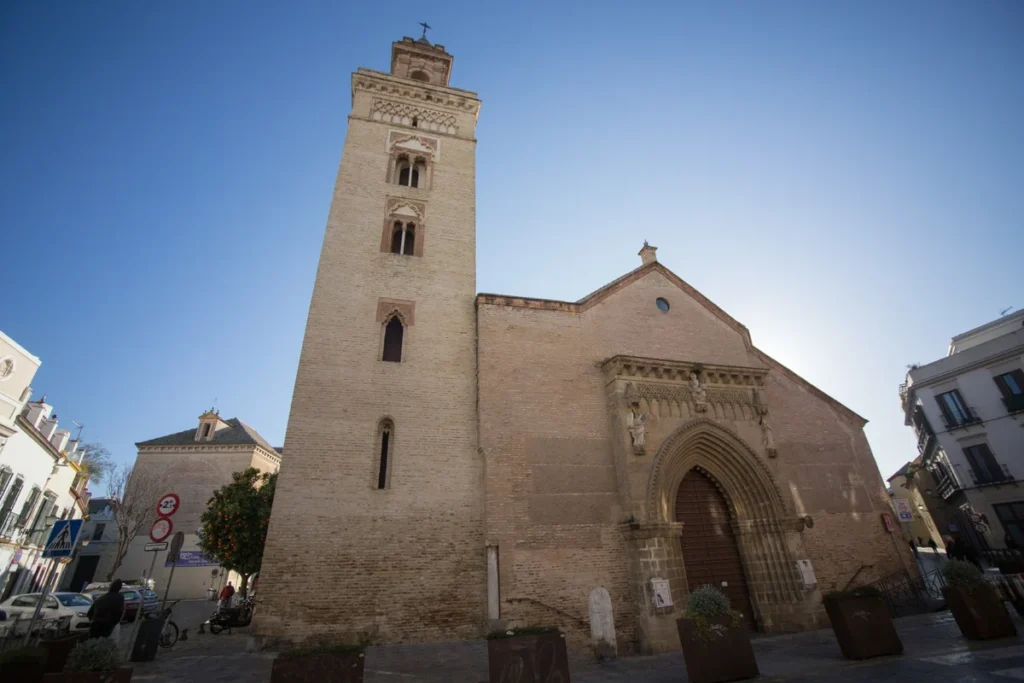
The old cardo maximus is now Calle San Luis, and it holds two churches worth the walk on their own: Santa Marina, Mudejar and severe, and San Luis de los Franceses, which is the most extravagant baroque interior in Seville and which most visitors never hear about. The route carries on past San Marcos and turns back towards the centre.
Ending inside Las Dueñas
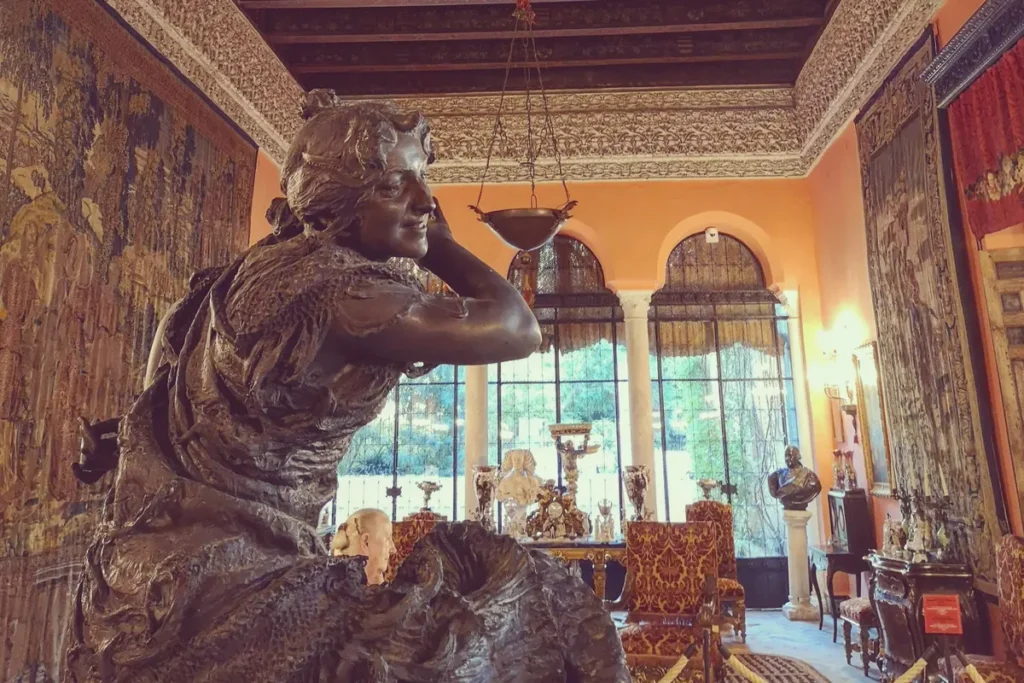
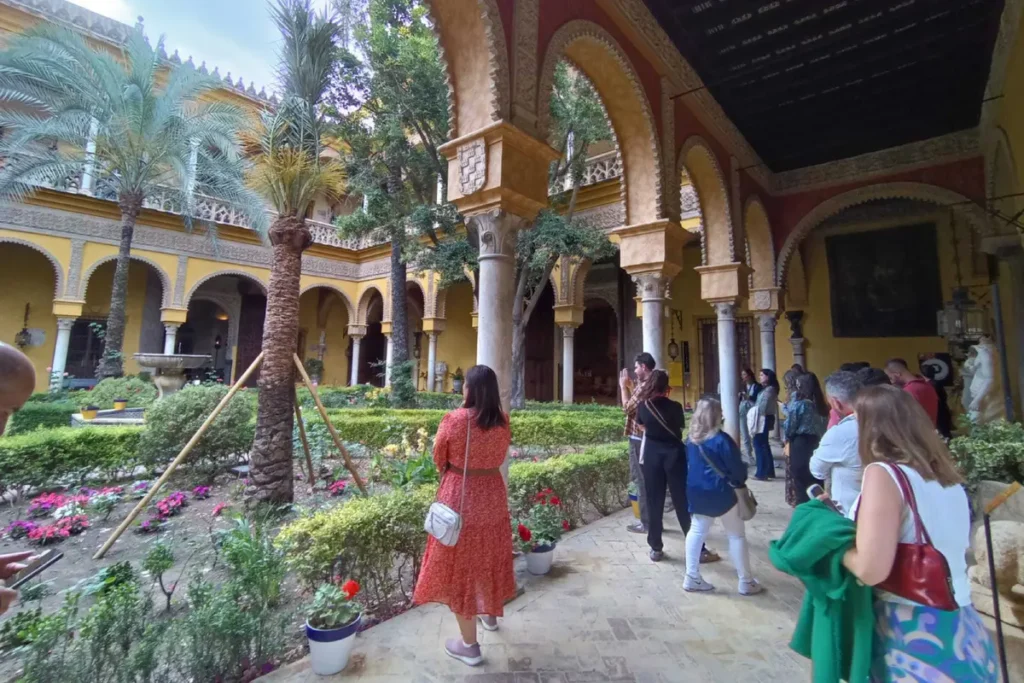
The walk finishes at the Palacio de las Dueñas, the best known of the houses of the Dukes of Alba and the private residence of the late Duchess. You go in: the courtyards, the gardens and the rooms, which are still furnished as a house rather than arranged as a museum.
Your questions answered
Frequently asked questions
About three and a half hours, walking, with the visit to the Palacio de las Dueñas at the end.
At the Metropol Parasol, on the Plaza de la Encarnación. The guide waits on the main steps of the front building, facing the road.
Yes. The price covers entry to the Palacio de las Dueñas and to the Basilica of La Macarena. There is nothing else to pay along the way.
It is a long walk — three and a half hours — but it is flat all the way and it ends sitting in a palace garden. If that sounds like too much, the shorter version of the same quarter takes an hour and a half.
The tour booked on this page is given in English.
The same walk also runs in Spanish, on its own dates, so the calendar above shows only the English departures.
No. There are a few departures a week and each language has different dates, so check the booking calendar for the day you have in mind.
Yes. Cancellation is free up to 24 hours before the activity.
Planning your walk through northern Seville
Practical questions about the quarter itself, useful background before you travel.
One of the houses of the Dukes of Alba, and the one the late Duchess lived in. It is 15th century, built around courtyards, and it is where the poet Antonio Machado was born, because his family rented rooms there. It opened to visitors relatively recently and it is still furnished rather than curated.
For its Virgin. The Basilica holds the image carried in the small hours of Good Friday, in the procession that empties the rest of the city into these streets. Outside Holy Week the quarter is quiet, ordinary and much more interesting than the centre.
The Metropol Parasol, a timber canopy finished in 2011 over the Plaza de la Encarnación, and one of the largest wooden structures anywhere. Sevillians call it the Mushrooms and argued about it for years. Underneath it there is a Roman and Moorish excavation left in place beneath the square.
If you like baroque at all, it is one of the best interiors in Spain, and it is almost always empty. A Jesuit novitiate church from the 18th century, on a centralised plan under a painted dome, with gilded altarpieces round the whole of it.
The start is about fifteen minutes on foot north of the Cathedral, and the route goes further north from there. It is a different city from the one around the Alcázar, which is the point of doing it.