

Everything you need to know
Half-day trip details
To see current prices for each rate (adults, children, students and infants), select your preferred date in the booking calendar. The price shown in the calendar is always the final price.
Check the available days and times directly in the booking calendar: it updates in real time according to the season.
You are picked up at your hotel or accommodation in central Seville, and dropped off there at the end. If the vehicle cannot reach your address, the pick-up is at the nearest accessible point.
Pick-up at your accommodation is only available if you are staying in central Seville. If you are staying outside it, choose C. Rastro 12A, 41003 Seville as your pick-up point when you book and make your own way there. · View on Google Maps
Once you have booked, the exact time and pick-up point are confirmed with you by email or telephone. We recommend being ready a few minutes early.
Round-trip transport from Seville in a private vehicle, and a professional guide.
A guided tour of the historic centre of Carmona.
Admission to the Roman necropolis and its underground tombs.
Food and drink are not included. This is a half-day activity and there is no meal stop.
Comfortable footwear. Carmona sits on a ridge and its centre is cobbled and sloping.
The tombs are reached by steps and are cooler than the surface, so a light layer is useful even in summer.
Sun protection and a hat in the warmer months: the necropolis is an open site with little shade.
Bring some water.
It is a four-hour activity, so you are back in Seville with most of the day still ahead of you.
Free cancellation up to 24 hours before the activity. You can cancel from the confirmation email you receive when you book.
The best-rated guide to Seville
First-hand local advice, more than 90 pages in PDF: what to see, where to eat, museums and palaces, day trips, opening hours and prices, and tourist maps of the city. Book any activity with us and it’s yours. Get the guide
 Eduardo BallesterosSeville local and author of the guide
The half-day trip
Five thousand years on a ridge above the plain
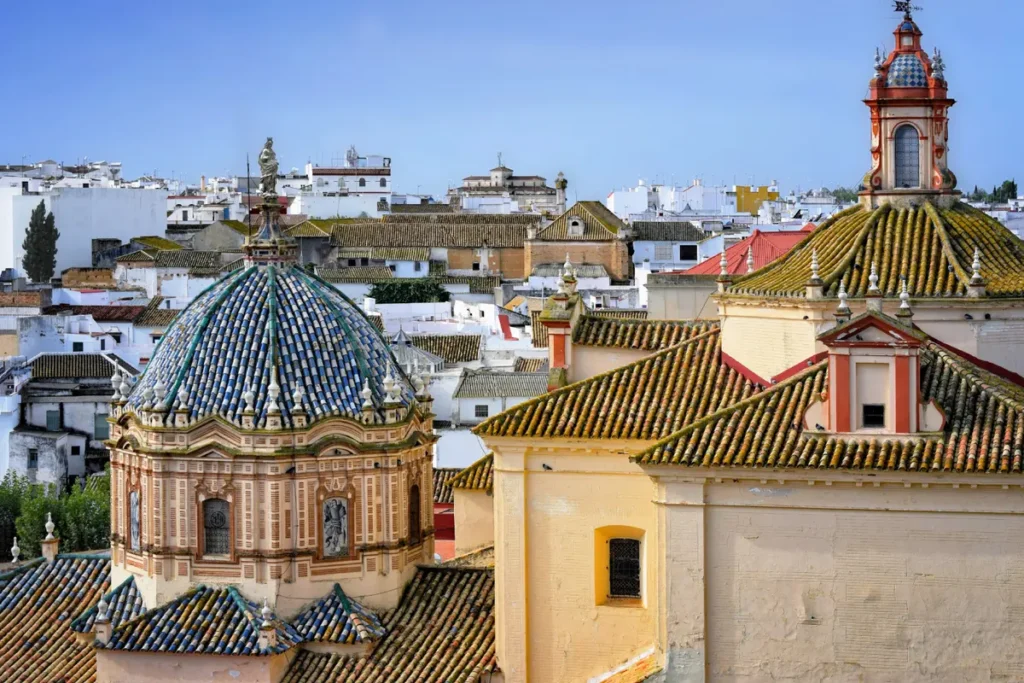
Carmona sits on a long escarpment forty minutes from Seville, looking out over the plain, and it has been lived in for around five thousand years. Carthaginians, Romans, Muslims and Christians all held it, and all of them left something standing.
Up to the ridge
The drive takes about forty minutes east of Seville. You see Carmona long before you reach it, because it sits high above flat farmland and its towers show from a distance.
The Roman necropolis
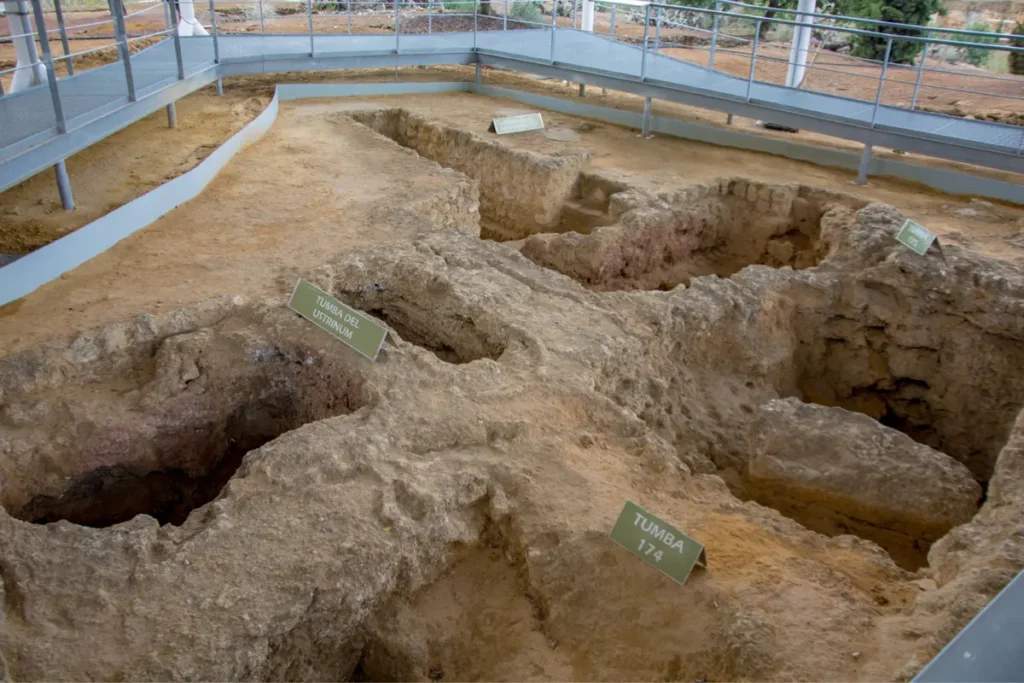
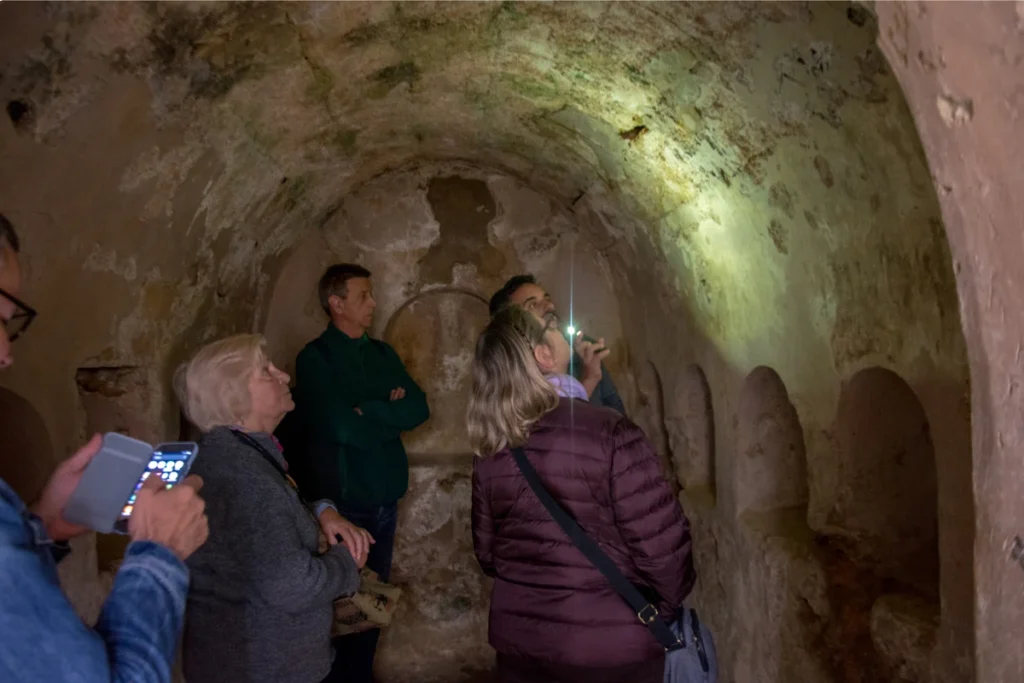
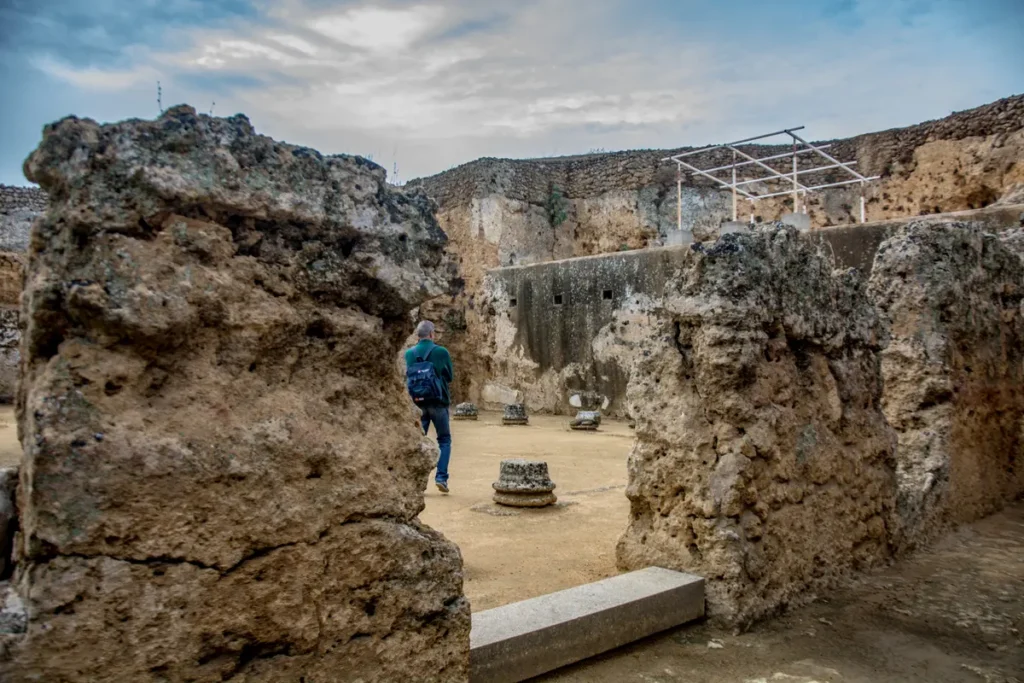
On the edge of town lies one of the largest Roman burial grounds excavated in Spain, cut down into the rock. You go underground into the chambers, among them the Tomb of the Elephant, named for the statue found inside it, and the Circular Mausoleum. It was opened to visitors in the nineteenth century, which makes it one of the earliest archaeological sites in Spain to be shown to the public.
Through the gates
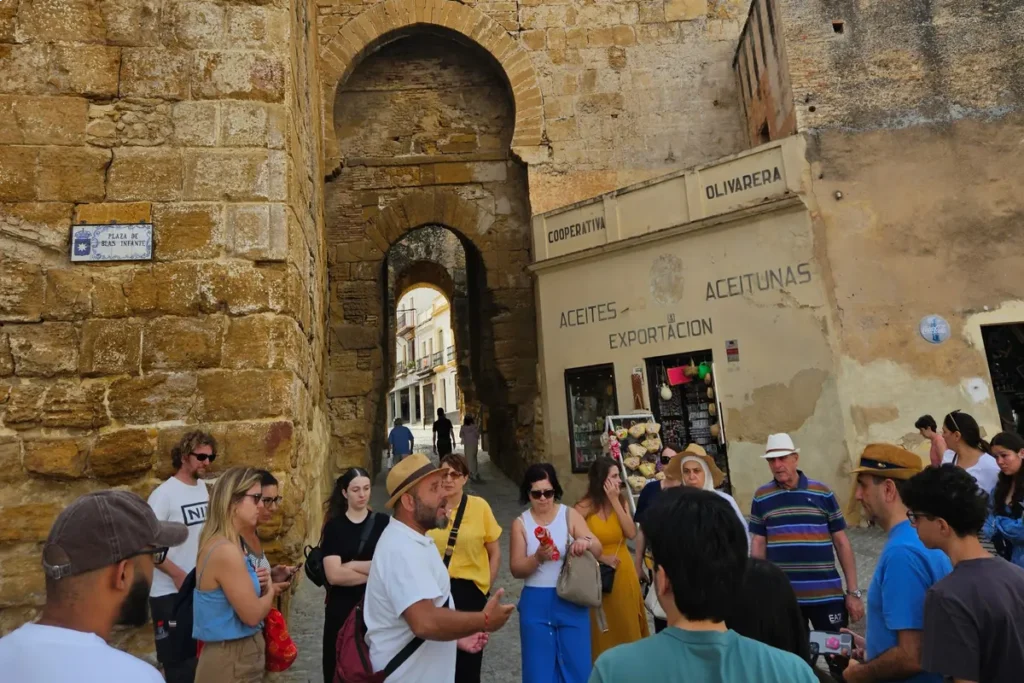
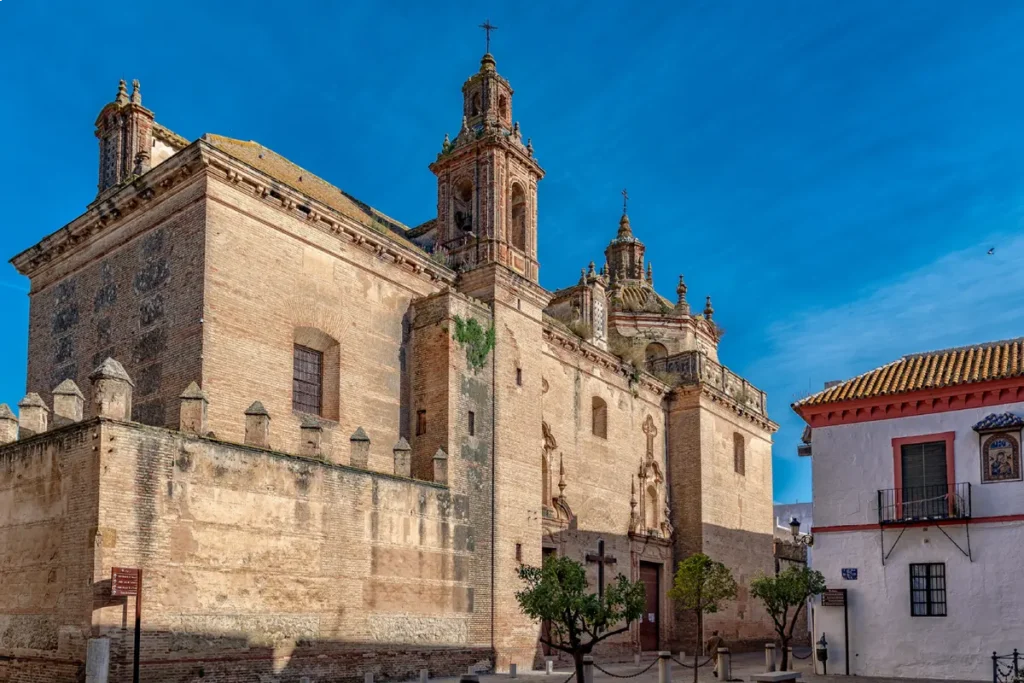
The walk enters the old town through the Puerta de Sevilla, a gate that began as Carthaginian, was rebuilt by the Romans and fortified again by the Almohads, and takes in the Puerta de Cordoba at the other end. Between them run the narrow streets, the Mudejar churches and the convents.
The Alcazar and the views
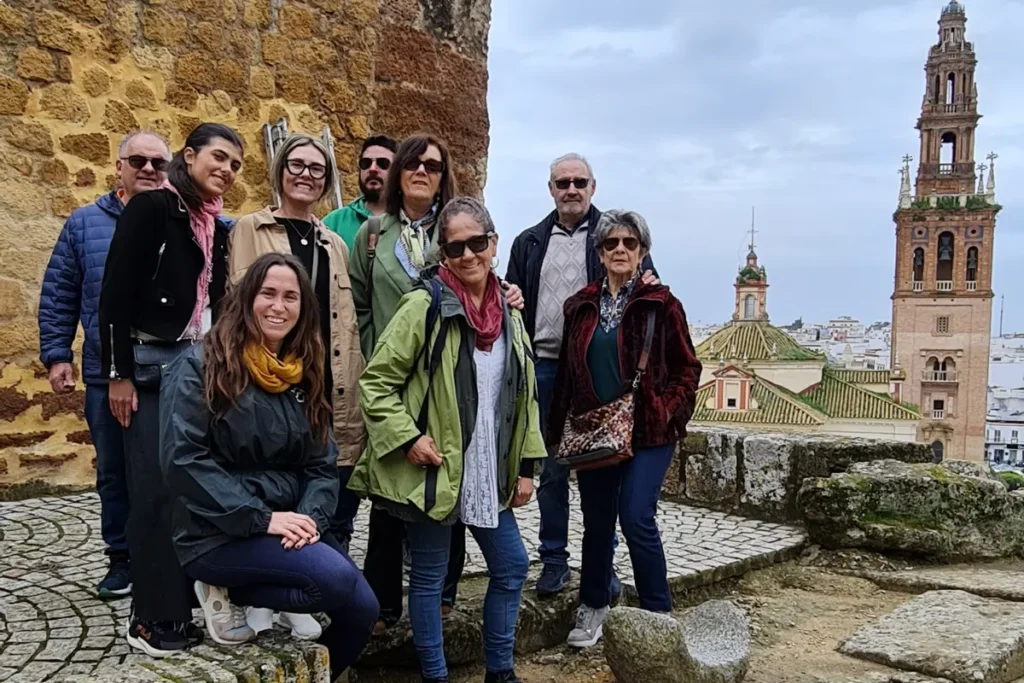
At the highest point stands the Alcazar del Rey Don Pedro, a fourteenth-century royal residence built on Almohad foundations and now a state-run hotel. From the terraces beside it the whole plain of the Guadalquivir opens out below.
Important: the order and format of the route may vary depending on the time of year, the weather, road conditions and each town’s local holidays. Your guide will organize the trip in whatever way works best for the group.
Your questions answered
Frequently asked questions
Around four hours in total, including the drive each way. It is a half-day activity, so you are back in Seville with the rest of the day free.
Yes. Entry to the Roman necropolis is included in the price and you go in with the group and the guide.
Yes. Several of the chambers are open and you go down into them, including the Tomb of the Elephant and the Circular Mausoleum.
No. That is a full day whose real destination is Cordoba, with a brief coffee stop in Carmona on the way. This is a half day devoted to Carmona itself, with a guided tour and the necropolis included.
Spanish, English, French and Italian. You choose when you book. French and Italian need a minimum of three travelers to be guaranteed; if that number is not reached, it runs in English or Spanish.
You are picked up at your hotel or accommodation in central Seville, and that is also where the trip ends. After you book, the exact time and pick-up point are confirmed with you by email or telephone. If you are staying outside central Seville, choose C. Rastro 12A as your pick-up point instead and make your own way there.
Yes, round trip. You travel in a comfortable, air-conditioned vehicle, van, minibus or coach, depending on how many travelers have booked for that date. Some have a toilet on board; if yours does not, you can ask your guide to stop at a service area.
It depends on the bookings for each date, and groups are usually small. In high season the group is split into two or more subgroups: as a rule, groups are no larger than 30 people.
No, and there is no meal stop. At four hours this does not cross lunchtime in the way our full day trips do.
A moderate amount, but on slopes. Carmona is built on a ridge and the old town is cobbled and rises steadily, and the tombs are reached by steps.
Yes, and there is a reduced rate for children. Going down into Roman tombs tends to be the part they remember.
We would not recommend it. The old town is cobbled and sloping and the burial chambers are reached by steps cut into the rock.
Yes. Cancellation is free up to 24 hours before the activity.
Planning your visit to Carmona
Practical questions about the town itself, useful background before you travel.
Its Roman necropolis, its fortified gates and the fact that almost every civilisation that passed through Andalusia built something here and left it standing. It has been continuously inhabited for roughly five thousand years, which is unusual even in this part of Spain.
A burial ground in use from around the first century BC to the second century AD, with several hundred tombs cut down into the rock rather than built above it. Families were cremated and interred in chambers reached by shafts, some of them large enough to hold benches and wall paintings.
One of the largest chambers in the necropolis, named after a stone statue of an elephant found inside. It has several rooms including what appear to be a kitchen and a dining area, which has led archaeologists to read it as a place for funerary banquets rather than only a grave.
The main gate into the old town, and effectively a small fortress in its own right. Its core is Carthaginian, the Romans rebuilt it with a temple above, and the Almohads wrapped it in a defensive courtyard. You can still see all three layers.
Yes. The Alcazar del Rey Don Pedro, the fourteenth-century royal palace at the top of the town, is now a Parador, the state-run hotel chain that occupies historic buildings. The terrace is worth seeing even if you are not staying.
About 33 kilometres east, roughly forty minutes by road. It is close enough that it works comfortably as a half day rather than a full one.
The phrase comes from an inscription attributed to the Muslim ruler Al-Mutamid, praising the town as a star shining above Europe. It stuck, and the local council has used it ever since.
It sits in the middle of the richest farmland in Andalusia, so the food is agricultural: spinach with chickpeas, game in season, and the local sweet pastries made by the enclosed convents, which are sold through a turntable in the wall so that the nuns are not seen.