

Everything you need to know
Day trip details
To see current prices for each rate (adults, children, students and infants), select your preferred date in the booking calendar. The price shown in the calendar is always the final price.
Check the available days and times directly in the booking calendar: it updates in real time according to the season.
There are three pick-up points in central Seville. The one you choose is also where the day ends.
C. Trajano 6, Casco Antiguo, 41001 Seville · View on Google Maps
C. Zaragoza 1, Casco Antiguo, 41001 Seville · View on Google Maps
C. Rastro 12A, 41003 Seville · View on Google Maps
Not every pick-up point is available on every date: the booking calendar shows which ones you can choose and the exact time. We recommend arriving with time to spare.
Round-trip transport from Seville and a professional guide for the day.
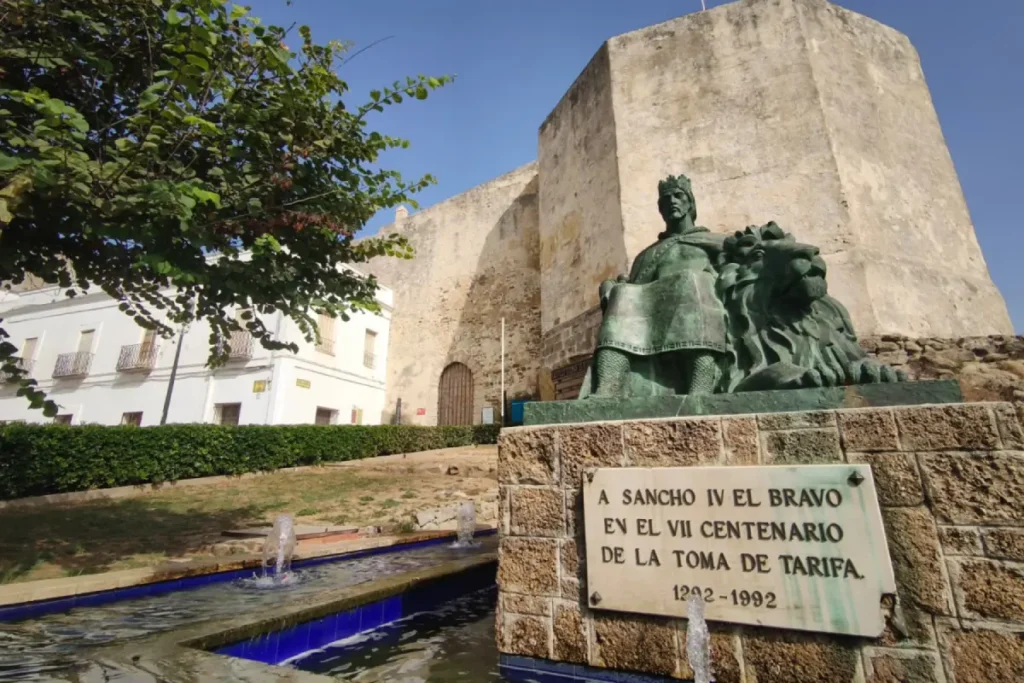
A guided tour of the town of Tarifa, with admission to Guzman el Bueno Castle included.
A guided tour of the Baelo Claudia archaeological site.
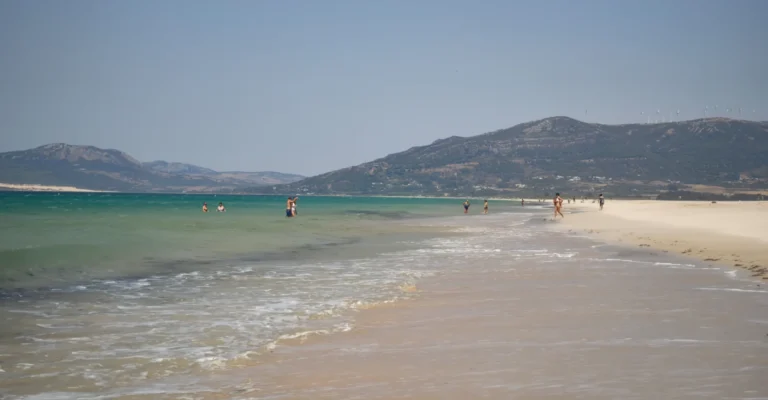
Free time on Bolonia beach.
A guided tour of Vejer de la Frontera.
Food and drink are not included, and neither is admission to any other monument. There is a break with free time for lunch.
The order of the visits may change depending on the group or the time of year.
Bring a swimsuit and a towel. There is free time on Bolonia beach and most people use it.
Comfortable footwear. Vejer is built on a hill and the Roman site is walked on uneven ground.
Bring some water and a snack for the road. In summer add sun protection and a hat: there is very little shade at Baelo Claudia or on the beach.
This corner of the coast is famous for its wind, so a light layer is worth having at any time of year.
There is a break with free time for lunch. You can eat at a local bar or restaurant, on which your guide can make recommendations, or bring your own picnic.
Free cancellation up to 24 hours before the activity. You can cancel from the confirmation email you receive when you book.
The best-rated guide to Seville
First-hand local advice, more than 90 pages in PDF: what to see, where to eat, museums and palaces, day trips, opening hours and prices, and tourist maps of the city. Book any activity with us and it’s yours. Get the guide
 Eduardo BallesterosSeville local and author of the guide
The day trip
Where Europe runs out, and Rome left a town on the sand
The southern tip of the continent packs a great deal into a short stretch of coast: a walled town looking across at Africa, a Roman city standing on a wild beach, one of the great white villages of Andalusia, and the oldest city in Western Europe to finish.
Tarifa, the southern edge of Europe
The first stop is Tarifa, the southernmost town on mainland Europe and the point where the Atlantic meets the Mediterranean. The walk through the medieval old town includes Guzman el Bueno Castle, a tenth-century fortress whose walls look straight across the strait to the hills of Morocco.
Baelo Claudia, a Roman city on the beach
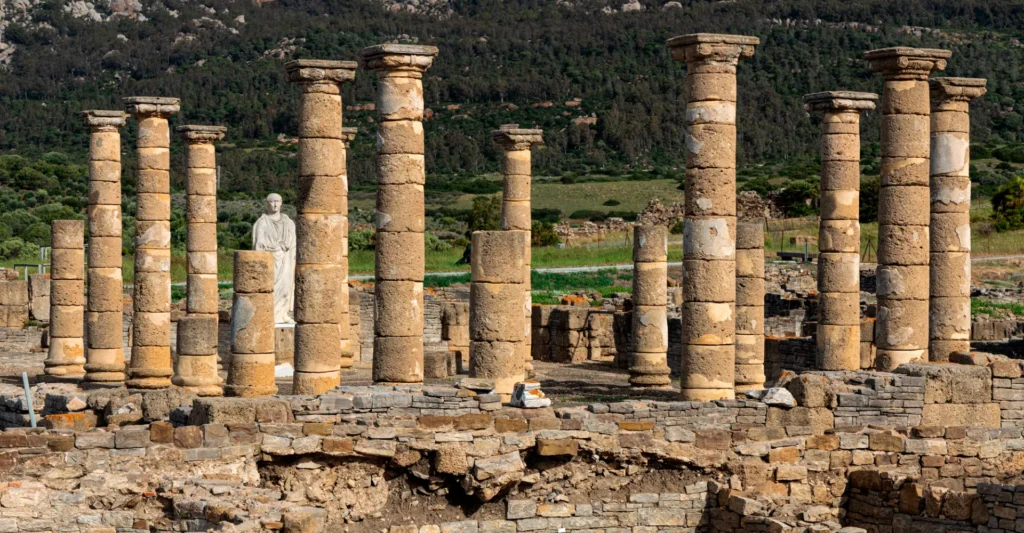
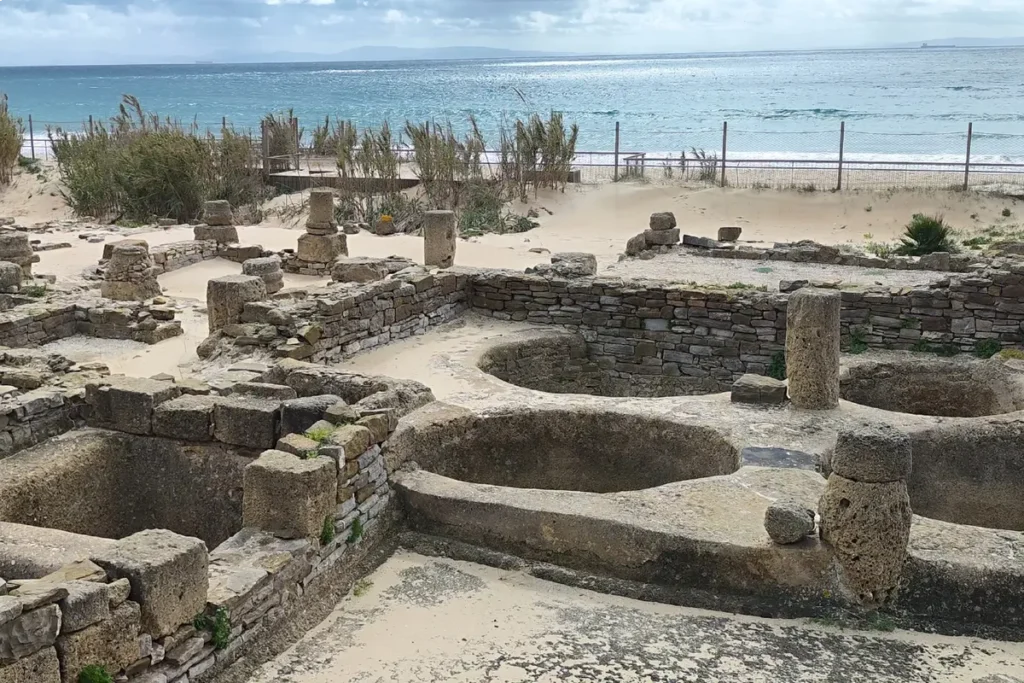
A short way up the coast stands Baelo Claudia, founded in the second century BC and abandoned after an earthquake. Its forum, basilica, temples, baths and fish-salting works are still laid out on the sand, a few steps from the water. This is where Rome made garum, the fermented fish sauce it exported across the empire.
Bolonia beach and its dune
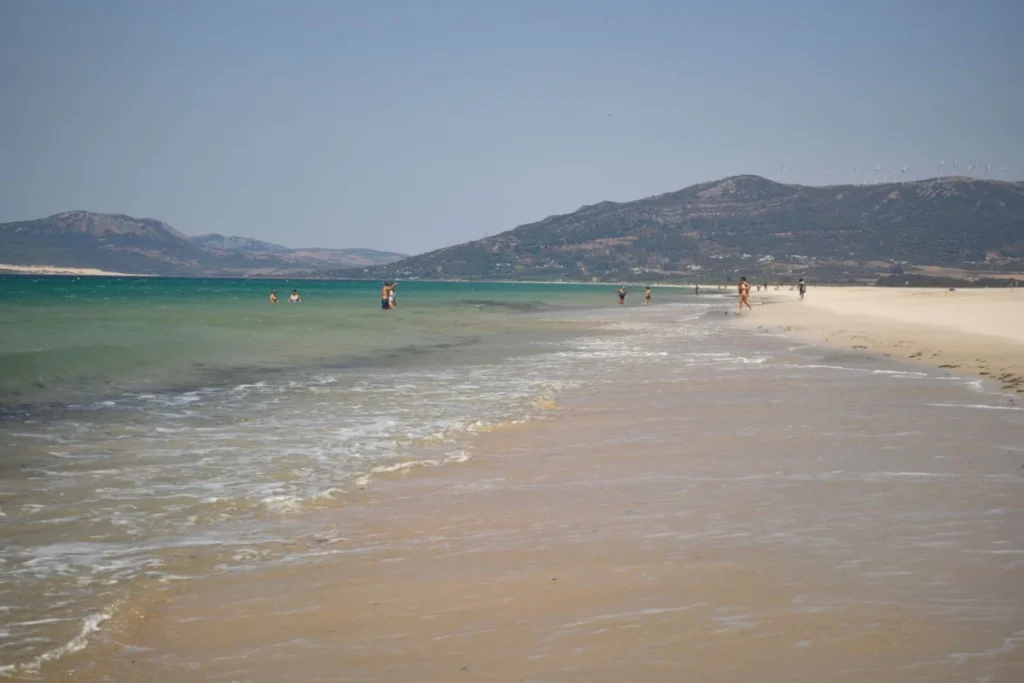
The ruins sit at one end of Bolonia beach, regularly called one of the most beautiful in Spain, with a vast shifting dune of white sand rising at the far end. There is free time here to swim, walk or simply sit.
Vejer de la Frontera, and Cadiz to close
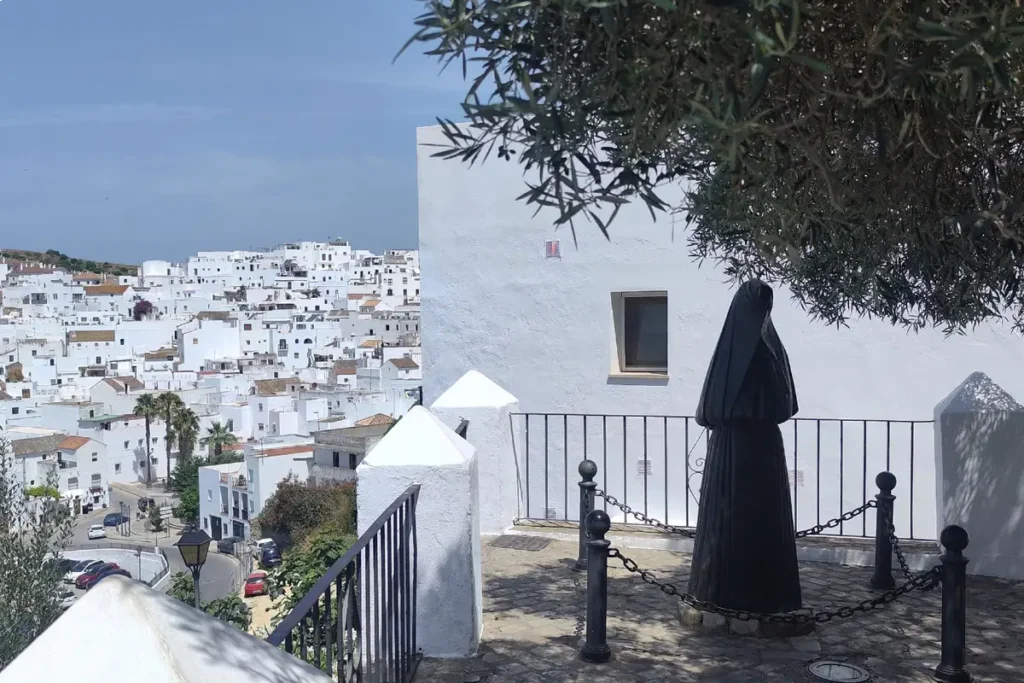
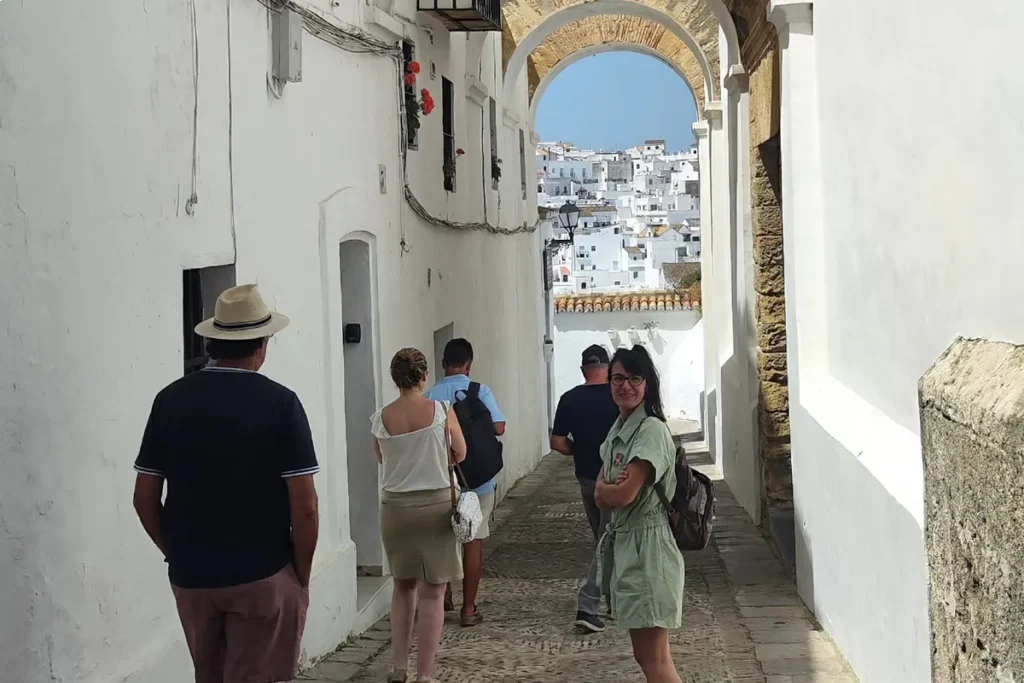
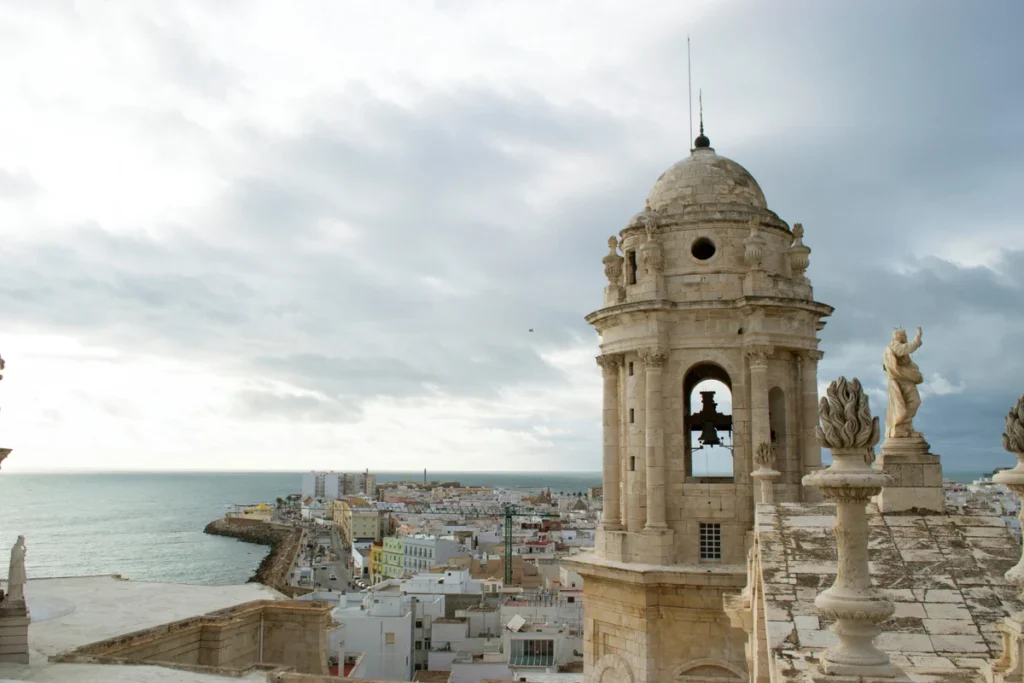
Vejer is a walled white village on a hilltop, all cobbled lanes, whitewashed walls and viewpoints, and there is free time to eat here. In the afternoon the route heads north to Cadiz for a look at the oldest city in Western Europe, almost entirely surrounded by the Atlantic, before the drive back to Seville.
Important: the order and format of the route may vary depending on the time of year, the weather, road conditions and each town’s local holidays. Your guide will organize the day in whatever way works best for the group.
Your questions answered
Frequently asked questions
Around twelve hours. The exact departure time for your date appears in the booking calendar.
Yes. Entry to Guzman el Bueno Castle in Tarifa is included in the price and you go in with the group and the guide.
The guided tour of the archaeological site is included. Baelo Claudia is a public site and entry is free for European Union citizens on presentation of an identity document.
Yes. There is free time on the beach, so bring a swimsuit and a towel. How long depends on the day and the season, and your guide will tell you when to be back.
The route ends in Cadiz in the afternoon, with a panoramic tour of the main sights and time to walk through the old town. The guided walking tours on this day trip are in Tarifa, Baelo Claudia and Vejer.
No. There is a break with free time for lunch in Vejer, at a local bar or restaurant, on which your guide can make recommendations, or you can bring your own picnic.
Spanish, English, French and Italian. You choose when you book. Usually the guide runs the day in one language, although it is sometimes run in two at once, with the guide alternating between them.
From central Seville. There are three pick-up points and the booking calendar shows which ones are available on your date. The pick-up point is also the drop-off point.
Yes, round trip. You travel in a comfortable, air-conditioned vehicle, van, minibus or coach, depending on how many travelers have booked for that date. Some have a toilet on board; if yours does not, you can ask your guide to stop at a service area.
It depends on the bookings for each date, and groups are usually small. In high season the group is split into two or more subgroups: as a rule, groups are no larger than 30 people.
A good deal. Tarifa and Vejer are walked on foot over cobbles, Vejer is on a hill, and Baelo Claudia is crossed on uneven ground with no shade. Comfortable shoes matter on this one.
Yes, and there is a reduced rate for children. The beach usually makes this an easier day for younger travelers than a pure city route, although twelve hours is a long stretch.
We would not recommend it. The visits are made entirely on foot and much of the route is over uneven, cobbled ground.
Yes. Cancellation is free up to 24 hours before the activity.
Planning your visit to the Costa de la Luz
Practical questions about this stretch of coast, useful background before you travel.
A Roman town on the shore of Bolonia beach, founded in the second century BC and largely abandoned after an earthquake in the third century AD. Because nothing was built on top of it, the forum, basilica, temples, theatre and baths survive as a complete street plan, which is rare.
A fermented fish sauce, made by salting and curing fish in stone vats under the sun, and one of the most traded foods in the Roman world. Baelo Claudia was built around producing it, and the rows of salting tanks are still there at the edge of the site.
It is regularly named among the most beautiful beaches in Spain, and it is undeveloped: no promenade, no towers, just four kilometres of white sand with a Roman city at one end and a thirty-metre dune at the other. The dune is a protected natural monument and you can climb it.
Because it is, on the mainland. Punta de Tarifa sits on a small island joined to the town by a causeway, and it marks the dividing line between the Atlantic and the Mediterranean. Africa is about 14 kilometres away and clearly visible on a decent day.
Being one of the best preserved of the Andalusian white villages. It sits on a hill about ten kilometres inland, still has its medieval walls and gates, and its lanes are too narrow for cars. It is also known for its food, particularly local tuna and Retinto beef.
The strait funnels wind between two land masses, so Tarifa gets two reliable ones: the levante from the east and the poniente from the west. That makes it one of the best places in Europe for kitesurfing and windsurfing, and the reason the beaches north of town are full of kites.
May, June and September. July and August are hot and busy, and the Atlantic here is cooler than the Mediterranean at any time of year. The wind is a constant, which keeps the summer bearable but can make a beach day breezy.
Bluefin tuna caught with a maze of nets set in the strait, a technique the Phoenicians brought here and that is still used in spring as the fish migrate through. It is the local delicacy along this coast and appears on every menu in Vejer and Tarifa in season.