

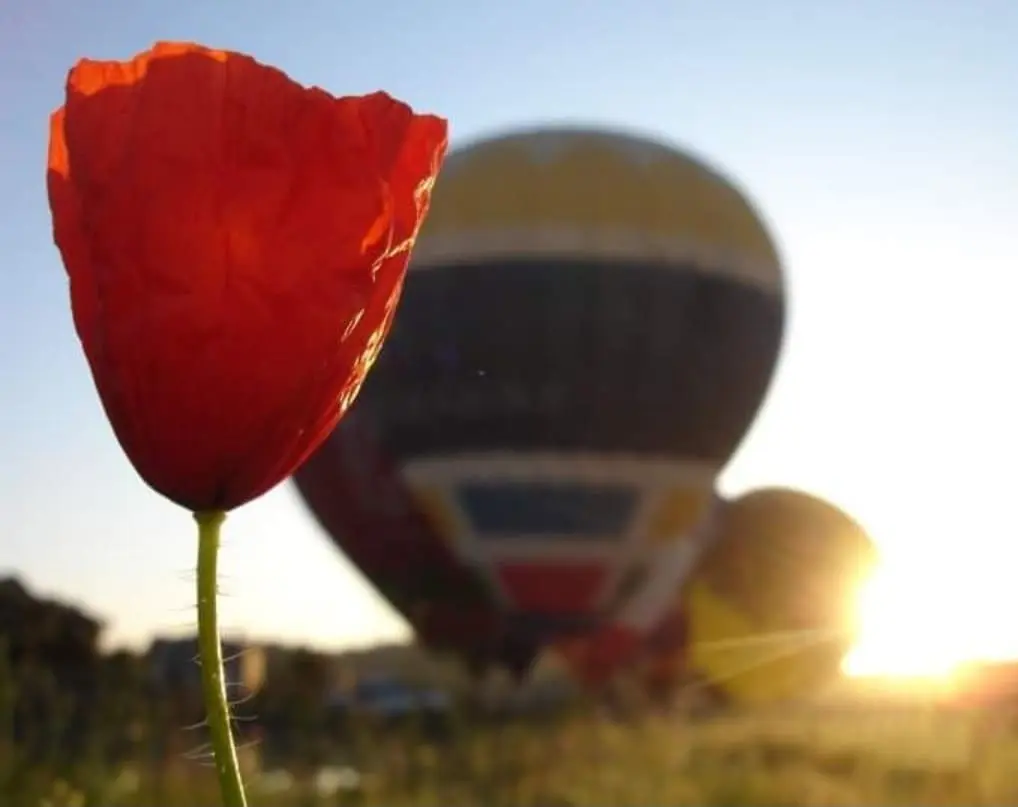
Everything you need to know
Balloon flight details
To see current prices for each rate, select your preferred date in the booking calendar. The price shown in the calendar is always the final price.
Flights go on a limited number of days each week, always early in the morning, because that is when the air is calm enough.
Every flight depends on the weather and the decision is taken on the day by the pilot.
The flight does not leave from Seville. The meeting point is at Sanlúcar la Mayor, about 25 km west of the city, and getting there is up to you.
Av. Antonio Pazo s/n, Sanlúcar la Mayor, Seville · View on Google Maps
Allow about half an hour by road from central Seville.
A balloon flight of roughly an hour to an hour and a half over the countryside west of Seville.
Breakfast and a toast with cava after landing, water on board, a flight certificate and a video of the flight.
Early start, and layers: it is cold before dawn and warm an hour later. Closed shoes, because you walk across a field to the basket.
The balloon goes where the wind goes, so the landing point is never known in advance. A vehicle follows the balloon and brings the group back to the start.
This flight is not refundable once booked, other than in the specific cases the operator sets out.
If the flight is called off because of the weather, that is not a cancellation on your part: the operator reschedules it.

The best-rated guide to Seville
First-hand local advice, more than 90 pages in PDF: what to see, where to eat, museums and palaces, day trips, opening hours and prices, and tourist maps of the city. Book any activity with us and it’s yours. Get the guide
 Eduardo BallesterosSeville local and author of the guide
The balloon flight
The countryside west of Seville, from a thousand feet up, before breakfast
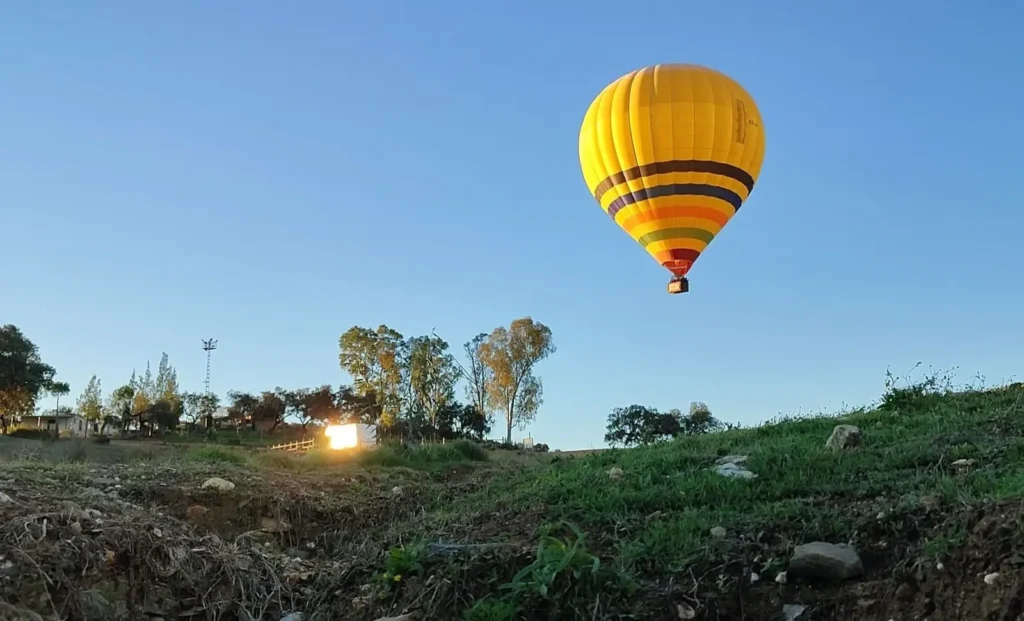
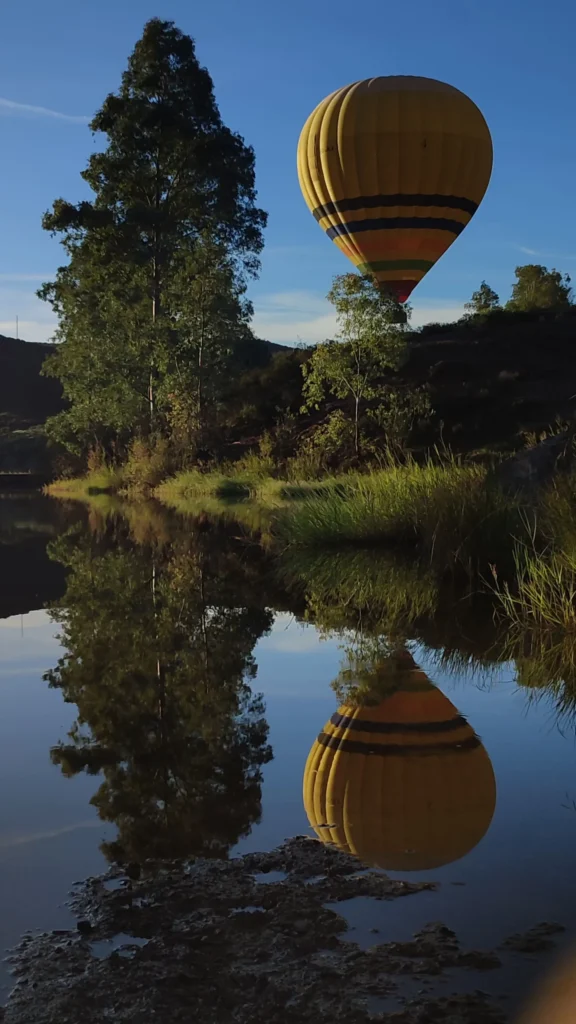
A balloon does not fly where you point it: it goes with the wind, slowly, at whatever height the pilot chooses, and the silence between burns is the part nobody expects. The flight goes up from the farming country west of Seville, over villages like Aznalcóllar and Gerena and the fields around them.
What you see
Whitewashed villages with their churches and squares, the green and gold of the campiña depending on the month, the streams and the reservoirs catching the early light, and the whole Aljarafe rolling away with Seville on the horizon.
How the morning goes
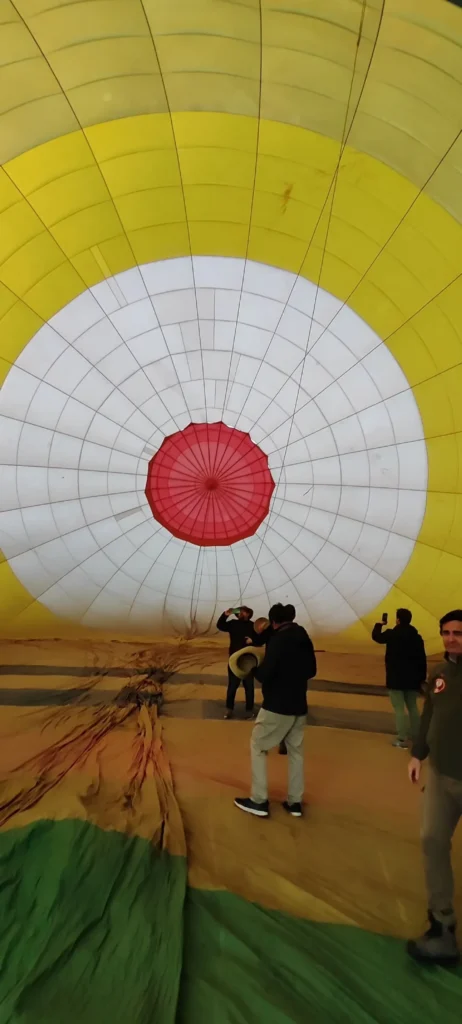
You meet before dawn, watch the envelope inflate on the field, and are in the air soon after first light, which is the only time of day when the air is still enough. The flight lasts about an hour; the whole morning takes three or four.
And afterwards
You land in a field somewhere downwind, the ground crew arrives, and there is breakfast and a toast with cava, which is a tradition as old as ballooning itself. You leave with a certificate and the video.
Your questions answered
Frequently asked questions
About an hour to an hour and a half in the air. Allow the whole morning for the meeting, the inflation, the flight, the recovery and breakfast.
No. The launch field is at Sanlúcar la Mayor, about 25 km west of the city, and getting there is your own arrangement. Allow half an hour by road.
The flight does not go. The pilot decides on the morning, and the operator reschedules; this is normal in ballooning and not a reason to be annoyed with anybody.
No. This product is not refundable once booked, other than in the specific cases the operator sets out, which is why the weather rule above matters: a weather call is a reschedule, not a cancellation.
Less than people expect. A balloon basket does not sway and there is no sensation of speed, because you travel with the wind rather than through it. If heights bother you, the edge of the basket is chest height.
Spanish and English.
Ballooning near Seville
Practical questions about the flight, useful background before you travel.
Because the air is at its most stable then. As the ground heats up it produces thermals and the wind picks up, which makes both flying and landing unpredictable. By mid-morning the window has closed.
Only up and down. The pilot climbs or descends to find a layer of wind going in a useful direction, which is the whole craft of it, but nobody knows where the balloon will land until it does.
Autumn and spring, for the light and the temperature. Summer flights go very early and the landscape is dry and gold; winter mornings are clearer but colder and more often cancelled.
A tradition going back to the first flights in 18th-century France, when balloonists carried champagne to convince alarmed farmers that they were not demons. The explanation is probably improved, but the custom stuck.