


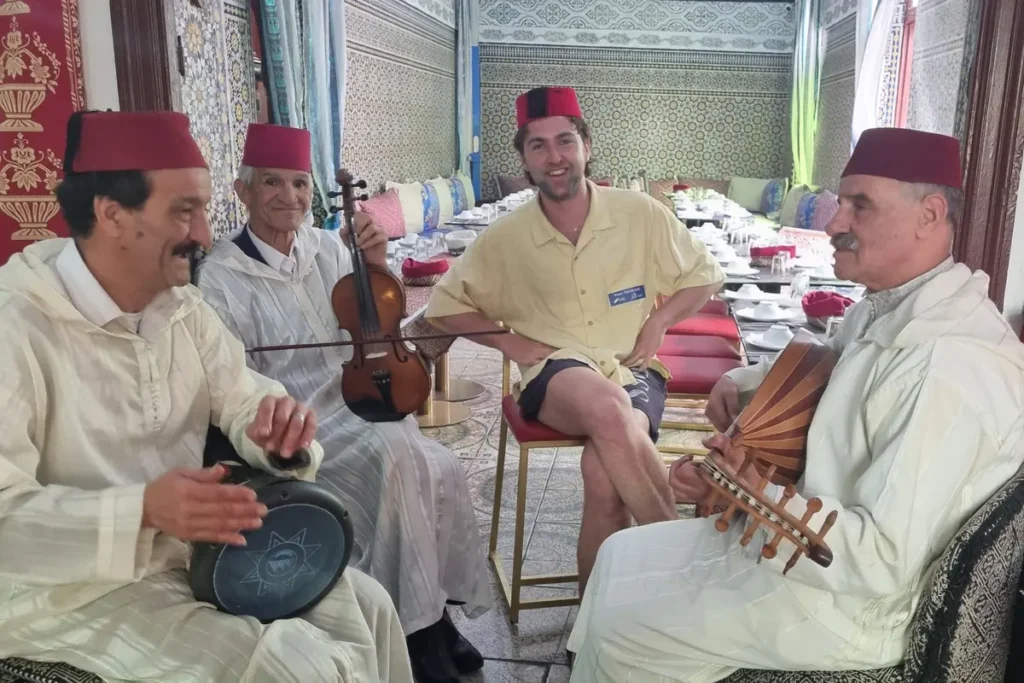
Everything you need to know
Day trip details
To see current prices for each rate (adults, children, students and infants), select your preferred date in the booking calendar. The price shown in the calendar is always the final price.
Check the available days and times directly in the booking calendar: it updates in real time according to the season.
There are three pick-up points in central Seville. The one you choose is also where the day ends.
C. Trajano 6, Casco Antiguo, 41001 Seville · View on Google Maps
C. Zaragoza 1, Casco Antiguo, 41001 Seville · View on Google Maps
C. Rastro 12A, 41003 Seville · View on Google Maps
Departures are early in the morning and not every pick-up point is available on every date: the booking calendar shows which ones you can choose and the exact time. We recommend arriving with time to spare.
This day trip crosses an international border, so a valid passport is compulsory. A national ID card is not enough.
You must provide the full name and passport number of every traveler at the time of booking.
Bring the passport itself with you on the day. Without it you cannot board the ferry or enter Morocco.
Most visitors do not need a visa. Citizens of the European Union, the United Kingdom, the United States, Canada, Australia, New Zealand, Japan and most Latin American countries can enter Morocco for up to 90 days without one. If you want to be certain, the official Moroccan government portal tells you in one step what your nationality needs. Visas and travel documents are the traveler’s own responsibility.
Round-trip transport from Seville and return ferry tickets between Tarifa and Tangier.
A local Moroccan guide and a guided tour of the surroundings and the historic centre of Tangier.
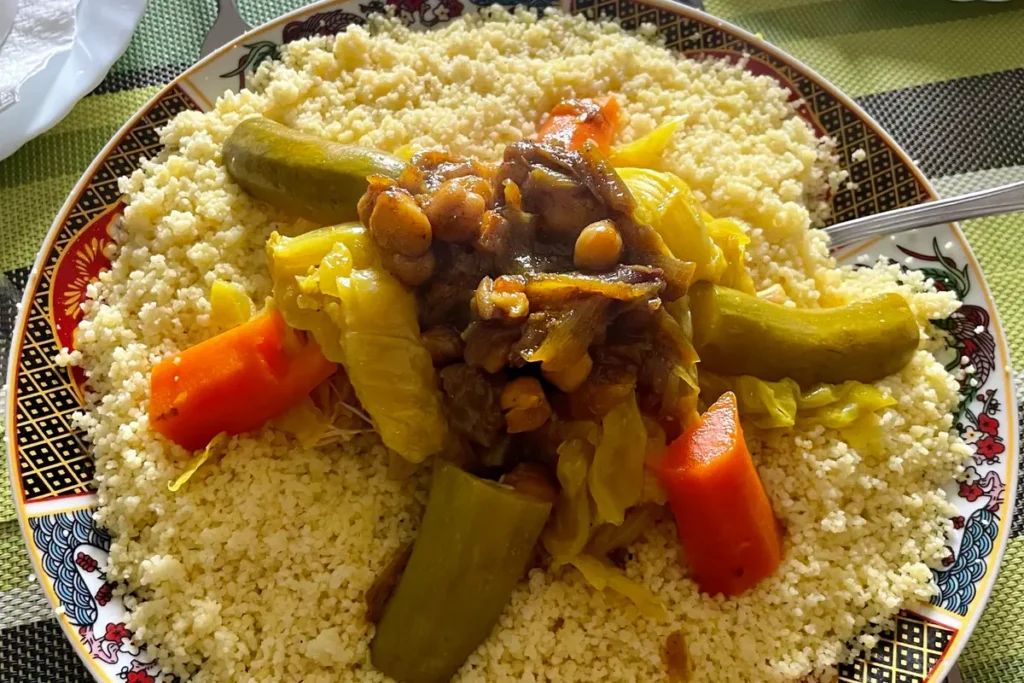
A traditional Moroccan lunch is included (drinks are not).
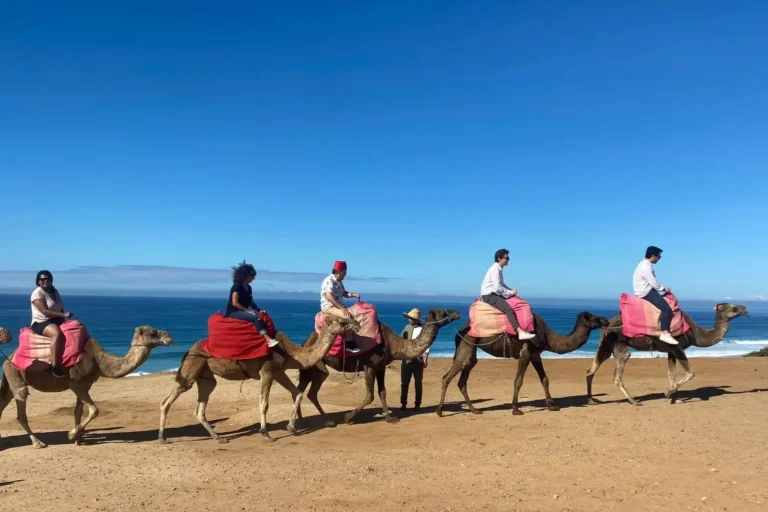
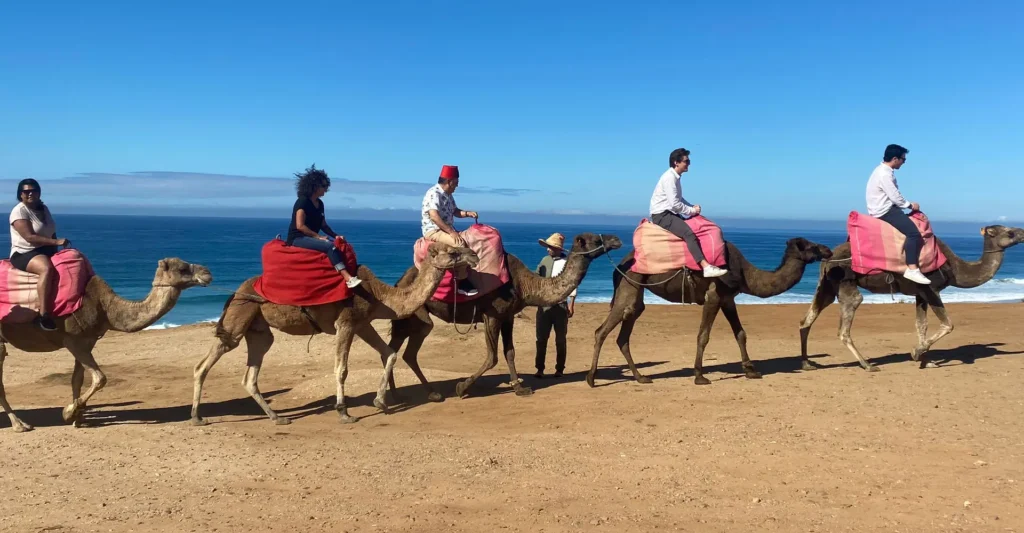
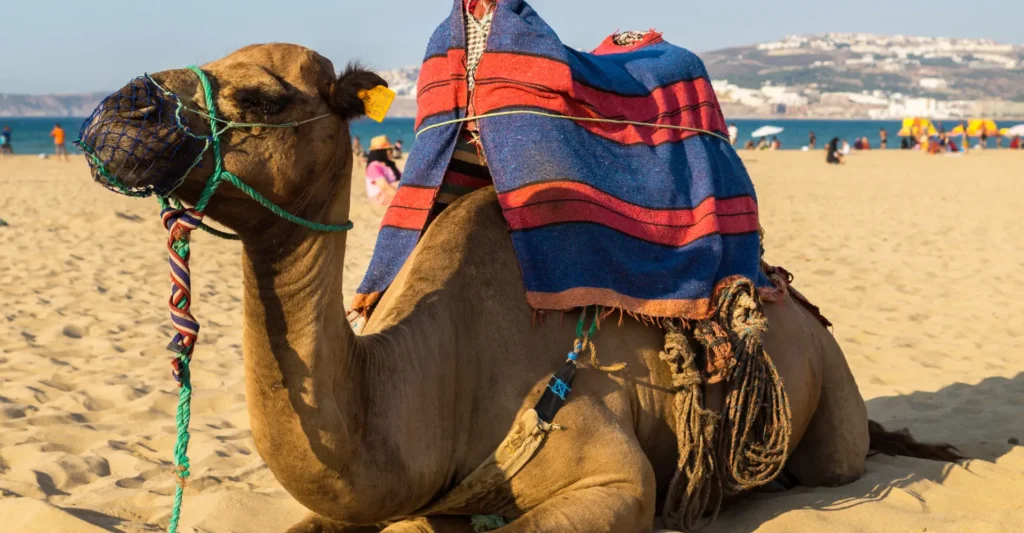
A short camel ride is available at the coast for a small extra charge paid on the spot. It is optional and not part of the price.
The order of the visits may change depending on the group, the sailing times or the time of year.
Your passport, above everything else. Check the night before that you have it with you.
It is a long day, around fifteen hours, with an early start and a late return. Come rested.
Comfortable footwear. The historic centre of Tangier is visited on foot, over uneven streets and slopes.
Bring some water and a snack for the road. In summer, add sun protection and a hat; the Atlantic coast can be windy, so a light layer helps at any time of year.
The local currency is the dirham and it cannot be bought outside Morocco. Small purchases in tourist areas are often accepted in euros, though at a poor rate.
Free cancellation up to 24 hours before the activity. You can cancel from the confirmation email you receive when you book.
One exception: if you arrive without your passport or without the documentation needed to enter Morocco, the booking cannot be refunded.
Ways to visit
Choose how you visit
Everything on this page describes the shared day trip. The same visit is also sold in other formats, each with its own group size, languages and price, and every one of them is booked right here.
Shared day trip
From €219per adult
- GroupRegular group
- LanguagesEN / ES / FR / IT, chosen when you book
The full day exactly as this page describes it, in a regular group, with transport from Seville, the ferry crossing and the guided visit in Tangier.
Check datesPrivate group
From €936per group
- GroupYour party only
- LanguagesEN / ES / FR / IT, chosen when you book
The same day for your party alone, priced per group rather than per person, and with pick-up at your accommodation in central Seville.
The best-rated guide to Seville
First-hand local advice, more than 90 pages in PDF: what to see, where to eat, museums and palaces, day trips, opening hours and prices, and tourist maps of the city. Book any activity with us and it’s yours. Get the guide
 Eduardo BallesterosSeville local and author of the guide
The day trip
Africa, an hour across the Strait
From Seville, the African continent is closer than most visitors realize. This day trip takes you across the Strait of Gibraltar by ferry to Tangier, a port city where Morocco has been meeting Europe for centuries, and brings you back the same night.
Across the Strait of Gibraltar
The day starts early, with the drive south from Seville to the port of Tarifa, the southernmost point of mainland Europe. From there the fast ferry crosses to Africa in about an hour, with the Spanish coast behind you and the Moroccan hills ahead. A local guide meets the group on arrival.
The Caves of Hercules and the Atlantic coast
A panoramic drive takes in the surroundings of Tangier, including the Caves of Hercules, a limestone cave near Cape Spartel whose sea-facing opening is famously shaped like the map of Africa. There is a stop on the Atlantic shore, where camels rest on the sand and a short ride can be arranged on the spot.
A walk through a city of three cultures
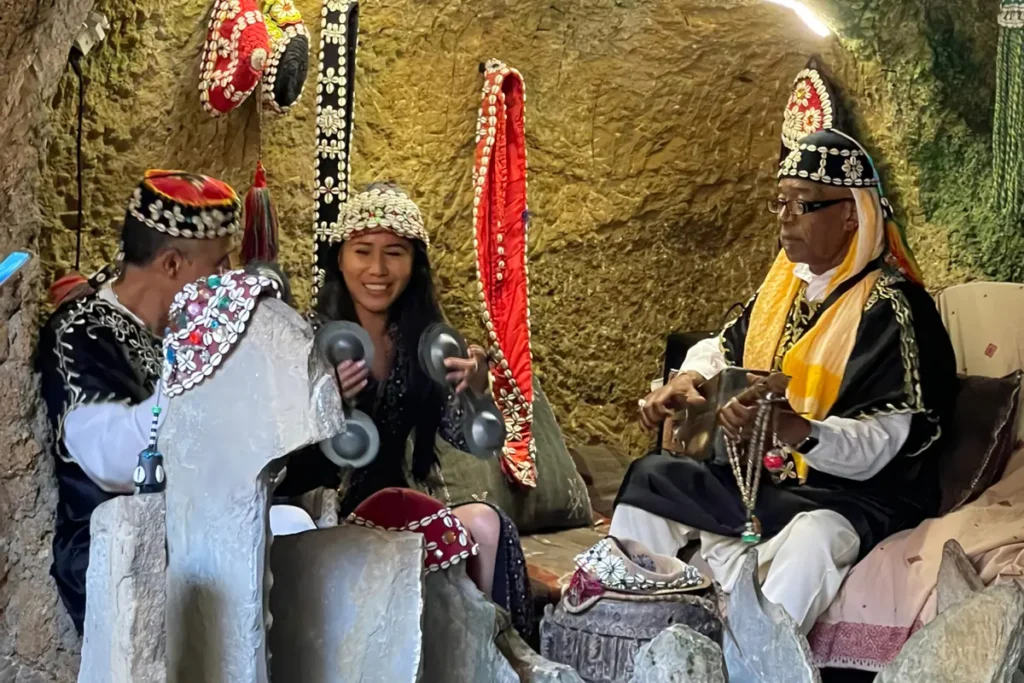
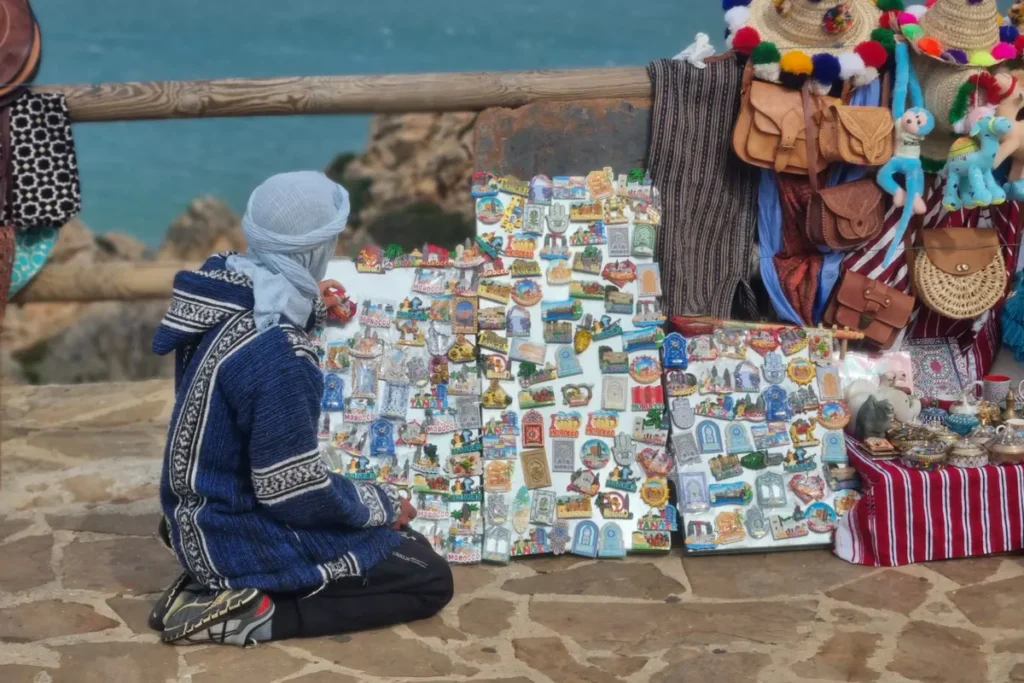
Back in Tangier, the group leaves the vehicle and continues on foot. Muslim, Jewish and Christian communities have shared this city for generations, and it has drawn writers and painters from all over the world. The walk winds past the shops and stalls that line its streets, thick with colour and the smell of spices.
A Moroccan lunch, then the crossing back
Halfway through the visit there is a stop at a traditional restaurant for a Moroccan lunch, included in the price. Afterwards the walk continues through more of the old town before returning to the port for the ferry to Tarifa, and from there back to Seville, arriving late at night.
Important: the order and format of the route may vary depending on ferry timetables, the weather, border formalities and other operational circumstances. Your guide will organize the day in whatever way works best for the group.
Your questions answered
Frequently asked questions
Yes, and there is no way around it. Tangier is in Morocco, so this is an international border crossing. A national ID card is not accepted. You also have to give the full name and passport number of every traveler when you book.
You will not be able to board the ferry, and the booking cannot be refunded. It is the one exception to the free cancellation policy, so it is worth checking the night before.
Almost certainly not. Citizens of the European Union, the United Kingdom, the United States, Canada, Australia, New Zealand, Japan and most Latin American countries enter Morocco visa-free for stays of up to 90 days, which covers a day trip comfortably. Around seventy nationalities are exempt in total. You can confirm your own case in one step on the official Moroccan government portal, which asks for your nationality and tells you whether anything is required. Documentation is the traveler’s own responsibility.
Around fifteen hours. It is an early start and a late return, and the exact departure time for your date appears in the booking calendar.
Yes. The return crossing between Tarifa and Tangier is included, and so is the road transport from Seville to the port and back.
About an hour on the fast ferry between Tarifa and Tangier. Sailing times can shift with the weather and the season, which is one reason the departure time from Seville varies.
Yes. A traditional Moroccan lunch at a local restaurant is included in the price. Drinks are not.
No. There is a stop on the Atlantic coast where camels are kept, and a short ride can be arranged there for a small charge paid on the spot. It is optional, and you are welcome to just take photographs.
Spanish, English, French and Italian. You choose when you book. French and Italian need a minimum of three travelers to be guaranteed; if that number is not reached, the day runs in English or Spanish.
From central Seville. There are three pick-up points and the booking calendar shows which ones are available on your date. The pick-up point is also the drop-off point at the end of the night.
It depends on the bookings for each date, and groups are usually small. In high season the group is split into two or more subgroups: as a rule, groups are no larger than 30 people. If you would rather not share the vehicle with anyone, you can book it as a private group.
A fair amount. The historic centre of Tangier is visited entirely on foot, over uneven streets and some slopes, so comfortable shoes make a real difference. The rest of the day is spent in the vehicle and on the ferry.
Yes, and there is a reduced rate for children. Bear in mind that it is a very long day with an early start, a ferry crossing and a late return, so it suits children who travel well.
We would not recommend it. The day involves a ferry crossing, several changes of vehicle and a walking tour over uneven ground.
Yes. Cancellation is free up to 24 hours before the activity. The only exception is turning up without the passport or documentation needed to enter Morocco, which is not refundable.
Planning your day in Tangier
Practical questions about Morocco and the city itself, useful background before you travel.
Around 210 kilometers by road to the port of Tarifa, then a sea crossing of roughly 14 kilometers across the Strait of Gibraltar. The strait is narrow enough that on a clear day you can see one continent from the other, which is why a day trip works at all.
Yes, and it is one of the few places in Europe where you can be on another continent and back before the night is over. What you get is a first taste: the coast, the Caves of Hercules and the old town. It is a long day, and it is not the same as staying over, but it is a real visit rather than a glance from the port.
Yes. Morocco is outside the European Union and the Schengen area, so a valid passport is required and a national ID card will not do. A visa is a separate matter, and most visitors do not need one: passport holders from the European Union, the United Kingdom, the United States, Canada, Australia and most of Latin America can enter for up to 90 days visa-free.
The Moroccan dirham. It is a closed currency, which means you cannot buy it before you leave: you change money or withdraw from an ATM once you arrive. In tourist areas many shops and stalls will take euros, though the rate you get is usually poor, so small purchases in dirhams work out better.
No. Morocco runs on Greenwich Mean Time all year round, which puts it one hour behind mainland Spain in winter and two hours behind in summer. On a guided day trip this makes no practical difference, since all the timings are handled for you, but it is worth knowing if you are watching your phone.
Arabic is the official language and French is widely used in business and education. Because of the strait, Spanish is common in Tangier too, and in tourist areas many people speak some English. It is the most multilingual city in Morocco.
A limestone cave complex at Cape Spartel, the northwestern corner of mainland Africa, opened to visitors in 1920. Its sea-facing mouth happens to be shaped like a map of Africa, which is what most people photograph. The name comes from the legend that Hercules slept here before setting out for the golden apples of the Hesperides.
It is generally regarded as one of the safer Moroccan cities, and violent crime against visitors is rare. The usual big-city sense applies: keep bags closed in crowded streets and around the port, and be aware that unofficial guides may approach you. On a guided day trip you are with the group throughout.
Tangier is relaxed by Moroccan standards and there is no dress code for visitors, but modest clothing draws less attention, particularly in the old town: shoulders and knees covered is a good rule. Comfortable shoes matter more than anything, and the Atlantic wind means a light layer is useful even in summer.